
Power outage food safety is something every household should understand before a storm or emergency happens. When the electricity goes out, many people do not know what food is still safe to eat and what food should be thrown away. Understanding power outage food safety can help prevent food poisoning and also help families avoid wasting food during an outage.
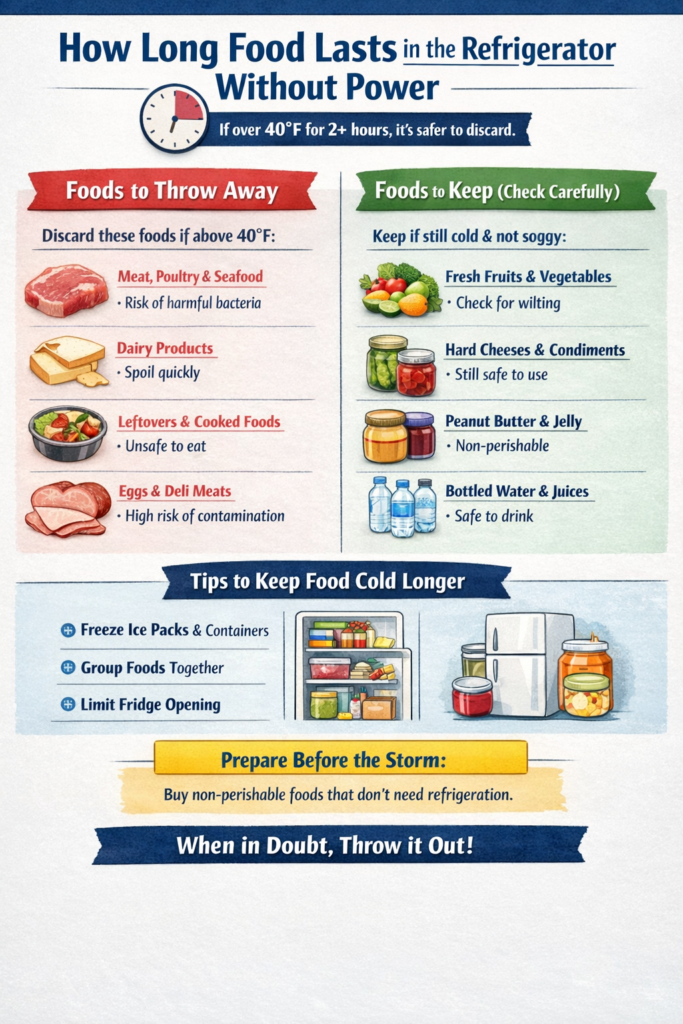
Understanding how long food lasts in the refrigerator without power can help prevent food poisoning and also help you avoid throwing away food that is still safe. The key factors are how long the power is out, how often the refrigerator door is opened, and how full the refrigerator and freezer are.
Planning ahead for power outages and knowing what to do with refrigerated and frozen food is an important part of emergency preparedness and home emergency planning.Power outage food safety is very important during storms and emergencies when electricity may be out for several hours or even days.
How Long Food Lasts in Refrigerator Without Power During a Power Outage
In general, a refrigerator will keep food cold for about 4 hours if the door remains closed. After that, the temperature inside the refrigerator begins to rise, and some foods may no longer be safe to eat.
A full freezer will keep food frozen for about 48 hours, while a half-full freezer will keep food frozen for about 24 hours, as long as the door remains closed.
The most important rule during a power outage is keep refrigerator and freezer doors closed as much as possible. Every time the door is opened, cold air escapes and the temperature rises faster.
Power Outage Food Safety: How to Keep Food Cold Longer
During a power outage, the biggest concern with refrigerated food is bacteria growth. When food is kept above 40°F for several hours, bacteria can grow quickly and make food unsafe to eat even if it looks and smells normal.
Foods that should be thrown away if the refrigerator temperature rises above 40°F for more than a few hours include:
- Meat
- Poultry
- Fish
- Eggs
- Milk
- Soft cheese
- Cooked leftovers
- Deli meat
- Yogurt
- Cut fruits
- Cut vegetables
- Cooked pasta
- Cooked rice
Understanding power outage food safety can help families avoid food poisoning and prevent unnecessary food waste.
These foods are considered high-risk foods because bacteria grow easily in them when they are not kept cold enough. Eating these foods after they have warmed up can cause food poisoning, stomach illness, or other health issues.
Even if these foods look fine or smell okay, they may still be unsafe because bacteria are not always visible or detectable by smell.
A good rule to remember is:
When in doubt, throw it out.
It is better to lose some food than to risk getting sick.
Foods That Are Usually Safe to Keep
Some foods are more stable and may still be safe after a power outage, especially if the refrigerator door stays closed most of the time.
Foods that are usually still safe include:
- Butter
- Hard cheese
- Uncut fruits
- Uncut vegetables
- Peanut butter
- Jelly
- Bread
- Mustard
- Ketchup
- Pickles
- Vinegar-based sauces
However, you should still check these foods carefully before keeping them. Fruits and vegetables should still feel firm and not soggy or slimy. If fruits or vegetables feel soft, mushy, or have an unusual smell, they should be thrown away.
Hard cheeses are usually safe because they do not spoil as quickly as soft cheeses. Butter is also usually safe because of its fat content. Condiments like mustard, ketchup, and pickles are acidic, which helps prevent bacteria growth.
Always check the texture, smell, and appearance of food before deciding to keep it.
Tips to Keep Food Cold Longer During a Power Outage
There are several things you can do to help keep food cold longer if the power goes out. Many people do not realize that a few small actions can make a big difference in how long food stays cold.
First, keep refrigerator and freezer doors closed as much as possible. Every time the door is opened, cold air escapes and warm air enters, which causes the temperature to rise faster.
If possible, move ice from the freezer into the refrigerator to help keep the refrigerator section colder longer. You can also place frozen water bottles inside the refrigerator to help maintain the temperature.
Another good idea is to group food together in the freezer. A full freezer stays cold longer than an empty freezer because the frozen items help keep each other cold.
You can also use coolers with ice for important items like milk, medication that requires refrigeration, baby formula, or expensive foods you want to save.
Freezing containers or bottles of water ahead of time is very helpful. These frozen bottles act like ice blocks and help keep the freezer cold longer. After the power comes back, the melted water can still be used for drinking.
How to Prepare Before a Power Outage
Many people go grocery shopping when they hear that a storm is coming or when there is a warning about possible power outages. This is very common, but it is important to shop smart so you do not lose a lot of food if the power goes out.
Many people do not think about power outage food safety until the power goes out and they are unsure what food is still safe.
If you are shopping before a storm or possible outage, try to buy foods that do not require a lot of refrigeration. This way, if the power goes out, you will not lose as much food or money.
Good foods to buy before a storm or outage include:
- Canned food
- Peanut butter
- Crackers
- Bread
- Granola bars
- Trail mix
- Nuts
- Shelf-stable milk
- Canned tuna or chicken
- Instant oatmeal
- Dry cereal
- Rice
- Pasta
- Pasta sauce
- Beans
- Soup
- Bottled water
These foods can be eaten without electricity or refrigeration and are great for emergency food supplies.
Before a storm or possible outage, you can also:
- Freeze bottles of water
- Make extra ice
- Turn the refrigerator and freezer to the coldest setting
- Group meat and frozen foods together
- Eat refrigerator food first
- Make sure you have a cooler available
- Check your emergency food supply
- Charge portable phone chargers
Preparing ahead of time can help you avoid losing food and can make a power outage much less stressful.
Food Safety Reminder
During a power outage, it is important to remember that food safety is more important than saving food. Many foods may look and smell fine but can still be unsafe if they have been at warm temperatures for too long.
If you are unsure whether a food is safe to eat, it is best to throw it away. Food poisoning is not worth the risk.
Remember this simple rule:
When in doubt, throw it out.
Understanding how long food lasts in refrigerator without power can help families stay safe during storms, power outages, and emergencies. Learning power outage food safety should be part of every home emergency plan.
Preparing a home emergency kit is also very important so your household is ready for power outages, storms, and other unexpected emergencies. https://everydayanswers.online/build-a-home-emergency-kit/
It is also a good idea to build an emergency food supply with shelf-stable foods that do not require refrigeration. https://everydayanswers.online/?p=44
According to food safety guidelines from the FDA, refrigerated food should be discarded if it has been above 40°F for more than two hours, as bacteria can grow rapidly at this temperature. fda.gov
Final Thoughts
Power outages happen in many areas due to storms, accidents, equipment failure, and other unexpected situations. Knowing how long food lasts in the refrigerator without power can help you make safe decisions about food and avoid getting sick.
The most important things to remember are to keep refrigerator doors closed, use ice and coolers if necessary, and monitor food temperatures if possible. Planning ahead with an emergency food supply and home emergency kit can make power outages much easier to manage and reduce food waste.
Let’s Hear From You
Power outages affect everyone differently depending on where they live and how long the power is out.
We would like to hear from you:
- Have you ever lost a lot of food during a power outage?
- How long was your longest power outage?
- Do you keep coolers or ice ready before storms?
- What foods do you always try to use first when the power goes out?
Sharing your experience may help other families prepare better for future outages.