
Many people believe that saving money means cutting out everything they enjoy, but that approach usually does not last long. The truth is that small everyday changes that save money are often more effective than extreme budgeting because they are easier to maintain over time. Instead of making big sacrifices, small habit changes can slowly reduce spending without making life feel restrictive or stressful.
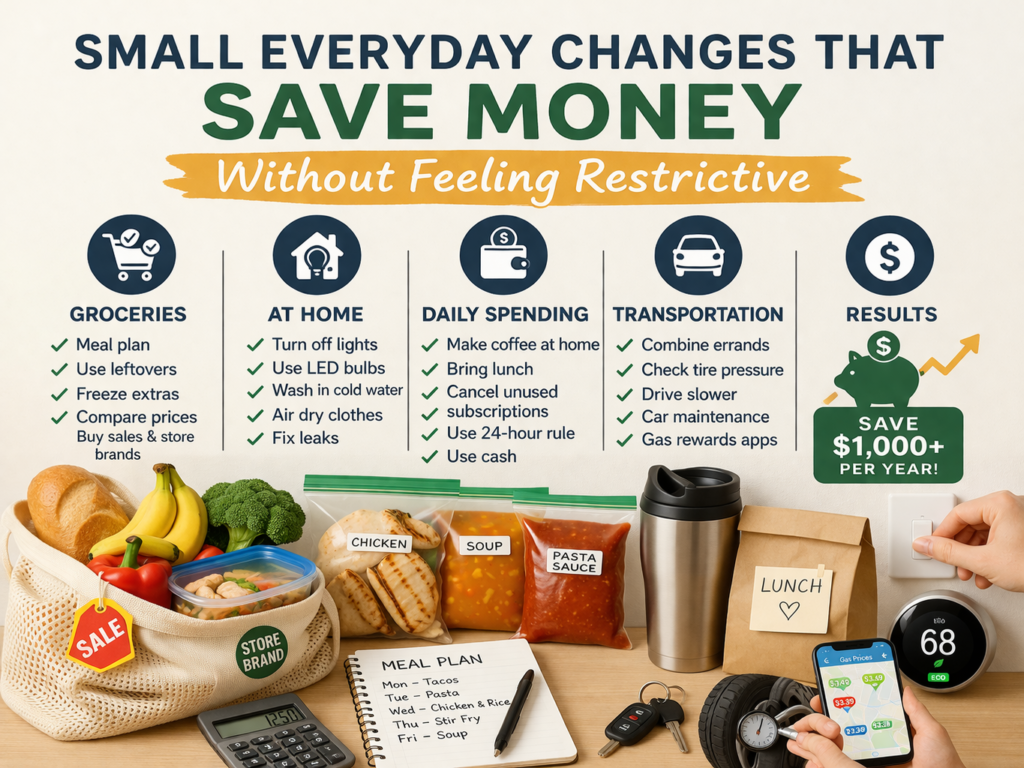
Saving money is often more about daily habits than big financial decisions. Small changes in groceries, utilities, transportation, and spending habits can add up to hundreds or even thousands of dollars saved each year.
Small Everyday Changes That Save Money on Groceries
Do Not Shop When You Are Hungry
Another important tip is not shopping when you are hungry. When people shop while hungry, they tend to buy more snacks, convenience foods, and items that were not on their list. Hunger makes everything look good, and you are more likely to make impulse purchases.
This can easily add an extra $20–$40 to a grocery trip without you even realizing it. A good habit is to eat before going to the grocery store or bring a snack with you. Shopping with a full stomach helps you stick to your grocery list and avoid unnecessary purchases.
Buy Store Brands and Items on Sale
Buying store brands can save money, but not always. The key is to compare the price per ounce or price per unit instead of just looking at the sticker price. Sometimes name brands on sale are actually cheaper than store brands.
Most grocery stores list the unit price on the shelf label. This shows the price per ounce, pound, or item, which makes it easier to compare products. Over time, choosing the lowest unit price instead of the most popular brand can save a lot of money.
Also, when items you regularly use go on sale, consider buying a little extra so you do not have to pay full price later.
Use Leftovers
Using leftovers is another big money saver. Instead of throwing away extra food, plan to use leftovers for lunch the next day or turn them into another meal.
For example:
- Leftover chicken can be used for sandwiches, salads, or pasta
- Leftover rice can be used for fried rice
- Leftover vegetables can be added to soup or omelets
- Leftover pasta can be reheated for lunch
You can also take leftovers to work for lunch and save money instead of buying lunch every day. Throwing away food is the same as throwing away money, so using leftovers is one of the easiest ways to reduce grocery spending.
Freeze Extra Food
If you cook a meal and make extra food, do not throw the food away. Freeze the food so you can eat it later. Many foods freeze very well and can be reheated on busy days when you do not have time to cook.
Foods that freeze well include:
- Cooked chicken
- Ground beef
- Soups
- Rice
- Pasta sauce
- Bread
- Vegetables
- Casseroles
Freezing extra food prevents waste and also gives you quick meals for later, which can help you avoid ordering takeout.
Compare Price Per Ounce or Pound
Do not just grab the first package you see, especially when buying meat, rice, beans, pasta, or other items sold by weight. Many products are priced by weight, and the larger package is often cheaper per pound or per ounce.
For example, two packages of chicken may look similar, but one may cost less per pound even if the total price is higher. Sometimes you need to do a little math to find the better deal, but over time this habit can save a lot of money.
Always look at:
- Price per pound
- Price per ounce
- Price per unit
This is one of the most overlooked small everyday changes that save money.
Plan Meals Before Shopping
Planning meals for the week can save a lot of money because you only buy what you need instead of buying random items that may go bad before you use them.
Before going to the store:
- Decide what meals you will cook for the week
- Check what food you already have at home
- Make a grocery list based only on the meals you will prepare
- Include breakfast, lunch, dinner, and snacks
- Try to use some of the same ingredients for multiple meals
Meal planning reduces food waste, prevents impulse buying, and makes grocery shopping faster and cheaper.
Why Grocery Habits Matter
Groceries are one of the biggest monthly expenses for most households. Making small everyday changes that save money on groceries can reduce your grocery bill without changing what you eat or feeling restricted. The goal is not to buy less food, but to waste less food and shop smarter.
Even saving $20 per week on groceries adds up to over $1,000 per year.
Small Everyday Changes That Save Money at Home
Turn Off Lights When Leaving a Room
Turning off lights when leaving a room may seem like a small thing, but over time it reduces electricity usage and lowers your electric bill. Many people leave lights on in multiple rooms without realizing how long they stay on.
A good habit is to do a quick check before leaving the house or going to bed to make sure lights are turned off in rooms that are not being used. Small habits like this may only save a few dollars per month, but over a year, it adds up.
Use LED Light Bulbs
Switching to LED light bulbs is one of the easiest small everyday changes that save money at home. LED bulbs use less electricity and last much longer than traditional light bulbs.
Even though LED bulbs may cost more at the store, they last for years and use less electricity, which saves money over time. Replacing the most used lights in your home first, like the kitchen and living room, can make the biggest difference.
Wash Clothes in Cold Water
Washing clothes in cold water instead of hot water can save money because heating water uses electricity or gas. Most clothes today can be washed in cold water and still come out clean.
Hot water should really only be used for towels, bedding, or very dirty clothes. For everyday laundry, cold water works well and reduces utility costs over time.
Air Dry Clothes Sometimes
Using the dryer uses a lot of electricity. Air drying clothes once or twice a week can reduce electricity usage and also make clothes last longer.
You can hang clothes on hangers, a drying rack, or even over chairs. Even air drying just heavier items like jeans and towels can help reduce dryer usage.
Fix Water Leaks
A dripping faucet or running toilet may not seem like a big deal, but over time it can waste a lot of water and increase your water bill. Small leaks can also turn into bigger and more expensive problems later.
If you notice a dripping faucet, running toilet, or leak under a sink, fixing it quickly can save money and prevent larger repairs.
Run Dishwasher and Washing Machine Only When Full
Running the dishwasher or washing machine when it is only half full wastes water and electricity. Waiting until you have a full load saves both water and energy.
This is one of the easiest small everyday changes that save money because it does not change your routine very much, but it reduces utility costs over time.
Adjust the Thermostat
Heating and cooling are usually the biggest utility expenses in a home. Adjusting the thermostat a few degrees can make a noticeable difference in your electric or gas bill.
In winter, try lowering the thermostat a few degrees and wearing warmer clothes. In summer, try raising the thermostat a little and using fans. Even a small temperature change can reduce energy costs.
Why Small Changes at Home Matter
Many people try to save money by cutting big things first, but small everyday changes that save money at home are often easier to maintain. Small habits done every day can slowly reduce electricity, water, and energy costs without making your home uncomfortable.
Saving a little on utilities every month can add up to hundreds of dollars saved over a year.
Small Everyday Changes That Save Money on Daily Spending
Make Coffee at Home
Buying coffee every day may not seem expensive at first, but it adds up quickly over time. If someone spends $4–$6 per day on coffee, that could be $120–$180 per month and over $1,500 per year.
Making coffee at home is much cheaper and does not take much time. You can still buy coffee occasionally, but making it at home most days is one of the easiest small everyday changes that save money without feeling restrictive.
Some people also bring coffee in a travel mug so they are not tempted to stop and buy coffee on the way to work.
Bring Lunch Instead of Buying Lunch
Buying lunch at work can be expensive. Even a $10 lunch every weekday is about $200 per month. Bringing lunch from home using leftovers or simple meals can reduce this cost significantly.
For example, you can bring:
- Leftover dinner
- Sandwiches
- Salads
- Pasta
- Rice and chicken
- Fruit and snacks
Bringing lunch even a few days per week instead of every day can save a lot of money over time.
Cancel Unused Subscriptions
Many people have subscriptions they forgot about or do not use often. Streaming services, apps, memberships, and subscription boxes can add up quickly.
Take a few minutes to look at your bank statement or credit card statement and see what subscriptions you are paying for each month. Cancel anything you do not use regularly. Even canceling two or three subscriptions could save $20–$50 per month.
This is one of the easiest small everyday changes that save money because you often do not even miss the subscriptions you cancel.
Use the 24-Hour Rule Before Buying
Impulse purchases are one of the biggest reasons people overspend. The 24-hour rule is simple: if you see something you want but do not need, wait 24 hours before buying it.
Many times, after a day, you will realize you do not actually need the item. This helps reduce impulse spending and unnecessary purchases.
This rule works especially well for:
- Clothes
- Home decorations
- Electronics
- Tools
- Online shopping
- Amazon purchases
Waiting before buying helps you spend more intentionally.
Use Cash for Small Purchases
Using cash instead of a card for small purchases can help control spending. When people use cards, they often spend more because they do not see the money leaving their hands.
If you take out a set amount of cash each week for small purchases like snacks, coffee, or small items, you are more likely to stay within your budget.
Once the cash is gone, you know you have reached your spending limit for the week.
Avoid Impulse Purchases at Stores
Stores are designed to make people buy more than they planned. Items near the checkout area are placed there on purpose to encourage impulse purchases.
A good habit is to ask yourself:
- Do I need this?
- Will I use this?
- Can I wait before buying this?
Even reducing impulse purchases by a few items per week can save a lot of money over time.
Why Daily Spending Habits Matter
Many people think big expenses are the reason they cannot save money, but small daily spending habits often have a bigger impact over time. Buying coffee, snacks, fast food, and impulse items regularly can add up to hundreds of dollars each month.
Small everyday changes that save money on daily spending are often the easiest changes to make because they do not require big lifestyle changes, just better spending habits.
Small Everyday Changes That Save Money on Transportation
Combine Errands Into One Trip
One of the easiest small everyday changes that save money on transportation is combining errands into one trip instead of making multiple trips throughout the week.
For example, instead of driving out separately for groceries, the bank, the post office, and other errands, try to plan one day to do everything in the same trip. This reduces gas usage and also saves time.
Short trips also use more gas because the engine does not have time to warm up and run efficiently. Planning errands together is a simple habit that can reduce fuel costs over time.
Keep Tires Properly Inflated
Many people do not realize that tire pressure affects gas mileage. Tires that are underinflated create more resistance on the road, which makes the car use more fuel.
Checking tire pressure once a month and keeping tires properly inflated can improve gas mileage and make tires last longer. This is a small habit that can save money on both gas and tire replacement over time.
Most gas stations have air pumps, and many newer cars show tire pressure on the dashboard.
Drive Slower and Avoid Rapid Acceleration
Driving fast, braking hard, and accelerating quickly uses more fuel. Driving at a steady speed and accelerating slowly improves fuel efficiency and reduces gas costs.
Using cruise control on highways can also help maintain a steady speed and improve gas mileage.
This does not mean driving extremely slow, but smooth driving saves fuel and reduces wear and tear on the vehicle.
Keep Up With Vehicle Maintenance
Regular vehicle maintenance may seem like an extra expense, but it actually saves money in the long run. Oil changes, tire rotations, brake checks, and fluid checks help prevent major repairs later.
Ignoring small maintenance issues can lead to expensive repairs. Spending a little money on maintenance can prevent spending a lot of money on repairs later.
Taking care of your vehicle is one of the most important small everyday changes that save money on transportation.
Use Gas Rewards and Price Apps
Many gas stations offer rewards programs that give discounts on fuel. Some grocery stores also offer fuel points that can be used for gas discounts.
There are also apps that show gas prices in your area so you can find the cheapest gas nearby. Saving even 10–20 cents per gallon adds up over time.
This is a very easy way to save money without changing your daily routine.
Why Transportation Habits Matter
Transportation is one of the biggest monthly expenses for many households. Gas, maintenance, insurance, and car payments add up quickly. Small everyday changes that save money on transportation can reduce these costs over time without changing your lifestyle too much.
Even small savings on gas and maintenance each month can add up to hundreds of dollars saved over a year.
The Consumer Financial Protection Bureau provides helpful budgeting tools and resources to help families manage expenses and save money. https://www.consumerfinance.gov/
If you are struggling with bills each month, you may also want to read our guide on how to prioritize bills when money is tight so you can organize your expenses better. https://everydayanswers.online/prioritize-bills-when-money-is-tight/
My Final Thoughts – Small Everyday Changes That Save Money
Saving money does not always require big sacrifices or major lifestyle changes. Small everyday changes that save money are often the most effective because they are easy to maintain and become habits over time. The goal is not to stop enjoying life, but to become more aware of spending and reduce waste where possible.
When you combine small savings from groceries, utilities, transportation, and daily spending, the total savings over a year can be very significant. Even small changes like planning meals, turning off lights, bringing lunch to work, and combining errands can lead to noticeable savings over time.
Small habits done consistently often lead to big results. Saving money is not always about making more money, but about managing the money you already have in a smarter way.
Better Engagement Section
Everyone saves money in different ways, and sometimes the smallest habits make the biggest difference over time.
Think about your weekly routine:
- What do you spend money on most often?
- Do you think groceries, gas, or eating out costs you the most each month?
- What is one small habit you could change this week to save money?
- Do you prefer saving money on groceries, utilities, or daily spending?
Sometimes the smallest everyday changes that save money are the ones we do not notice until we look back at the end of the year.