
Bomb Shelters in the US are one of the most searched emergency topics right now, especially by people asking where civilians would actually go if war started.
When people search for Bomb Shelters in the U.S., they are usually asking three things at once: are there public shelters, are there bunkers for civilians, and where would they actually go in a real emergency.
Many people searching for Bomb Shelters in the US are trying to understand what options actually exist for civilians today. When people search about bomb shelters or bunkers in the United States, they’re not just curious—they’re trying to answer a very real question:
“If something actually happened… where would I go?”
It’s a fair question. But the answer isn’t what most people expect.
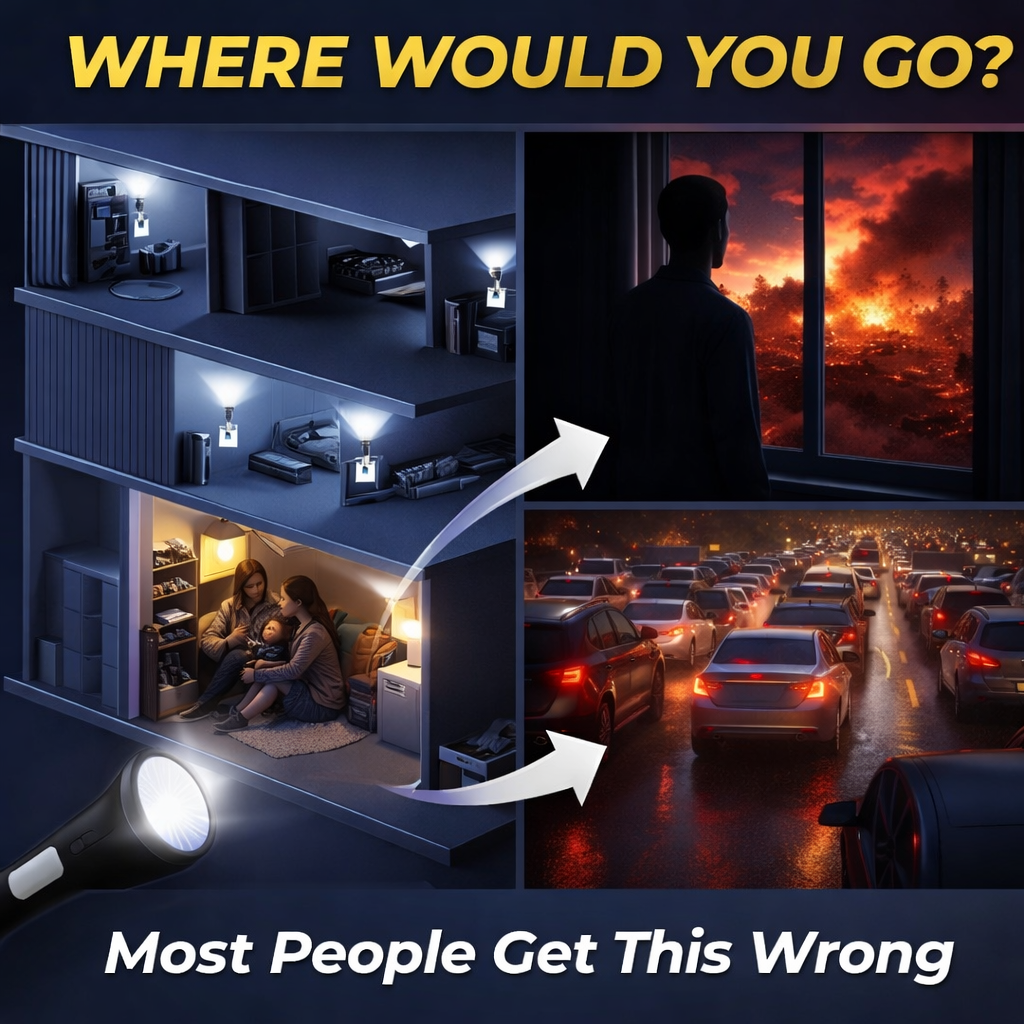
There is a common belief that there are bunkers or shelters available for everyone, and that in an emergency you could simply leave your home and go somewhere safer. The reality is more complicated—and understanding it can change how you prepare and respond.
Bomb Shelters in the US: What People Need to Know
The United States once had a widespread fallout shelter system, especially during the Cold War. At that time, thousands of buildings across major cities were identified as potential shelters, stocked with supplies, and clearly marked with recognizable fallout shelter signs.
These shelters were commonly located in schools, government buildings, and large public facilities, particularly in cities like New York, Baltimore, Boston, and Chicago. The idea was to provide civilians with a place to go in the event of a nuclear emergency.
However, over time, that system faded. Funding was discontinued, supplies were removed or expired, and many of the buildings were renovated or repurposed. Today, while some of those locations may still physically exist, they are generally not maintained, not stocked, and not accessible in any organized or reliable way.
What this means in practical terms is that you should not expect to find a clearly marked, ready-to-use public shelter nearby when you need it. Even if a structure once served that purpose, there is no guarantee it still can.
The truth about Bomb Shelters in the U.S. is that many of the locations people imagine are either outdated, inaccessible, or no longer stocked for civilian use.
Does the U.S. Have Bunkers for Civilians?
The United States does have bunkers, but most of them are not available to the public.
There are highly secure government facilities designed to protect leadership and maintain operations during national emergencies. These locations are built for continuity of government, not for civilian access, and they are strictly restricted.
At the same time, there is a growing private market for bunkers. Some individuals and companies have developed underground shelters, converted missile silos, and even created luxury bunker communities. These spaces are real, but they are privately owned, expensive, and limited in capacity. Access typically requires advance purchase or membership, often at a significant cost.
So while bunkers do exist, the important takeaway is this:
Most people will not have access to one when it matters.
That doesn’t mean you’re without options—it just means your plan needs to be based on what is realistically available to you.
Understanding how Bomb Shelters in the U.S. actually work helps people stop relying on myths and start building a realistic emergency plan.
The reality of Bomb Shelters in the U.S. is very different from what most people expect when they first start researching this topic.
Where Would You Actually Go If Something Happened?
This is where expectations and reality often diverge.
Many people imagine they would leave their home, drive somewhere safer, or try to reach a shelter. Others think they would go upstairs, look out the window, and assess what’s happening. Some want to get in their car immediately and go to family members.
All of these reactions are human—and understandable.
But in real-world emergencies, especially fast-moving ones, those choices can increase risk instead of reducing it.
In most situations, the safest immediate action is to go inside and stay inside, not leave. Being indoors places physical barriers—walls, floors, and structural materials—between you and whatever is happening outside. These barriers help reduce exposure to debris, heat, and other hazards.
If you have a basement, that is typically the safest place in the home because it puts more material between you and the outside environment. If you don’t have a basement, the next best option is an interior room on a lower level, away from windows.
This is where some common thoughts need to be addressed directly.
Staying upstairs might feel safer because you can see what’s happening, but visibility comes with exposure. Windows are one of the weakest parts of any structure. In an emergency, they can shatter, allow debris inside, and increase your risk. Being higher up also means you are closer to external forces that can affect the structure.
Bathrooms are often considered a safe place because they are small and enclosed, and sometimes located in the center of the home. That can be true—but only if the bathroom is not on an exterior wall or top floor. Again, it’s not just the room—it’s the location within the structure.
The instinct to leave and drive to loved ones is one of the strongest reactions people have. But when many people act on that instinct at the same time, roads quickly become congested. Traffic slows or stops, accidents increase, and you can end up stuck in an exposed environment without protection. In those moments, being in a vehicle can be far less safe than being inside a building.
The difficult but important truth is this:
Movement feels like action, but in many emergencies, staying in place is what actually keeps you safer.
What Happens in the First 10 Minutes of an Emergency
Understanding how quickly things change helps explain why these decisions matter.
In the first minute or two, there is usually confusion. Alerts may come through, people check their phones, and there is uncertainty about what is happening. Within a few minutes, people begin reacting—some stay put, others decide to leave immediately.
By the five-minute mark, patterns begin to form. Traffic increases, communication networks start to slow down, and people commit to their decisions. By ten minutes, conditions can already be very different from when the situation began. Roads may be difficult to navigate, reliable information may be limited, and options may be more restricted.
That’s why your first decision matters so much. If you already know where to go and what to do, you don’t lose time trying to figure it out under stress.
What If Communication Systems Go Down?
Another common concern is how to stay informed if phones or the internet stop working.
In many cases, communication doesn’t disappear instantly—it becomes limited. Text messages often still go through when calls don’t. Emergency alerts can still be delivered. Radio broadcasts, especially local and emergency stations, often remain one of the most reliable sources of information.
But there is always the possibility that communication becomes severely limited or unavailable. That’s why preparation matters more than real-time information.
If you have a battery-powered or hand-crank radio, you have a way to receive updates even without power. If you already know your plan—where to go in your home, how to stay safe, and what supplies you have—you don’t need to rely on constant updates to make your first decisions.
In longer situations, information often spreads through local awareness. Neighbors, visible patterns, and community behavior become part of how people understand what’s happening.
The key shift is this:
You don’t depend on information to act—you prepare so you already know how to act.
You can also read our power outage survival guide to understand how to stay safe when electricity and communication systems are down. https://everydayanswers.online/power-grid-failure-preparedness/
Why Preparation Matters More Than Finding a Shelter
At the end of the day, this is where everything comes together.
Searching for a bunker or shelter is less effective than preparing the space you already have. A well-prepared home can provide immediate safety, while searching for an external solution may not be possible when time matters most.
When you build a home emergency kit, you’re not just gathering supplies—you’re giving yourself options during uncertain situations. Water, food, light, communication tools, and basic medical supplies allow you to remain stable during the first critical hours or days. https://everydayanswers.online/?p=931
That preparation is what turns your home into your first and most reliable place of safety.
For most households, learning the reality about Bomb Shelters in the U.S. is less about finding a secret location and more about knowing how to protect your family where you already are.
Reality Check: If Something Happened Tonight
If something unexpected happened tonight, ask yourself:
- Do I know the safest place in my home?
- Do I have basic supplies ready?
- Would I stay, or would I try to leave?
- Would my decision help me—or put me at greater risk?
These are not questions to answer during an emergency. They’re questions to answer now.
Learning the truth about Bomb Shelters in the U.S. can help you make better decisions instead of relying on outdated assumptions.
Let’s Think This Through Together
Before reading this, what did you assume?
Did you believe there were accessible shelters nearby? Would your instinct be to leave or stay? There’s no judgment here—just awareness.
Share your thoughts. This is how people start building better plans.
Share This With Someone You Care About
This isn’t about fear—it’s about understanding reality before it matters.
Send this to someone you care about. It might help them think differently about what they would do.
For official guidance on emergency preparedness, visit the Ready.gov emergency preparedness guide for recommendations on staying safe during different types of emergencies.
The American Red Cross emergency preparedness resources also provide practical steps for building emergency plans and preparing your household.
Preparing also includes financial readiness—our emergency budget plan can help you manage expenses during uncertain times.
What People Are Really Asking
Are there public bomb shelters in the U.S.?
Some still exist, but most are not maintained or accessible.
Can civilians use bunkers?
In most cases, no. Government bunkers are restricted, and private ones require prior access.
Should I leave my home during an emergency?
In many situations, staying indoors is safer than traveling.
What if I can’t get information?
Preparedness reduces your dependence on real-time updates.
What is the safest place in my home?
A basement or interior room away from windows.