
Traveling Internationally Is Different Than Traveling in the U.S.
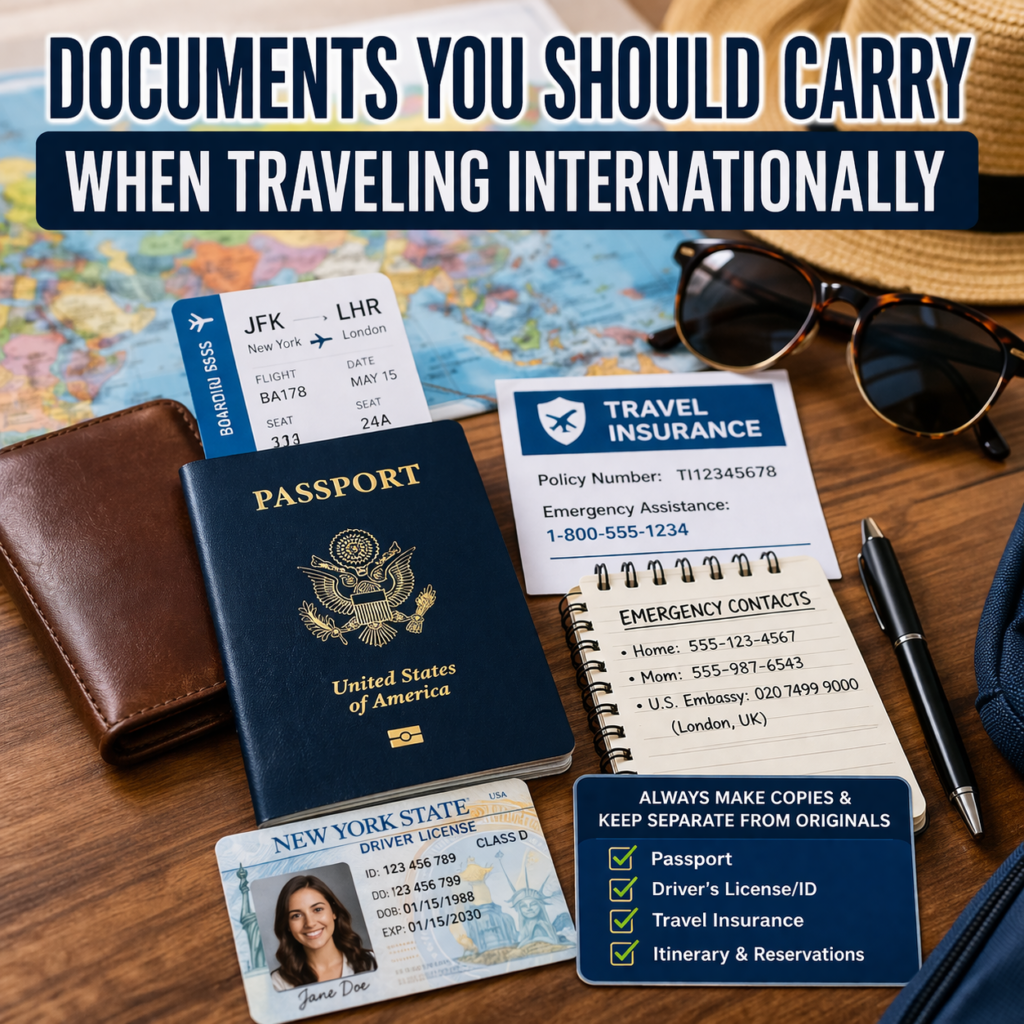
International travel documents are very important when traveling abroad because they help with identification, emergencies, and travel planning.
Many travelers only bring their passport, but there are several important documents you should carry when traveling internationally to avoid serious problems if documents are lost, stolen, or needed in an emergency.
Why International Travel Documents Matter
When planning an international trip, most people focus on flights, hotels, and activities, but many forget which documents you should carry when traveling internationally are just as important as packing clothes. These documents help identify you, protect you in emergencies, and help you return home if something goes wrong. Traveling without proper documentation can create serious problems, especially if documents are lost, stolen, or needed unexpectedly during your trip.
Many travel problems are not caused by flights or hotels. They are caused because people did not have the right documents when they needed them.
Your Passport Is Not the Only Important Document
Most travelers think that as long as they have their passport, they are fine. The passport is very important, but it should not be the only document you carry. If your passport gets lost or stolen and you have no copies, replacing it becomes much more difficult. If your wallet is stolen and you don’t have copies of your cards or identification, accessing your money becomes harder. If you need medical care and you don’t have your insurance information, you may have to pay large amounts upfront.
Travel documents are really about protecting yourself from problems, not just about entering another country.
Copies of International Travel Documents You Should Carry
One of the most important travel habits experienced travelers follow is carrying copies of all important documents. This is something many people forget, but it can save you a lot of stress if something goes wrong.
You should make copies of your passport, driver’s license, travel insurance, flight information, hotel reservations, and credit cards. These copies should not all be in one place. Keep one copy in your carry-on bag, one in your luggage, and one saved in your email or cloud storage. Some people also leave a copy with a family member at home.
If your passport is lost, a copy helps the embassy replace it faster. If your wallet is stolen, a copy of your cards helps you cancel them and request replacements. If your phone dies, printed copies of your reservations help you still check into your hotel or board your flight.
This is one of those small things that seems unnecessary until the moment you actually need it.
Travel Insurance Documents You Should Carry When Traveling Internationally
Many people skip travel insurance because they think nothing will happen. Most of the time nothing happens, but if you get sick or injured in another country, medical treatment can be very expensive and sometimes must be paid before treatment is given.
Travel insurance can help cover medical care, emergency transportation, canceled flights, lost luggage, and other unexpected travel problems. If you do have travel insurance, you should always carry your policy number and the emergency contact phone number with you. If something happens, you don’t want to search through emails trying to find the information.
When traveling internationally, it is better to have this information and not need it than to need it and not have it.
Emergency Information Documents You Should Carry When Traveling Internationally
Another thing many travelers forget is emergency contact information. If something happens to you and someone needs to contact your family, your phone may be locked or dead. Having a small card in your wallet with emergency contact names and phone numbers can be very helpful.
You should also write down the address and phone number of your hotel and the nearest U.S. Embassy or Consulate. If you get lost, lose your phone, or need help, having this information written down makes things much easier.
This is especially important for people traveling alone.
Where to Store Documents You Should Carry When Traveling Internationally
One of the biggest mistakes travelers make is keeping everything in one wallet or one bag. If that wallet or bag is lost or stolen, you lose everything at once — identification, money, cards, and important documents.
A smarter way to travel is to separate things. Keep some cash in your wallet, some in your luggage, and some in a hidden pouch or money belt. Keep one credit card in your wallet and another in your luggage. Keep copies of documents in different places.
This way, if something is lost or stolen, you still have backup money and identification.
Preparing Your Travel Documents Before the Trip
Before traveling internationally, it is a good idea to create a travel document folder. This folder should include your passport, copies of important documents, travel insurance information, flight and hotel confirmations, emergency contacts, and any visa documents if required for the country you are visiting.
Having everything organized before the trip makes traveling much less stressful and helps you avoid last-minute problems at the airport or border.
Travel preparation is not just about packing clothes — it is also about making sure you can handle unexpected situations if they happen.
Before planning your trip, you should also understand travel advisory levels and what they mean for your safety when traveling abroad. https://everydayanswers.online/travel-advisory-rankings-2026/
You can check travel advisories and travel information on the U.S. Department of State website before traveling internationally. https://travel.state.gov
International travel documents should always be prepared before your trip so you do not run into problems at the airport or in another country. Many travelers forget important international travel documents until it is too late, which can cause delays, extra costs, or travel problems. Keeping your international travel documents organized and stored safely will make your trip much easier and less stressful.
Final Thoughts
Most people plan their trips around flights, hotels, and activities, but experienced travelers spend just as much time preparing their documents and emergency information. Travel documents are not exciting to think about, but they can make a huge difference if something goes wrong.
Being prepared does not mean you expect problems — it simply means you are traveling smart and responsibly. A little preparation before your trip can prevent a lot of stress later.
Traveler Discussion Section
For experienced travelers, what is one document or item you always carry when traveling internationally that you would recommend others bring as well?