
Travel advisory rankings 2026 play a critical role in helping U.S. travelers understand which countries pose serious risks and why checking advisories before booking is essential. The travel advisory rankings 2026 provide travelers with important safety guidance when planning trips to different countries around the world.
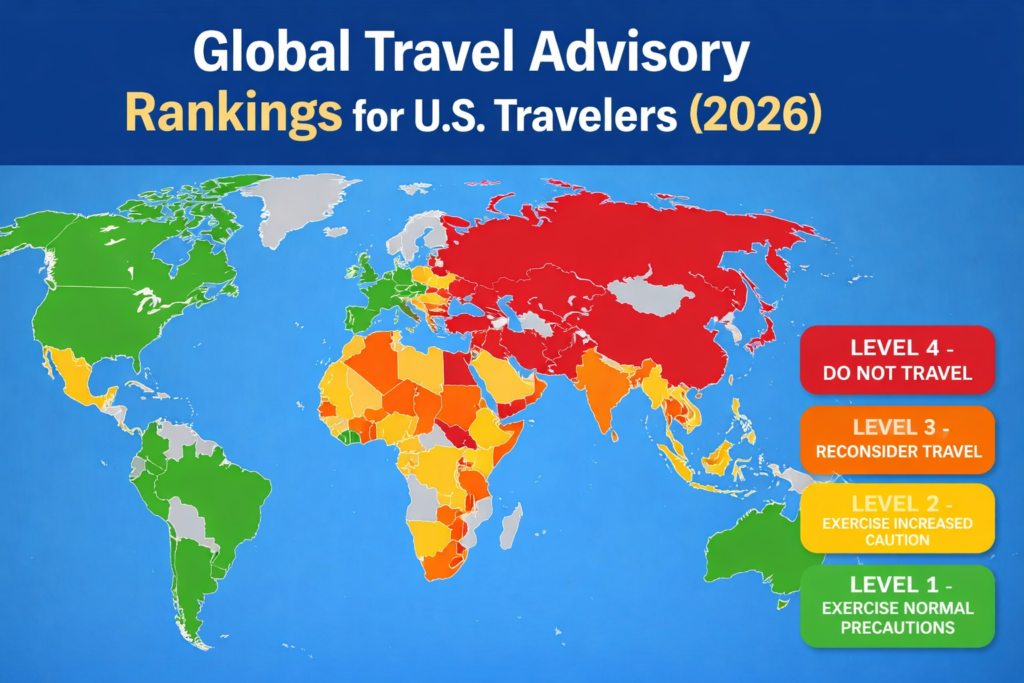
Travel in 2026 looks very different than it did even a few years ago. Between shifting geopolitical risks, changing entry requirements, and updated government advisories, many destinations that were once considered “safe” now carry serious warnings — and some places that never had warnings before are now under high alert.
For Americans planning international travel, understanding current advisory levels is crucial not just for planning, but for safety, insurance coverage, and even the ability to board a plane.
Understanding the Travel Advisory Rankings 2026
This guide breaks down the official U.S. Department of State travel advisory ranks, explains what each level means, lists the most-searched destinations under each advisory, and provides actionable tips you can use before you book.
Understanding the travel advisory rankings 2026 can help travelers evaluate potential risks before booking flights or accommodations.
Note: Travel advisories can change at any time. Always check official travel advisory information before booking or departing.
👉 Official source: U.S. Travel Advisories (Travel.State.Gov) — https://travel.state.gov/en/international-travel/travel-advisories.html
Rank 4 — Do Not Travel (Highest Urgency)
This is the highest risk category.
A Level 4 advisory means the U.S. government strongly advises against travel due to extremely serious risks such as armed conflict, civil unrest, terrorism, kidnapping, or widespread violence.
In many of these destinations, U.S. embassies are closed or operating at a severely limited capacity — meaning Americans may not be able to get help if something goes wrong.
Why Rank 4 Matters
Travelers going to Level 4 countries may face:
- No consular support in emergencies
- Disabled evacuation options
- Travel insurance refusal to cover incidents
- Suspended airline service without notice
Complete Level 4 Country List (2026)
(This is the latest official advisory as of early 2026 — subject to change.)
- Afghanistan
- Belarus
- Burkina Faso
- Burma (Myanmar)
- Central African Republic
- Gaza (Palestinian Territories)
- Haiti
- Iran
- Iraq
- Lebanon
- Libya
- Mali
- Niger
- North Korea
- Russia
- Somalia
- South Sudan
- Sudan
- Syria
- Ukraine
- Venezuela
- Yemen
These are destinations where official guidance is very clear: Do not travel. Even experienced travelers are strongly advised to avoid these countries entirely.
👉 Official U.S. travel advisories can be found here:
🔗 https://travel.state.gov/en/international-travel/travel-advisories.html
Rank 3 — Reconsider Travel (High Caution)
A Level 3 advisory means that while travel isn’t strictly banned, there are serious concerns travelers need to understand before going. This often includes elevated crime, ongoing political tension, health risks, or areas of the country with unpredictable security conditions.
People who decide to travel to Level 3 destinations should have robust travel plans, contingency options, and emergency contacts prepared.
Common Search Destinations with Level 3 Advisories
These are places Americans frequently want to visit — but conditions require caution:
- Pakistan — Risk of terrorism and kidnapping
- Bangladesh (certain regions) — Crime and political demonstrations
- Nepal (specific areas) — Natural disaster potential and health concerns
Note: Some advisories apply regionally, not countrywide — always check detailed maps and state department updates.
What Rank 3 Means for You
Travel here is still possible, but:
- Monitor local news regularly
- Use STEP to receive updates from the U.S. Embassy
- Consider flexible or refundable bookings
- Have clear emergency plans
Rank 2 — Exercise Increased Caution (Moderate Risk)
Destinations in this category are generally popular travel locations and are not considered unsafe overall — but they carry risks that travelers should be aware of.
This often includes higher crime rates, health concerns (like dengue or Zika in some regions), political demonstrations, or areas where safety conditions can change quickly.
Frequently Visited Rank 2 Destinations
These are destinations Americans commonly search or travel to:
- Mexico (national advisory level 2 — certain regions may be higher)
- Brazil
- United Kingdom
- Spain
- Jamaica
- Colombia
These countries welcome American visitors every year, but travelers should know:
- Crime can be higher in certain cities
- Petty theft is common in tourist areas
- Local laws differ from U.S. law
What Rank 2 Means
- Standard safety awareness is recommended
- Know local emergency numbers
- Understand health risks (vaccinations, advisories)
Rank 1 — Exercise Normal Precautions (Lowest Risk)
Rank 1 is the lowest advisory level. These are destinations where the U.S. government has no major safety recommendations or restrictions beyond basic travel awareness.
Popular Rank 1 Destinations
- Canada
- Japan
- Australia
- New Zealand
- Most of Western Europe
These places are often considered routine travel — but normal caution still applies:
- Secure valuables
- Know emergency contact information
- Follow local laws
Why Virus, Conflict & Crime Information Alone Isn’t Enough
Advisory rankings aren’t just about crime or conflict — they reflect:
- U.S. government ability to assist you
- Local medical and hospital infrastructure
- Risk of kidnappings or terrorism
- Likelihood of civil unrest
- How fast you can get help if something goes wrong
For example:
- A destination may have low crime but very limited medical facilities — meaning any emergency could become serious.
- Another place may be politically stable but carjackings are common — affecting personal security.
Understanding the why behind the ranking will help you decide whether travel is right for you.
Passport Rules & What You Must Check Before Booking
A serious travel mistake many people make is not verifying passport requirements before buying plane tickets.
Here’s what you must know:
✔ Passport Validity
Many countries require:
- Your passport be valid for at least 6 months beyond your planned return date
- Blank pages for entry and exit stamps
If your passport expires too soon, you can be denied boarding or entry — even if you meet visa requirements.
✔ New or Updated Entry Requirements
Some destinations that once accepted U.S. passports without a visa now require:
- Visa on arrival
- Electronic Travel Authorization (ETA)
- Proof of onward travel
- Proof of sufficient funds
It’s your responsibility to verify this before booking.
👉 Always double-check passport and entry rules on the official government or embassy site before you buy flights.
Know Where the U.S. Embassy or Consulate Is
Knowing where your closest U.S. diplomatic mission is located can be invaluable in an emergency — but in many high-risk countries, consular services are limited.
Examples:
- Venezuela: The U.S. embassy is not operational — no routine services
- North Korea: No U.S. diplomatic presence
- Syria: Embassy closed due to ongoing conflict
For countries where embassies are present, register with the Smart Traveler Enrollment Program (STEP) so you get alerts and can receive emergency help.
👉 STEP registration: https://step.state.gov
🧳 Travel Insurance: What You Need to Know
Travel insurance is more important than ever — but not all policies cover everything you think they do.
Key Points
By reviewing the travel advisory rankings 2026 before traveling, individuals can make better decisions about safety and preparedness.
- Many insurers exclude Level 4 destinations
- Some will not cover evacuation if advisory levels change
- Medical coverage may be limited if infrastructure is weak
- Choose plans with emergency evacuation and trip cancellation benefits
Compare travel insurance options and read policy details before booking.
(You can link your chosen travel insurance resource here.)
📌 Final Travel Safety Checklist
Before booking any trip:
✔ Check the current travel advisory rank
✔ Verify passport validity requirements
✔ Confirm entry requirements and visas
✔ Know U.S. embassy or consular support availability
✔ Enroll in STEP for updates
✔ Get comprehensive travel insurance
✔ Be prepared to change plans if advisories shift
Remember: Rankings Can Change
This post reflects travel advisories as of early 2026 — but the world changes quickly. Destinations can be downgraded or upgraded with little notice due to:
- Natural disasters
- Political instability
- Health outbreaks
- Security incidents
Make it a habit to check official advisories before booking and again before departure.
Travelers who review the travel advisory rankings 2026 before booking trips can make better decisions about safety and destination planning.
Official travel advisories for U.S. citizens:
https://travel.state.gov/en/international-travel/travel-advisories.html
Before booking your next international trip, travelers should also review our guide on carry-on rules 2026, including updated airline restrictions, prohibited items, and what could cause serious travel delays or removal from a flight. https://everydayanswers.online/carry-on-rules-2026/
Frequently Asked Questions About Travel Advisory Rankings 2026
What are travel advisory rankings 2026?
The travel advisory rankings 2026 provide guidance about the safety of traveling to different countries based on current conditions. These rankings are typically issued by government agencies to inform travelers about potential risks such as crime, civil unrest, natural disasters, or health concerns.
How are travel advisory levels determined?
Travel advisory levels are determined based on multiple factors including political stability, crime rates, health risks, and security threats. Government agencies evaluate these risks and assign advisory levels to help travelers make informed decisions.
Should travelers avoid countries with high advisory levels?
Travelers are strongly encouraged to review travel advisories carefully before visiting countries with higher warning levels. While travel may still be possible in some cases, visitors should take extra precautions and stay updated on the latest safety information.
Where can travelers check official travel advisories?
Travelers can review official travel advisories from government sources such as the U.S. Department of State travel advisory website, which provides regularly updated information on safety conditions around the world.
What Do You Think About the Travel Advisory Rankings 2026?
Have you checked the latest travel advisories before planning your trips?
Share your thoughts or experiences in the comments below.
Your insights may help other travelers better understand potential risks and make safer travel decisions.