
When money is tight and you are living on one income, paying bills can become stressful very quickly. Many people feel overwhelmed and don’t know which bills to pay first, which ones can wait, and how to avoid late fees or service interruptions. Learning how to prioritize bills when money is tight can help you stay organized, reduce stress, and make sure your basic needs are always covered first.
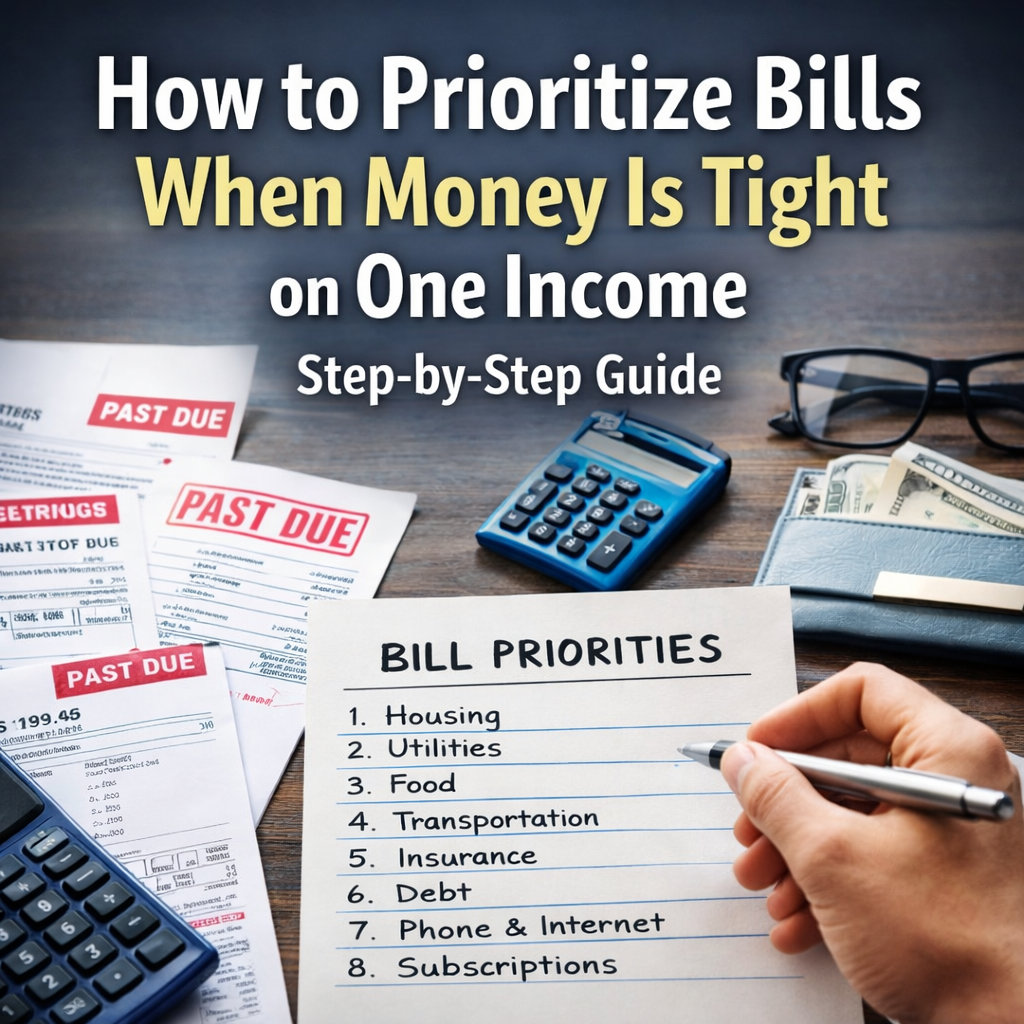
The most important thing to remember is that not all bills are equal. Some bills protect your home, your transportation, and your basic living needs, while others can be delayed or negotiated if necessary.
How to Prioritize Bills When Money Is Tight
Learning how to prioritize bills when money is tight can help families avoid late fees, service interruptions, and unnecessary stress. When income is limited, having a clear plan for which bills to pay first is very important.
Many people panic when money is tight, but if you prioritize bills when money is tight correctly, you can protect your housing, utilities, and transportation first before worrying about other expenses.
The goal when you prioritize bills when money is tight is to protect your basic needs first and then work on debt and other expenses later.
Step 1: Cover the Four Basic Needs First
When prioritizing bills when money is tight, always start with the bills that protect your basic needs. These should always come before credit cards, subscriptions, or other non-essential expenses.
Your basic needs include:
- Housing (rent or mortgage)
- Utilities (electric, water, gas)
- Food
- Transportation (car payment, gas, bus pass)
- Insurance (car insurance, health insurance)
If these are not paid, it can affect your ability to live, work, and take care of your family.
Step 2: Pay Housing First
Housing should always be your number one priority. Whether you rent or have a mortgage, keeping a roof over your head must come before everything else.
Missing a credit card payment may affect your credit score, but missing rent or a mortgage payment could put you at risk of eviction or foreclosure. If you are struggling, contact your landlord or mortgage company early. Many companies offer hardship programs or payment arrangements.
Step 3: Pay Utilities Next
After housing, utilities should be next on your list. This includes:
- Electricity
- Water
- Gas
- Trash
- Internet (if needed for work)
- Phone
If money is tight, call the utility company before the bill is due. Many companies offer payment plans, extensions, or assistance programs.
Step 4: Transportation Comes Next
Transportation is important because it allows you to get to work, buy groceries, and handle daily responsibilities. This includes:
- Car payment
- Car insurance
- Gas
- Public transportation
Without transportation, it becomes harder to earn income, so these bills should be high priority.
Step 5: Minimum Payments on Debt
Once your basic living expenses are covered, try to make at least the minimum payments on:
- Credit cards
- Personal loans
- Student loans
- Medical bills
If you truly cannot pay, call the lender and ask for hardship options. Many lenders will work with you if you contact them before missing payments.
Step 6: Cut Non-Essential Expenses Immediately
When prioritizing bills when money is tight, it is important to temporarily cut non-essential spending such as:
- Streaming services
- Subscriptions
- Eating out
- Shopping
- Gym memberships
- Entertainment
- Premium phone plans
These small expenses can add up quickly and may be the difference between paying an important bill or falling behind.
Simple Bill Priority Order
When money is tight, use this order to decide what to pay first:
- Rent or Mortgage
- Electricity, Water, Gas
- Food and Groceries
- Transportation and Gas
- Insurance
- Minimum Debt Payments
- Phone and Internet
- Subscriptions and Entertainment
This order helps protect your home, your job, and your basic living needs first.
The Consumer Financial Protection Bureau provides helpful budgeting tools and advice for managing bills and expenses.https://www.consumerfinance.gov/
You can also reduce financial stress by learning how to save money on groceries and household expenses. https://everydayanswers.online/save-money-on-groceries/
Final Thoughts
Learning how to prioritize bills when money is tight is not about being perfect with money. It is about making sure the most important things are covered first so you can stay stable during difficult financial periods. Many people go through times when money is tight, and having a plan for which bills to pay first can make a big difference.
Start with housing, utilities, food, and transportation, then work your way down the list. Even small changes and careful planning can help you get through difficult financial times.
When money gets tight, what bill do you worry about the most each month?