
An emergency kit for pets is something many pet owners do not think about until an emergency actually happens. During power outages, storms, evacuations, road trips, or unexpected emergencies, people often prepare supplies for themselves but forget that their pets also depend completely on them for food, water, and safety.
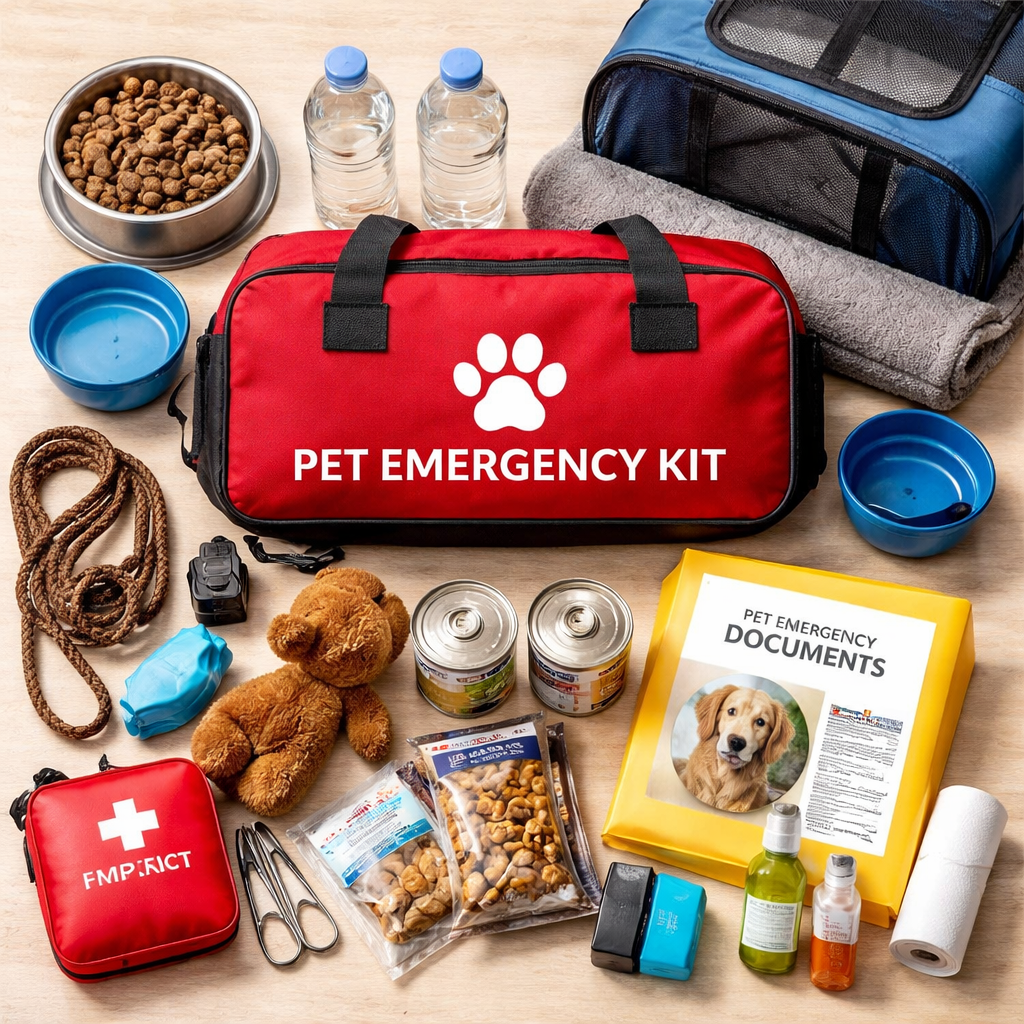
Preparing an emergency kit for pets ahead of time can make a stressful situation much easier. If you need to leave your home quickly, if stores are closed, or if you are stuck without electricity for several days, having pet supplies ready in one place will help you take care of your pets without panic or last-minute shopping.
The goal of a pet emergency kit is not to buy everything at once, but to slowly gather the supplies your pet would need for several days if normal routines were interrupted.
Preparing an emergency kit for pets ahead of time removes a lot of stress because you are not scrambling to pack bowls, food, medications, and paperwork at the last minute.
Why Every Pet Owner Should Have an Emergency Kit for Pets
Many emergencies happen without much warning. Power outages, severe weather, road closures, flooding, winter storms, and evacuations can all affect your ability to buy pet food or access supplies.
An emergency kit for pets helps in situations like:
- Power outages
- Severe storms
- Evacuations
- Road trips and travel delays
- Camping trips
- Moving or temporary housing
- Supply shortages
- Veterinary emergencies
- Being stuck away from home longer than expected
Pets are part of the family, and preparing an emergency kit for pets is just as important as preparing a home emergency kit or car emergency kit.
What to Put in an Emergency Kit for Pets
When building an emergency kit for pets, think about what your pet would need for at least 3 to 7 days if you could not get to a store right away or had to leave home quickly. The goal is to have your pet’s supplies ready ahead of time so you are not trying to gather food, water, medication, and paperwork in the middle of a stressful situation.
It is also important to remember that the water you store for your pets should be separate from the water you store for the people in your household. Do not count your pet’s water as part of your family’s drinking water supply. Pets need their own emergency water, and larger dogs especially can go through water quickly. If you have multiple pets, make sure you store enough water specifically for them.
A simple way to stay organized is to keep your pet supplies together in one container, tote, or bag that is easy to grab if you need to leave quickly.
Food and Water
Start with the basics: food and water. These are the items your pet depends on most, and they should always be the first things added to an emergency kit for pets.
Include:
- Pet food for several days
- Bottled water stored specifically for your pets
- Collapsible food and water bowls
- Treats
- Manual can opener if your pet eats canned food
The water stored in your pet emergency kit should be for pets only, not shared with the household supply for people. This helps you avoid running short during an emergency.
Pet food should also be rotated regularly so it stays fresh and does not expire. A very easy way to manage this is to add a reminder in your phone calendar. When you place food into the emergency kit, make a note of the date and schedule a reminder for 3 to 6 months later, depending on the type of food and its shelf life. When that reminder comes up, check the food, rotate it, and replace it with fresh supplies. This keeps the emergency kit ready without having to guess when something was last updated.
This small step can save money, reduce waste, and help you avoid discovering expired pet food during an actual emergency.
Health and Medical Items
Your pet emergency kit should also include health and medical items that would be difficult to replace quickly in a stressful situation.
Include:
- Copy of vaccination records
- List of medications
- Pet medications
- Flea or tick medication if needed
- Pet first aid supplies
- Contact information for your veterinarian
- Emergency vet clinic information
- Pet microchip information
- Recent photo of your pet
A very good way to keep these papers protected is to place them in a clear resealable folder or waterproof document sleeve. That makes them easier to find quickly and protects them from spills, dirt, and bad weather. You can also keep copies of these pet documents with your family emergency paperwork so everything important is in one place.
This kind of organization helps reduce stress during an emergency. When supplies and documents are already packed and easy to find, you are less likely to forget something important. In stressful moments, people often rush, and that is when medication, paperwork, or pet identification can get missed or left behind. Preparing these items ahead of time makes it much easier to leave quickly and stay focused.
Comfort and Safety Items
During emergencies, pets often become anxious because their routine changes and they may not understand what is happening. That is why comfort items matter just as much as food and paperwork.
Include:
- Blanket
- Favorite toy
- Leash
- Harness
- Collar with ID tag
- Pet carrier or crate
- Waste bags
- Litter and litter box for cats
- Paper towels
- Cleaning wipes
These items help pets feel more secure and also make it easier for you to care for them if you are away from home, staying with family, or in temporary housing.
Travel and Evacuation Items
If you ever need to leave your home quickly, travel during an emergency, or stay somewhere temporarily with your pets, having travel items already packed will make everything much easier. Many people think about food and water but forget that traveling with pets requires additional supplies to keep them safe, clean, and comfortable.
When preparing an emergency kit for pets, think about what would happen if you had to leave your home for a few days and stay with family, in a hotel, or at a temporary shelter. Your pet will still need their routine items.
Include travel and evacuation items such as:
- Pet carrier or crate
- Extra leash
- Portable water bowl
- Extra food
- Blanket or towel
- Waste bags
- Cleaning wipes
- Paper towels
- Small litter container for cats
- Pet seat cover or old towel for the car
- Favorite toy to reduce stress
If your pet is not used to traveling, emergencies can be very stressful for them. Having their blanket, toy, or bed can help them feel more comfortable in a new environment.
If you travel often with your pets, you may want to keep a small version of your emergency kit for pets in your vehicle. This can include water, a collapsible bowl, leash, waste bags, and a small amount of food. This is helpful not only during emergencies but also during long drives, road trips, camping trips, or unexpected travel delays.
Being prepared ahead of time means you will not have to search the house for pet supplies if you need to leave quickly. Everything will already be packed and ready to go.
Where to Store Your Emergency Kit for Pets
Your emergency kit for pets should be stored in a place where it is easy to access quickly. Good locations include a closet, laundry room, storage bin near your home emergency kit, or near the garage door if you may need to leave quickly.
Some families keep two emergency kits for pets:
- One at home
- One small kit in the car
This is very helpful if you travel with your pets often or take them camping, hiking, or on long road trips.
Make sure everyone in the household knows where the emergency kit for pets is stored so it can be grabbed quickly if needed.
How Often to Check Your Pet Emergency Kit
An emergency kit for pets should be checked every few months.
Things to check:
- Replace expired food
- Replace expired medications
- Update vaccination records
- Make sure leash and collar still fit
- Replace water bottles
- Update vet contact information
- Update pet photos
Pets grow, medications change, and supplies expire, so checking the kit regularly is important.
Build Your Emergency Kit for Pets Slowly
You do not need to build a complete emergency kit for pets in one day. You can build it slowly.
For example:
- Week 1: Extra pet food and water
- Week 2: Leash, waste bags, bowls
- Week 3: Copies of vet records and documents
- Week 4: Blanket, toy, carrier
- Week 5: Cleaning supplies and extra towels
After a few weeks, you will have a complete emergency kit for pets ready to go.
Let’s Hear From Pet Owners
Many pet owners prepare emergency kits differently depending on where they live and the types of emergencies they experience. Some people prepare for storms, others prepare for power outages, travel delays, or camping trips with pets.
We would like to hear from you:
- Do you already have an emergency kit for your pets?
- What is the most important item you keep for your pet in an emergency?
- Have you ever had to use your pet emergency kit before?
- Is there something you would add that most people forget?
Sharing ideas can help other pet owners better prepare for emergencies and keep their pets safe.
The Federal Emergency Management Agency (FEMA) also recommends that pet owners prepare an emergency kit with food, water, medications, and pet records in case of evacuation or emergencies. fema.gov
The ASPCA recommends keeping pet medical records, identification, and several days of food and water stored in a pet emergency kit at all times. aspca.org
In addition to preparing an emergency kit for pets, it is also important to have a home emergency kit so your entire household is prepared for power outages and emergencies. https://everydayanswers.online/build-a-home-emergency-kit/
Final Thoughts
Preparing an emergency kit for pets is one of the most responsible things a pet owner can do. Emergencies and unexpected situations happen, and pets rely completely on their owners for food, water, safety, and comfort. Having a pet emergency kit ready means you will not have to rush to stores, search for supplies, or worry about forgetting something important.
A small amount of preparation now can make a very big difference during an emergency. Start small, build your kit over time, and keep everything organized so you and your pets are prepared for whatever unexpected situation may happen.