
DIY all purpose cleaner is one of the easiest and cheapest cleaning products you can make at home. Many store-bought cleaners are expensive and contain strong chemicals, but a DIY all purpose cleaner can clean most surfaces just as well using simple household ingredients. Making your own cleaner can save money, reduce chemicals in your home, and allow you to control what ingredients you use.
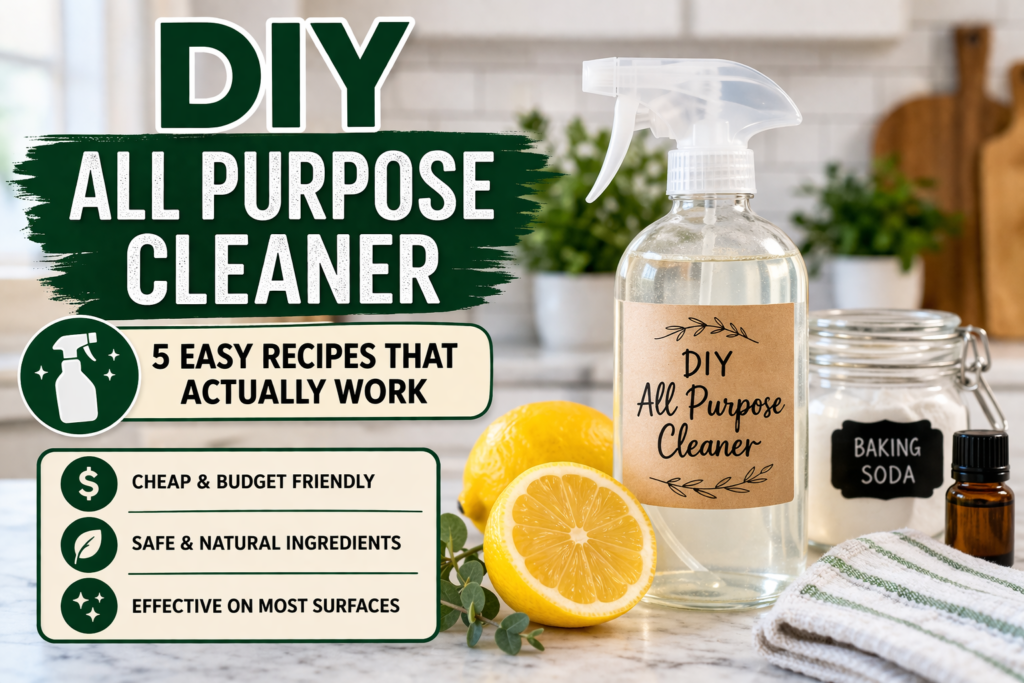
Many people start making their own cleaning products once they realize how much money they spend on cleaners every month. A good DIY all purpose cleaner can be used on kitchen counters, tables, appliances, bathroom surfaces, doors, baseboards, and many other areas around the house.
Why Make a DIY All Purpose Cleaner
There are several reasons why people switch to a DIY all purpose cleaner. One of the biggest reasons is cost. Store-bought cleaners can cost several dollars per bottle, and most households go through multiple bottles per month. Homemade cleaners cost much less because they use ingredients like vinegar, water, lemon, and baking soda.
Another reason is controlling chemicals. Some people prefer not to use strong chemical cleaners around children or pets. A DIY all purpose cleaner allows you to use simple ingredients that still clean effectively.
Making your own cleaner also means you never run out. Most of the ingredients are things you already have at home.
Basic DIY All Purpose Cleaner Recipe
One of the easiest DIY all purpose cleaner recipes uses just vinegar and water. Vinegar is very good at cutting grease, removing odors, and cleaning many surfaces.
To make a basic cleaner, mix equal parts white vinegar and water in a spray bottle. Shake the bottle before using and spray on surfaces like countertops, tables, sinks, and appliances. Wipe with a cloth or paper towel.
This basic cleaner works well for everyday cleaning and is one of the most common homemade cleaning solutions.
Lemon DIY All Purpose Cleaner
If you do not like the smell of vinegar, lemon is a great alternative. Lemon helps cut grease and leaves a fresh smell. Here are the products needed:
Ingredients:
- 1 cup white vinegar
- 1 cup warm water
- 1 teaspoon dish soap
- 10–15 drops essential oil (optional)
You can make a lemon DIY all purpose cleaner by mixing water, a small amount of vinegar, and lemon juice in a spray bottle. Some people also place lemon peels in vinegar for a few days before mixing with water to create a citrus cleaner.
This cleaner works very well in kitchens because it helps remove grease and food residue.
Baking Soda Cleaning Solution
Baking soda is not usually used in a spray bottle, but it works very well as a scrubbing cleaner. You can sprinkle baking soda on sinks, bathtubs, stovetops, and other surfaces that need scrubbing.
Ingredients:
- Spray bottle
- Baking SOda
- cup warm water
- 1 teaspoon dish soap
When combined with a DIY all purpose cleaner spray, baking soda can help remove tough stains and grease buildup.
Alcohol-Based DIY All Purpose Cleaner
For surfaces that need disinfecting, you can make a DIY all purpose cleaner using rubbing alcohol, water, and a few drops of dish soap. This type of cleaner dries quickly and works well on glass, mirrors, and high-touch surfaces.
Ingredients:
- Spray Bottle
- Rubbing Alcohol
- Dish Soap
This cleaner is useful for doorknobs, light switches, phones, and other surfaces that are touched often.
Surfaces You Can Clean With DIY All Purpose Cleaner
A DIY all purpose cleaner can be used on many surfaces around the house, including:
- Kitchen counters
- Tables
- Appliances
- Bathroom counters
- Sinks
- Doors
- Baseboards
- Cabinets
- Tile
- Trash cans
- Outdoor furniture
Always test on a small area first, especially on wood or stone surfaces.
Surfaces You Should Not Use Vinegar On
Even though a DIY all purpose cleaner is very useful, vinegar should not be used on certain surfaces such as:
- Granite
- Marble
- Stone countertops
- Hardwood floors
- Waxed surfaces
- Electronics screens
Vinegar can damage some surfaces over time, so it is important to know where not to use it.
How Much Money You Can Save Making Your Own Cleaner
Many people do not realize how much money they spend on cleaning products each year. If a bottle of cleaner costs $4 and you buy several bottles per month, the cost adds up quickly.
A DIY all purpose cleaner made from vinegar and water costs only a few cents per bottle. Over a year, this can save a significant amount of money, especially for larger households.
Making your own cleaning products is one of the easiest ways to reduce household expenses.
Tips for Using DIY Cleaners
When using a DIY all purpose cleaner, it is helpful to label your bottles so you know what mixture is inside. It is also a good idea to keep separate bottles for kitchen, bathroom, and glass cleaning.
Use microfiber cloths when possible because they clean better and can be reused many times, which saves money on paper towels.
You can also read our guide on DIY Air Freshener – 5 Easy Homemade Air Fresheners That Smell Amazing to find more ways to reduce household expenses. https://everydayanswers.online/?p=1116
You can learn more about safe household cleaning ingredients on the Environmental Protection Agency website. EPA.gov
Final Thoughts
Making a DIY all purpose cleaner is simple, inexpensive, and very effective for everyday cleaning. Once you start making your own cleaning products, you may realize you do not need to buy as many store cleaners as before. This can save money, reduce chemicals in your home, and make cleaning supplies easier to manage.
A DIY all purpose cleaner is a great place to start if you want to make your own household products and reduce expenses at the same time.
Common Questions About DIY All Purpose Cleaner
Is DIY all purpose cleaner safe for kitchens?
Yes, most homemade cleaners using vinegar, lemon, or mild soap are safe for kitchen surfaces.
Does vinegar disinfect?
Vinegar can kill some bacteria but not all germs, so alcohol-based cleaners are better for disinfecting.
How long does homemade cleaner last?
Most DIY cleaners last several weeks to a few months depending on ingredients.
Can I add essential oils?
Yes, many people add lemon, lavender, or tea tree oil for scent.
Reader Discussion
Do you currently make any DIY cleaning products at home, or would you consider switching to homemade cleaners to save money and reduce chemicals in your home?