
Have you ever left the potato salad out “just for a little while longer” at a summer cookout?
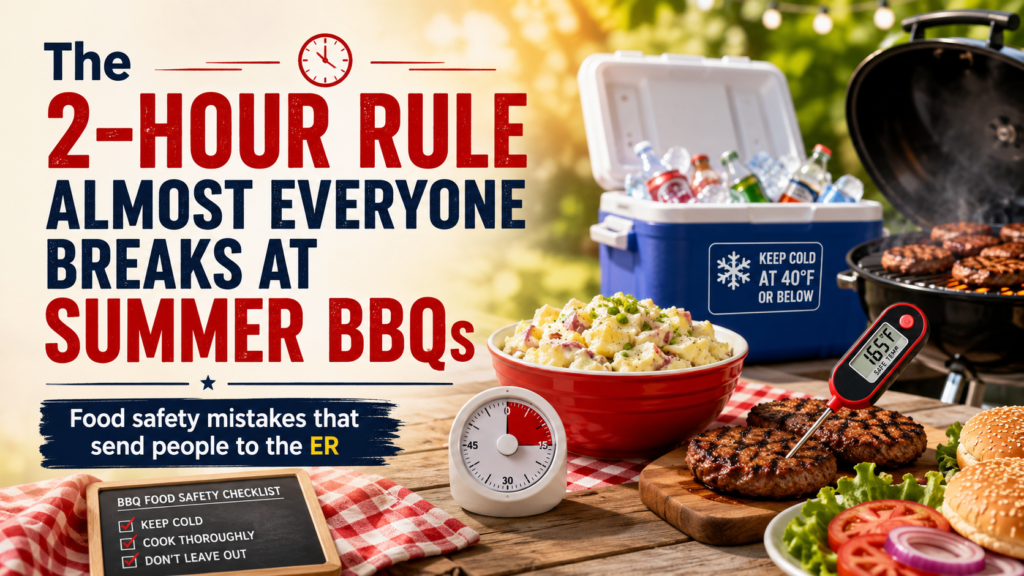
Summer BBQ food safety matters more than most people realize, especially when dishes like potato salad, burgers, deviled eggs, and dairy-based dips sit outside in the heat.
Have you ever left the potato salad out “just for a little while longer” at a summer cookout?
Most of us have. And most of the time, nothing happens, which is exactly why this mistake keeps happening every single summer at backyard gatherings, picnics, and holiday cookouts. The problem is that “most of the time” is not “every time,” and foodborne illness cases become a bigger concern in the summer because it is so easy to break the rules without realizing it.
With July 4th approaching — one of the biggest cookout days of the year — this is exactly the right week to talk about what actually keeps food safe outdoors in summer heat, and what’s quietly putting your guests at risk.
FREE DOWNLOAD: The Summer Cookout Food Safety Card
A printable reference card with every safe temperature, time limit, and storage rule in this post — perfect to keep near your grill or cooler all summer. https://everydayanswers.online/wp-content/uploads/2026/06/Summer-Cookout-Food-Safety-Card.pdf
Why Summer BBQ Food Safety Matters So Much
Bacteria that cause foodborne illness multiply fastest between 40°F and 140°F — a range food safety experts call the “danger zone.” The hotter the ambient temperature, the faster bacteria multiply within that zone, and the shorter the window before food becomes genuinely risky.
At a typical summer cookout, with air temperatures of 90°F or above, food spends far less time being safe than most people assume — which is exactly why the rule below exists, and exactly why most people unknowingly break it.
The Summer BBQ Food Safety Rule Most People Break
The standard rule: Perishable food should not sit at room temperature for more than 2 hours total — including the time it takes to prepare, serve, and have people eat from the spread.
The rule that changes in summer: When the outdoor temperature is above 90°F — which describes most July and August afternoons across the country — that window drops to just 1 hour.
This means the potato salad, the deviled eggs, the burgers sitting out while everyone socializes — all of it is on a much shorter clock than most people realize once the temperature climbs.
What to do about it: Set a timer when food comes out. Genuinely. It sounds excessive, but it’s the only reliable way to track this across a multi-hour gathering where everyone loses track of when things were actually set out.
The Foods Most Likely to Cause Problems
Not all cookout foods carry equal risk. These are the specific categories where most foodborne illness at summer gatherings actually originates:
Mayonnaise-based salads — potato salad, macaroni salad, coleslaw with mayo dressing, egg salad. These are blamed disproportionately, though the mayo itself is rarely the actual culprit (commercial mayonnaise is acidic enough to inhibit bacterial growth on its own) — the real risk is the other ingredients (potatoes, eggs, pasta) sitting in the danger zone alongside it.
Ground meat dishes — burgers and any ground meat carry higher risk than whole cuts because grinding mixes any surface bacteria throughout the meat. This makes thorough, verified cooking temperature especially important.
Poultry — chicken and turkey require higher safe internal temperatures than beef, and outdoor grilling makes it notoriously easy to char the outside while leaving the inside undercooked.
Dairy-based dips and desserts — cream-based dips, cheesecakes, and anything with dairy left unrefrigerated develops bacterial risk quickly in heat.
Summer BBQ Food Safety Temperatures You Should Know
This is the single biggest gap between what people think they know and what’s actually true. Color and time on the grill are not reliable indicators of safety — internal temperature is.
Ground beef, pork, lamb, veal: 160°F Whole cuts of beef, pork, lamb, veal (steaks, roasts): 145°F, with a 3-minute rest Ground poultry (turkey burgers, chicken burgers): 165°F Whole poultry, chicken breasts, chicken thighs: 165°F Fish: 145°F, or until flesh is opaque and separates easily Hot dogs: 165°F, or until steaming hot if previously cooked
A reliable instant-read meat thermometer YOUR AMAZON AFFILIATE LINK is the single most useful $15 tool for cookout food safety. Cutting into meat to “check if it’s done” by color is not reliable — pink can persist safely in some properly cooked meats, while gray coloring can appear in meat that’s still undercooked.
Cooler Safety Tips for Summer BBQ Food Safety
If you’re transporting food to a picnic or someone else’s cookout, your cooler is doing critical food safety work — and most coolers are set up wrong.
Pack your cooler with a 2:1 ratio of ice to food — most people use far less ice than this, which means the cooler interior temperature climbs faster than expected.
Use a separate cooler for drinks — this is the single most effective trick for keeping your food cooler cold, because the food cooler doesn’t get opened and closed every five minutes as people grab drinks, which is the main way cold air escapes.
Keep the cooler in shade, not in a hot car trunk or direct sun — obvious in theory, frequently ignored in practice when people are setting up.
Use a thermometer inside the cooler — your cooler should maintain 40°F or below. A simple appliance thermometer left inside tells you definitively, rather than guessing based on how cold it feels when you open the lid.
Summer BBQ Food Safety Mistakes That Cause Cross-Contamination
Use separate platters for raw and cooked meat — the same platter that carried raw chicken to the grill should never be the platter that carries the cooked chicken back, unless it’s been thoroughly washed in between. This is one of the most common — and most preventable — outdoor cooking mistakes.
Wash hands or use hand sanitizer between handling raw meat and touching anything else — at an outdoor gathering without easy sink access, keep hand sanitizer at the grill station specifically for this purpose.
Keep raw meat marinades separate from any marinade used for basting cooked food — if you want to use marinade for basting during cooking, set aside a separate portion before raw meat ever touches it, or boil the used marinade before reusing it as a sauce.
Summary
- The 2-hour rule for food at room temperature drops to 1 hour when it’s above 90°F
- Mayo-based salads, ground meat, poultry, and dairy desserts carry the highest real risk
- Internal temperature — not color or grill time — is the only reliable safety check
- Pack coolers with a 2:1 ice-to-food ratio and keep a separate cooler for drinks
- Never reuse the same platter for raw and cooked meat
- Download the free Summer Cookout Food Safety Cardhttps://everydayanswers.online/wp-content/uploads/2026/06/Summer-Cookout-Food-Safety-Card.pdf
According to the USDA, perishable foods should not be left out for more than 2 hours, or more than 1 hour when the temperature is above 90°F, because bacteria can grow quickly in the danger zone between 40°F and 140°F.
Your Turn
Have you ever found out later that something sat out too long at a gathering? Drop a comment — these stories are genuinely useful for everyone reading, because they make the abstract rule feel real.
And please share this post before your next cookout — especially with whoever is hosting July 4th this year. A five-minute read now could prevent a genuinely unpleasant week for everyone who shows up.
Share this post | Download the safety card | Subscribe for weekly kitchen tips
FAQ
Is it really necessary to use a meat thermometer? I’ve grilled for years without one. Years without an incident doesn’t mean the food was always at a safe temperature — it often means you got lucky, or the bacterial load happened to be low enough that time. A $15 thermometer removes the guesswork entirely and takes seconds per piece of meat.
How long can food stay in a properly packed cooler? A well-packed cooler (2:1 ice to food ratio, kept in shade, opened minimally) can maintain safe temperatures for 4-6 hours in hot weather, sometimes longer with high-quality coolers and dry ice. Check with a thermometer rather than assuming based on time alone.
What are the signs of foodborne illness, and when should I seek medical care? Nausea, vomiting, diarrhea, stomach cramps, and fever typically appear within 1-3 days of eating contaminated food, though some bacteria act within hours. Seek medical care for symptoms lasting more than 3 days, signs of severe dehydration, blood in stool, or high fever — and always seek immediate care for young children, elderly individuals, pregnant women, or anyone immunocompromised showing these symptoms.
And if your summer cookout includes pets nearby, don’t forget that heat can become dangerous for dogs quickly too. Read our guide on dog heat stroke in summer before your next backyard gathering.
Final Thoughts
Nobody wants to be the reason a family gathering turns into a week of stomach illness — and the good news is that the actual prevention steps are simple, cheap, and take very little extra effort once you know them. A thermometer, a timer, and a little awareness about cooler packing genuinely cover most of the risk.
If you’re planning a full July 4th gathering, our post on The lazy person’s 2-hour Sunday meal prep has useful component-prep ideas that translate well to cookout planning too.
Have a safe and delicious summer.