
Small Habits Wasting Money Most People Don’t Notice
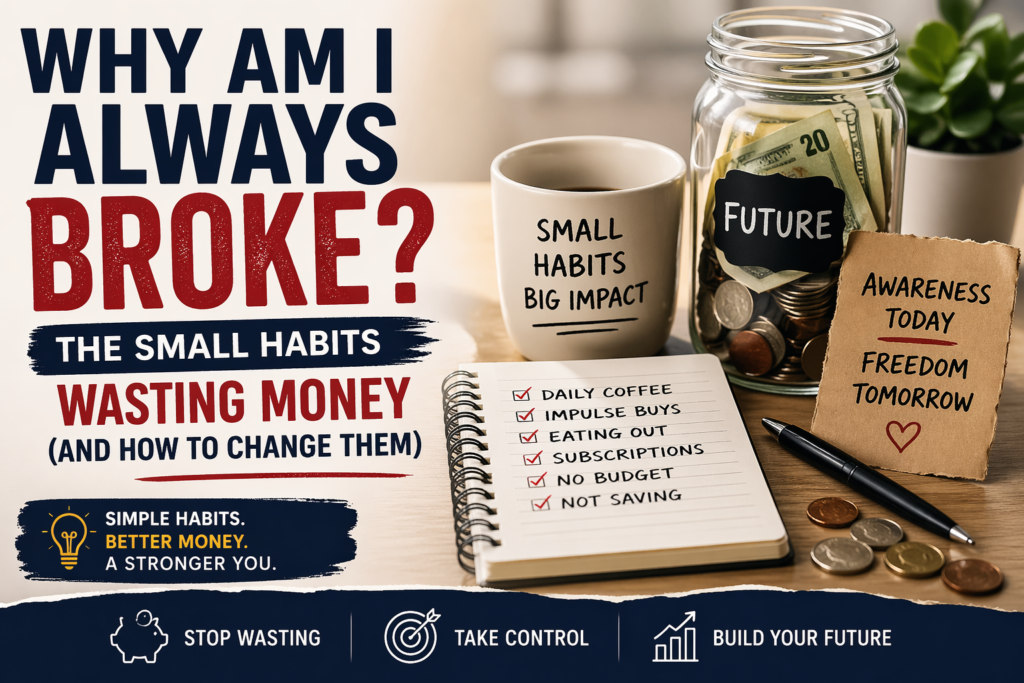
Small habits wasting money are one of the biggest reasons people feel broke without understanding why.
It usually builds over time.
You handle your bills, you take care of what’s important, and then little by little the rest fades away. Nothing feels extreme in the moment. There’s no single purchase you can point to and say, “That’s what caused this.”
But by the end of the week, you’re left wondering why there’s nothing left to work with.
That feeling isn’t random. It’s usually the result of small, repeated habits that go unnoticed because they seem normal.
These small habits wasting money don’t feel serious in the moment, but they build up quickly over time.
The difference between spending money and controlling it
Spending money is part of life. The problem isn’t spending—it’s when spending happens without a clear decision beforehand.
When there’s no plan, your money starts following your day instead of your priorities.
A long day turns into takeout. A busy moment turns into a quick purchase. Something small feels harmless, so you don’t think twice about it.
Individually, these decisions make sense. But together, they create a pattern where money is constantly moving without direction.
A simple shift can change that.
Before the week begins, take a moment to decide what your flexible spending will look like. It doesn’t need to be strict or complicated. It just needs to exist.
Once you’ve made that decision, you’re no longer reacting to every situation—you’re choosing how your money is used.
Why small purchases matter more than they seem
It’s easy to ignore small amounts because they don’t feel like a problem.
A few dollars here and there rarely create urgency. You don’t feel the impact right away, so it becomes easy to repeat the behavior without thinking about it.
But small purchases don’t stay small when they happen regularly.
Think about something you buy often without planning for it. Maybe it’s something convenient during the day, a quick stop on the way home, or an add-on when you’re already spending.
On any single day, it feels insignificant. Over a week, it starts to add up. Over a month, it becomes noticeable. Over time, it becomes one of the main reasons your money never seems to stretch far enough.
The goal isn’t to eliminate every small purchase. It’s to become aware of how often they’re happening and decide which ones are worth keeping.
What happens when your money has no clear purpose
When money comes in and isn’t assigned to anything specific, it tends to disappear into whatever feels most important at the moment.
You might tell yourself you’ll “be careful,” but without a structure, there’s nothing guiding your decisions.
That’s when spending becomes reactive.
You respond to what’s happening in front of you instead of following a plan. And when everything feels important in the moment, it becomes difficult to prioritize what actually matters.
Giving your money a simple direction changes that.
When you decide ahead of time what portion goes toward bills, essentials, spending, and saving, your money stops drifting. It starts working with you instead of against you.
Why checking your money regularly changes your behavior
A lot of people avoid checking their bank account consistently, not because they don’t care, but because they don’t want to feel stressed.
The problem is that avoiding it creates uncertainty.
When you’re not looking at your numbers, you’re relying on assumptions. You think you know where you stand, but you’re not completely sure.
That gap between what you think and what’s actually there is where overspending happens.
Checking your money regularly doesn’t require a system or a long process. It simply keeps you aware.
Over time, that awareness naturally changes your decisions because you’re no longer disconnected from your situation.
When a new purchase feels small but repeats often
There’s a difference between spending once and spending repeatedly without noticing.
A single purchase might not affect you. But when that same type of purchase happens several times throughout the week, it becomes part of your routine.
That’s where people get stuck.
Not because they’re making bad choices, but because they’re repeating the same small choices without realizing how often they occur.
Breaking that pattern doesn’t require cutting everything out.
It requires choosing one area and becoming more intentional with it.
Once you slow down one habit, it becomes easier to notice the others.
Once you start recognizing these small habits wasting money, it becomes easier to take control of your finances.
When things break and we delay dealing with them
Another habit that quietly affects your finances is putting off small problems.
Something stops working properly, but it still functions enough that you don’t feel the need to deal with it right away.
So you wait.
Later, the problem becomes bigger, more expensive, or unavoidable.
What could have been handled early turns into something that costs more time and money.
This pattern shows up more often than people realize, and over time it adds to the feeling of always being behind.
Addressing small issues sooner rather than later doesn’t just fix the problem—it prevents a larger expense from taking its place.
Saving money when it feels like there’s nothing left
This is where many people feel stuck.
If your money already feels tight, saving can feel unrealistic. It’s easy to think it only works for people who have extra to spare.
But saving doesn’t begin with large amounts. It begins with consistency.
Setting aside a small amount—something that feels manageable—changes the way you interact with your money.
It shifts you from reacting to being intentional.
Even a small amount, saved consistently, builds a habit. And that habit creates a sense of control that wasn’t there before.
Once you start noticing these small habits wasting money, your day-to-day decisions begin to shift.
Setting a goal that matches your reality
A common mistake is setting goals that feel overwhelming from the start.
When a goal feels too far away, it becomes difficult to stay motivated. It starts to feel like something you’ll never reach.
A better approach is to start with something that fits your current situation.
Choose a goal that feels possible within a short period of time. Something you can reach without completely changing your lifestyle.
Once you reach it, you adjust and continue.
Progress builds confidence. And confidence makes it easier to keep going.
Many people don’t realize that everyday household habits can also lead to increased expenses over time.
Small Habits That Waste Money: 10 Hidden Habits Costing You More Than You Think
For more practical tips on building better money habits, you can review guidance from trusted financial resources like Bank of America’s Better Money Habits. https://bettermoneyhabits.bankofamerica.com/en/saving-budgeting/ways-to-save-money
Letting your savings grow without pulling it back
Saving money is one step. Keeping it saved is another.
One of the most common habits is using savings to cover everyday spending, especially when things feel tight.
Over time, these small habits wasting money shape how your income gets used without you realizing it.
Keeping your savings separate—physically or mentally—helps protect it.
When you treat it as something that already has a purpose, it becomes easier to leave it alone.
Growth doesn’t always come from adding more. Sometimes it comes from simply not taking it away.
Breaking small habits wasting money doesn’t require perfection—just awareness and consistency.
Final thoughts
If you feel like you’re always broke, it doesn’t mean you’re doing everything wrong.
It usually means there are patterns that haven’t been adjusted yet.
Once you begin to notice those patterns and make small, intentional changes, things start to shift.
Not all at once, and not perfectly—but enough to feel the difference.
And that difference is where progress begins.
Changing small habits wasting money is less about strict rules and more about staying aware of where your money goes.