
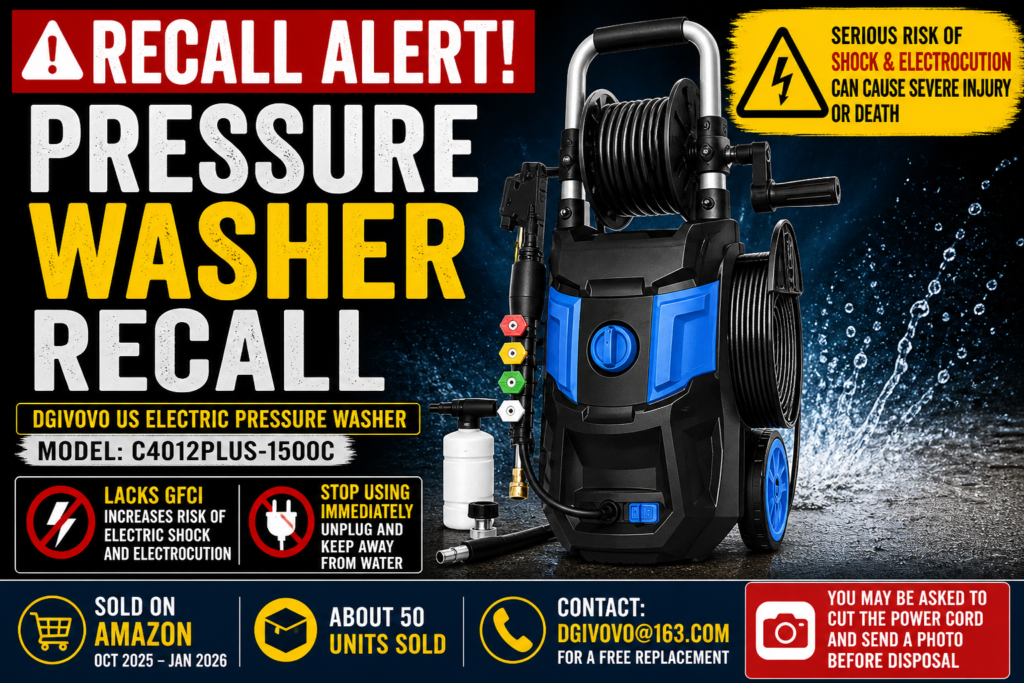
The Pressure Washer Recall involving DGIVOVO US electric pressure washers is an important safety alert for homeowners who use outdoor power equipment for cleaning decks, patios, fences, driveways, siding, vehicles, and outdoor furniture.
Pressure washers are a common spring and summer tool.
Many homeowners pull them out when warm weather arrives to tackle seasonal cleaning projects.
That is exactly why this recall deserves immediate attention.
Water and electricity can be a dangerous combination when safety protections fail.
According to safety officials, the recalled washer lacks an important electrical protection device designed to reduce the risk of electric shock and electrocution.
That creates a potentially life-threatening hazard.
Pressure Washer Recall
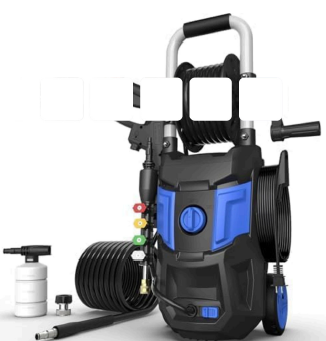
The Pressure Washer Recall involves:
DGIVOVO US Electric Pressure Washer
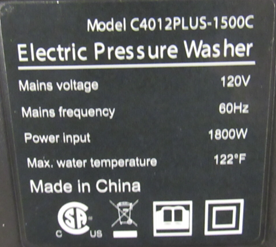
Model: C4012PLUS-1500C
Consumers can identify the recalled model by checking the product label.
Affected units were sold online through:
✔ Amazon
Sales took place between:
October 2025 through January 2026
Many units may still be sitting unused in garages, sheds, workshops, or unopened shipping boxes waiting for spring use.
Why the Pressure Washer Recall Is Serious
The recalled pressure washer reportedly lacks a required ground-fault circuit interrupter (GFCI).
A GFCI is designed to quickly shut off electrical power when dangerous current leakage is detected.
That protection is especially important for products used around:
water,
wet pavement,
garden hoses,
outdoor outlets,
damp driveways,
and rainy or humid conditions.
Without that protection, consumers face increased risk of:
electric shock,
serious burns,
heart complications,
electrocution,
or death.
Even touching wet equipment while standing on damp concrete can increase danger.
The Pressure Washer Recall should be taken seriously even though no injuries have been reported so far.
What Consumers Should Do Right Now
If you own this recalled pressure washer:
Stop using it immediately.
Do not plug it in.
Do not test it.
Do not continue cleaning projects with it.
Unplug the unit and store it away from use until recall instructions are completed.
Check:
✔ garages
✔ sheds
✔ patio storage areas
✔ tool rooms
✔ unopened Amazon deliveries
✔ outdoor equipment storage spaces
How Consumers Can Get a Replacement
Consumers should contact the company for a free replacement pressure washer of equal or greater value.
The recall process may require consumers to:
unplug the recalled pressure washer,
cut the power cord in half,
send a photo showing the disabled cord,
then properly dispose of the recalled unit.
This prevents unsafe products from remaining in circulation.
Contact Information
Consumers should contact:
📧 dgivovo@163.com
Keep:
- Amazon order history
- model number photo
- product label image
- proof of purchase if available
This helps speed replacement processing.
Why Electrical Outdoor Equipment Needs Extra Caution
The Pressure Washer Recall is a reminder that outdoor electrical tools need multiple layers of protection.
Extension cords, wet hands, puddles, damaged cords, and faulty electrical safeguards can quickly create dangerous conditions.
Always inspect outdoor equipment before seasonal use.
A quick check today can prevent a serious accident tomorrow.
Final Thoughts
The Pressure Washer Recall is not something homeowners should ignore.
A cleaning tool meant to refresh your home should never become a hidden electrocution risk.
If you purchased an electric pressure washer online, check your model today.
One quick inspection could save a life.
Consumers can also review our latest household equipment and outdoor product recall alerts to stay informed about hidden safety hazards affecting products used around the home.
Portable Generator Recall 2026: Critical Fire and Burn Hazard Warning for Generac Units
For official replacement instructions and full recall details, review the safety notice from the U.S. Consumer Product Safety Commission.
Spring Equipment Safety Check
Look around your home:
Do you have:
- a pressure washer in the garage?
- outdoor electric tools?
- extension cords used outdoors?
- wet-area electrical equipment?
- unopened tool shipments from online retailers?
- older power washing equipment stored away?
Check today.
Hidden hazards often show up when seasonal tools come back out.