
Plant Leaf Color Meaning and Quick Fixes You Can Try Today
Plant leaf color meaning is one of the easiest ways to understand what your plant is going through—yet it’s something many people overlook.
Most of the time, your plant is already telling you what’s wrong. The problem is, if you don’t know how to read the signs, it just looks like something is “off.”
Leaves don’t randomly change color. When they turn yellow, brown, pale, or develop spots, it’s usually a signal that something in the environment needs to be adjusted.
The good news is, once you understand what those colors mean, fixing the issue becomes much simpler.
Why Healthy Leaves Matter More Than You Think
Before we break down the colors, it helps to understand why leaves matter so much.
Leaves are where your plant creates energy through sunlight. If something interferes with that process—too much water, not enough light, poor soil—the leaves are the first place you’ll see it.
That’s why paying attention early can save your plant before the damage spreads.
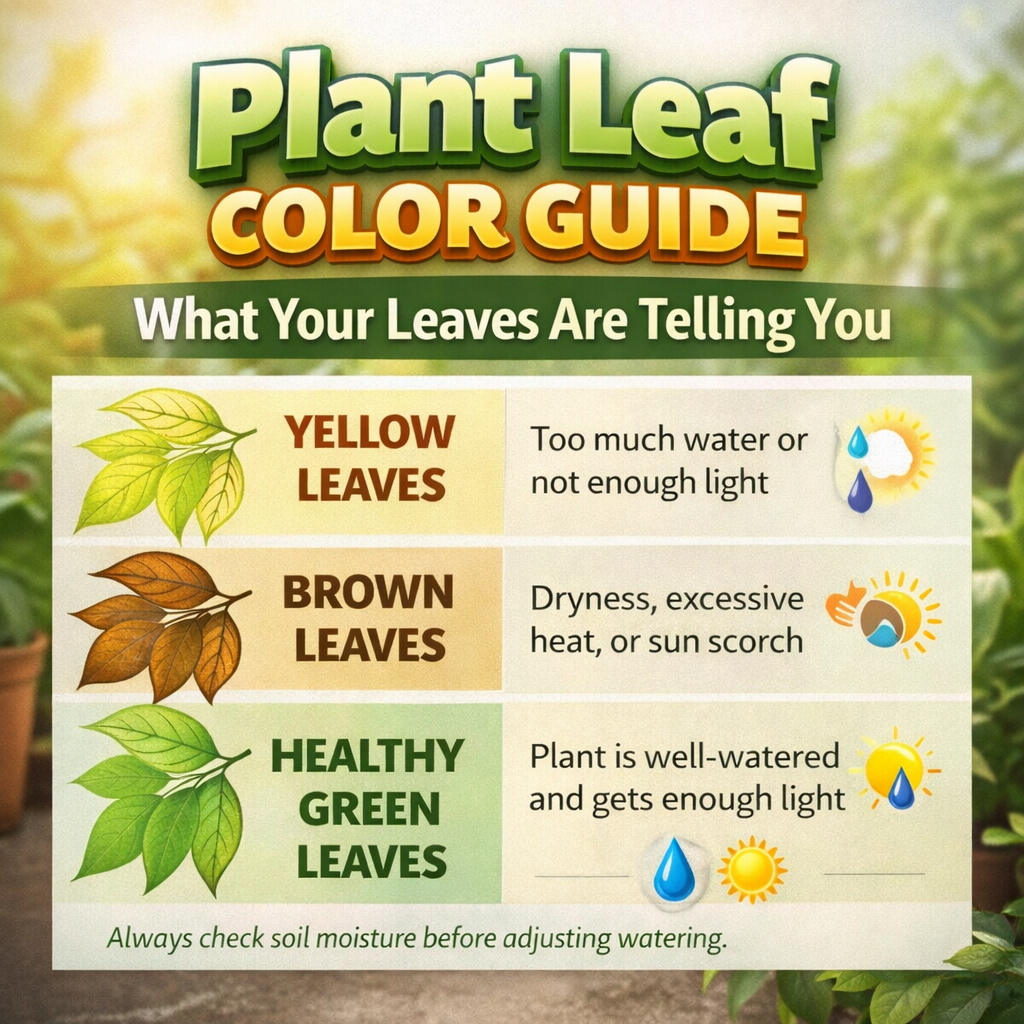
Yellow Leaves: The Most Common Warning Sign
Yellow leaves are probably the most common issue people notice.
At first glance, it’s easy to assume your plant needs more water. But in many cases, it’s actually the opposite.
When leaves turn yellow, it usually means the plant is under stress.
Sometimes that stress comes from too much water sitting in the soil, which can lead to root problems. Other times, it’s caused by not getting enough sunlight to support healthy growth.
If you notice yellow leaves, take a moment to check the soil. If it feels wet and heavy, watering less may help. If it’s dry and the plant looks weak, it may need more consistent care.
Understanding this part of plant leaf color meaning can prevent one of the most common mistakes—overcorrecting in the wrong direction.
Brown Leaves: Dryness or Heat Stress
Brown leaves often show up when a plant is struggling with dryness.
This can happen when the air is too dry, the plant isn’t getting enough water, or it’s exposed to too much direct heat.
Instead of looking at the entire plant, focus on where the browning is happening.
If the edges are turning brown and crispy, it’s often a sign that the plant needs more moisture—either in the soil or the air around it.
If the leaves look burned or scorched, too much sun exposure could be the cause.
Pale or Light Green Leaves: Not Enough Nutrients or Light
When leaves start to look pale or lose their deep green color, it usually points to a lack of nutrients or insufficient sunlight.
Plants rely on nutrients in the soil to stay strong and vibrant. If those nutrients aren’t available, growth slows down and color fades.
In some cases, simply moving the plant to a brighter location can make a noticeable difference.
This is another area where understanding plant leaf color meaning helps you make the right adjustment instead of guessing.
Understanding plant leaf color meaning early can help you fix problems before your plant becomes too damaged to recover.
Dark Spots or Black Leaves: A Sign to Act Quickly
Dark spots or black areas on leaves can be more serious and should be addressed quickly.
This can happen when there’s too much moisture on the leaves, poor air circulation, or even fungal issues.
If you see spots forming, it’s a good idea to:
- remove affected leaves
- avoid watering directly onto leaves
- improve airflow around the plant
Catching this early can prevent it from spreading.
How Light Affects Leaf Color
Light plays a bigger role than most people realize.
Too little light can cause leaves to fade, stretch, or weaken. Too much direct sunlight can lead to burning or discoloration.
Finding the right balance is key.
A plant that looks dull or stretched may need more light, while one that looks scorched may need a bit of shade.
Watering Mistakes That Change Leaf Color
Watering is one of the biggest reasons leaves change color.
Too much water can suffocate roots and lead to yellowing. Too little water can cause dryness and browning.
Instead of sticking to a strict schedule, check the soil first.
That simple habit can make a huge difference in keeping your plant healthy.
Once you understand plant leaf color meaning, you’ll be able to quickly adjust water, light, and care without guessing.
A Simple Way to Diagnose the Problem
If your plant doesn’t look right, don’t panic.
Take a step back and look at three things:
- the color of the leaves
- the moisture of the soil
- the amount of light the plant is getting
Most of the time, the answer is in one of those areas.
Understanding plant leaf color meaning turns guesswork into simple adjustments that actually work.
You may also want to read: How to Start a Small Food Backup Using Plants (No Backyard Needed) https://everydayanswers.online/small-food-backup-using-plants/
For plant care basics, visit the US Department of Agriculture website. USDA.GOV
What People Ask About Plant Leaves
Why are my plant leaves turning yellow even when I water them?
It could be overwatering. Roots may not be getting enough oxygen.
Can plants recover after leaves turn brown?
Damaged leaves won’t turn green again, but new growth can be healthy once the issue is fixed.
How do I know if my plant needs more sunlight?
Look for pale color, slow growth, or stretching toward light.
Let’s Talk About It
Have you noticed your plant leaves changing color recently?
What did they look like—and were you able to figure out what caused it?
Final Thoughts
Plants don’t suddenly fail—they give signals along the way.
When you understand plant leaf color meaning, you can catch problems early and fix them before they get worse.
Sometimes, all it takes is a small adjustment to bring your plant back to life.