
A pet food recall checklist can help you move quickly when you hear that a dog food, cat food, treat, or raw pet food product may not be safe. When you have a pet at home, a recall does not feel like just another news alert. It feels personal because your dog or cat may have already eaten the food sitting in your pantry, freezer, or pet food bin.
The good news is that you do not have to guess. By checking the product name, lot number, UPC code, best-by date, and official recall notice, you can usually find out fast whether your pet’s food is included. This guide walks you through the fastest way to check, what details matter most, and what to do if your pet food has been recalled.
When you have a pet at home, a food recall does not feel like just another news alert. It feels personal. That bag of food in the pantry, the can you opened this morning, or the treats your dog gets after being good suddenly become something you want to check right away.
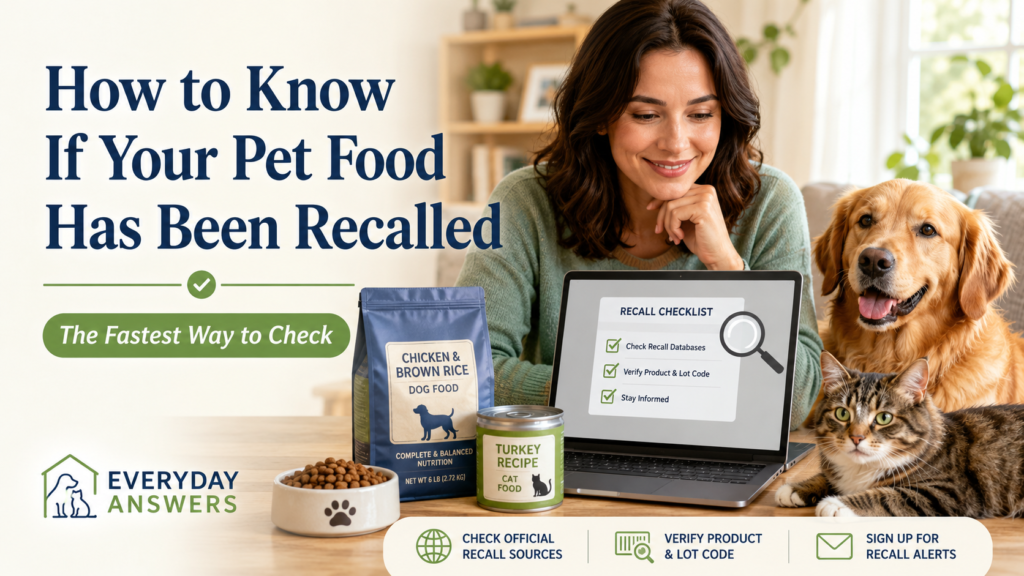
A pet food recall checklist can help owners compare product names, lot numbers, UPC codes, and best-by dates before feeding recalled food to a dog or cat.
As pet owners, we trust that the food we buy is safe. We read labels, compare prices, pick flavors our pets will actually eat, and try to make the best choice we can. But sometimes, a pet food product may be recalled because of possible contamination, labeling concerns, unsafe ingredient levels, or another safety issue.
That is why we take pet safety seriously here at Everyday Answers. Our goal is not to scare pet owners. Our goal is to help you understand what a recall means, how to check your pet’s food quickly, and what steps to take if a product in your home may be affected.
Pet food recall notices can feel confusing at first because they may include lot numbers, UPC codes, best-by dates, expiration dates, package sizes, and company instructions. But once you know what to look for, it becomes much easier to figure out whether your pet’s food is part of the recall or not.
This guide will walk you through the fastest way to check for a pet food recall, where to look, what package details matter most, and how Everyday Answers can help you stay informed about pet food recalls and other pet safety topics.
The 7-Step Pet Food Recall Checklist
Keep this pet food recall checklist nearby whenever a new dog food, cat food, or pet treat recall is announced.
Use this pet food recall checklist before feeding your dog or cat any product that may be included in a recall:
- Grab the food package — bag, can, pouch, box, treat container, or frozen package.
- Find the lot number — usually printed on the bottom, back, side seam, label, or near the best-by date. The lot number is one of the most important parts of a pet food recall checklist because recalls often apply to only certain batches.
- Find the UPC or barcode — this helps confirm the exact product version. A pet food recall checklist should always include the UPC or barcode because similar-looking products can have different recall status.
- Check the best-by or expiration date — many recalls only apply to certain production dates. The best-by date helps complete your pet food recall checklist because one product may be recalled while another date from the same brand is not.
- Search official recall sources — start with the FDA recall list, AVMA recall alerts, and trusted updates from Everyday Answers. After you complete your pet food recall checklist, compare your information with the FDA recall notice, the company announcement, or another official source.
- Match every detail exactly — brand, product name, package size, lot number, UPC, and date must match the recall notice.
- If it matches, stop feeding it immediately and follow the company’s instructions for disposal, refund, replacement, or return.
A simple pet food recall checklist works best when you save the original bag, take a photo of the label, or write down the lot number before pouring food into a storage container.
This quick check matters because pet food recalls are often specific. One flavor, one lot number, or one best-by date may be affected while other products from the same brand are not.
Why Keeping a Pet Food Recall Checklist Matters
A pet food recall checklist gives pet owners a simple way to check food safety without guessing. Instead of only looking at the brand name, the checklist reminds you to compare the product name, package size, lot number, UPC code, and best-by date.
This matters because a pet food recall checklist can help you avoid throwing away safe food by mistake, but it can also help you stop feeding recalled food before your dog or cat gets sick.
Why Pet Food Recalls Happen
Pet food recalls can happen for several reasons. Sometimes a product may have the potential to be contaminated with bacteria such as Salmonella or Listeria. Other times, there may be too much or too little of a nutrient, a foreign material concern, a labeling mistake, or another issue that could affect pets or the people handling the food.
The important thing to remember is that a recall does not always mean every product from that brand is unsafe. Many recalls are very specific. They may only affect one recipe, one package size, one lot number, or one best-by date.
That is why it is so important not to panic based on the brand name alone. You want to compare the exact details on your package with the recall notice.
For example, in our recent Dog Food Recall Alert: Albright’s Raw Chicken Recipe Recalled Over Salmonella Risk, the recall involved a specific product, lot number, UPC, and best-by date. That is exactly why pet owners should always check the full details before assuming their food is affected.
How Everyday Answers Helps Pet Owners Stay Informed
At Everyday Answers, we know most pet owners do not have time to search government recall pages every morning. Between work, family, errands, appointments, and caring for pets, it is easy to miss an important notice.
That is why we cover pet food recalls in a way that is easier to understand. When a recall is announced, we look for the details pet owners actually need, including the brand name, product name, package size, lot number, best-by date, possible health risk, affected locations, refund information, and what steps to take next.
But our pet section is not only about pet food recalls. We also cover helpful pet information, pet safety reminders, care tips, product safety alerts, and practical guidance for pet owners who want to make safer choices at home.
The goal is simple: to help pet owners feel more prepared, more informed, and less confused when safety alerts come out.
Official sources are still important because they provide the original recall information. But Everyday Answers helps break that information down into plain language so you do not have to figure everything out by yourself.
The Fastest Way to Check If Your Pet Food Has Been Recalled
The fastest way to check is to start with the product in your home and compare it to trusted recall information.
First, look at the food bag, can, pouch, frozen package, treat container, or box. Do not only look at the brand name. Look for the exact product name, flavor, package size, lot number, UPC, and best-by date.
Then check a trusted recall source. You can start with Everyday Answers for plain-language recall coverage, then verify the product details through the official recall notice.
A good place to verify pet food recalls is theFDA Animal & Veterinary Recalls & Withdrawals page. The FDA page lists animal food recalls and includes important details such as the product type, recall reason, company name, product description, and recall status. You can also sign up for FDA email updates so important FDA news and safety information can be delivered to your inbox when available.
You can also check the FDA’s broader Recalls, Market Withdrawals & Safety Alerts page for FDA-regulated products. This page may include company announcements and safety alerts involving food, pet food, supplements, medical products, and more.
Another helpful resource is the American Veterinary Medical Association recalls and safety alerts page. The AVMA tracks recalls and safety alerts involving animal foods, veterinary products, and other animal-related items.
You should also check the pet food company’s own website. Many companies post recall information under sections like “News,” “Product Safety,” “Recall Information,” “Customer Notices,” or “Consumer Alerts.”
If you purchased the food from a retailer such as Chewy, Petco, PetSmart, Walmart, Target, Costco, Amazon, or a local pet store, check your email and customer account as well. Some retailers send notices when they can match a recalled product to a customer purchase.
What Details Should You Check on the Package?
When checking a pet food recall, the most important thing is to match the exact product details. A recall may not apply to every bag, can, or pouch from the same brand.
Look for:
Brand name
Product name
Flavor or recipe
Dog, cat, kitten, puppy, or other pet formula
Package size
Lot number
UPC or barcode
Best-by, use-by, or expiration date
Purchase location
Purchase date, if available
The lot number is especially important. The FDA encourages pet owners to save pet food lot numbers because they can help identify the manufacturing plant and production date if a product needs to be reported or traced. The FDA also explains that information such as the UPC, best-by date, and packing code can help identify the product during a complaint or recall review.
One simple habit can save you a lot of stress later: before throwing away the original bag or box, take a photo of the front label, UPC, lot number, and best-by date.
If you pour dry food into a storage container, keep the original packaging if possible. If you do not want to keep the whole bag, cut out the section with the lot number and best-by date and tape it to the container. You can also keep a small note in your phone with your pet’s food details.
Do Not Rely on the Brand Name Alone
This is one of the biggest mistakes pet owners can make when checking a recall. A headline may say a certain brand has a recall, but that does not automatically mean every product from that company is affected.
For example, a recall may only involve one chicken recipe, one frozen product, one size package, one lot code, or one best-by date. Another product from the same company may not be included.
That is why recall posts on Everyday Answers include specific details whenever they are available. We want readers to know exactly what to check so they do not throw away the wrong product or, more importantly, keep using a product that actually is affected.
When you see a pet food recall, always ask:
Does the product name match?
Does the package size match?
Does the lot number match?
Does the UPC match?
Does the best-by or expiration date match?
Was it sold in my state, store, or through online orders?
If the answer is yes to all the details listed in the recall notice, stop feeding the product and follow the company’s instructions.
What to Do If Your Pet Food Is Recalled
If your pet food matches the recall notice, stop feeding it right away. Do not wait to see if your pet gets sick, and do not finish the bag because it was expensive.
Move the product somewhere your pet, children, or other animals cannot reach it. Take pictures of the package, lot number, best-by date, UPC, and receipt if you still have it.
Then read the recall notice carefully. Some companies may tell customers to return the product to the store. Others may instruct customers to throw it away or destroy it in a way that pets, children, and wildlife cannot access.
You should also clean anything the food touched. That includes bowls, scoops, storage containers, counters, refrigerator or freezer areas, and your hands. This is especially important with recalls involving bacteria such as Salmonella because people can become sick from handling contaminated food or touching contaminated surfaces.
If your pet ate the recalled food, watch them closely. Some pets may show symptoms, while others may not show obvious signs right away.
Symptoms Pet Owners Should Watch For
Symptoms will depend on the reason for the recall, but with Salmonella-related pet food recalls, pet owners should watch for signs such as vomiting, diarrhea, bloody diarrhea, fever, loss of appetite, low energy, and stomach discomfort.
The CDC notes that some pets may not look sick from Salmonella but can still spread the germ through poop and saliva. Pets with health problems, puppies, and kittens may be more likely to become sick.
Call your veterinarian if your pet ate recalled food and is acting unusual, refusing food, vomiting, having diarrhea, becoming weak, or showing signs of discomfort.
You should be extra cautious if your pet is very young, elderly, pregnant, already sick, or has a weakened immune system.
People in the home should also be careful. Salmonella can affect humans, especially young children, older adults, pregnant people, and those with weakened immune systems. If someone in the home becomes sick after handling recalled pet food or cleaning pet bowls, they should contact a healthcare provider.
How to Report a Pet Food Problem
If you believe your pet became sick from food or treats, you can report the issue to the FDA through the FDA pet food complaint reporting page. The FDA says these reports help them monitor possible illness related to pet foods and decide whether follow-up investigation may be needed.
Before reporting, gather as much information as possible. Helpful details include the product name, brand, package size, lot number, UPC, best-by date, where the product was purchased, when it was purchased, how it was stored, and what symptoms your pet had.
If your pet was seen by a veterinarian, keep records from the visit. Those details may help if the FDA or company needs more information.
Again, this is why saving the package or taking pictures matters. If something goes wrong, you want to have the information ready.
A Simple Pet Food Recall Routine
You do not have to check recall pages every hour, but having a simple routine can help.
Once a week, check Everyday Answers for recent pet safety alerts and recall updates. You can also check the FDA Animal & Veterinary recalls page and the AVMA recalls and alerts page for official updates.
You may want to check more often if your pet eats raw food, specialty food, prescription food, frozen food, or a brand that has had recalls before.
If you order pet food online, keep your order confirmation emails. They can help you confirm the product name, purchase date, and seller if a recall is announced later.
It is also smart to keep your pet food details in your phone. A simple note could look like this:
Dog Food: Brand name, recipe, package size
Lot Number: ______
Best-By Date: ______
UPC: ______
Bought From: ______
Date Purchased: ______
This only takes a few minutes, but it can make recall checking much faster.
Get Weekly Recall Alerts from Everyday Answers
Every week, Everyday Answers shares important food, pet, baby, home, product, and safety recalls so you can act before a recalled item sits unnoticed in your pantry, freezer, garage, or pet food bin.
Subscribe free and stay informed.
One habit that makes this pet food recall checklist easier is storing dry pet food in an airtight container while keeping the original bag or label. If you use a storage container, cut out or photograph the lot number, UPC code, and best-by date so you can check recall notices quickly.
Everyday Answers Is Here for More Than Recalls
Pet food recalls are important, but they are only one part of pet safety. At Everyday Answers, we also want to help pet owners with practical information that makes daily pet care easier.
That may include pet safety tips, seasonal pet reminders, product alerts, food storage tips, household safety concerns, travel safety for pets, and simple ways to keep dogs, cats, and other pets safer at home.
Our pets depend on us for everything. They cannot read a recall notice, check a lot number, or know when a product may not be safe. That is why having reliable, easy-to-understand information matters.
Pet Owner Check-In
Before you close this page, go grab your pet’s food bag, can, pouch, treat container, or frozen package and check the lot number right now.
Then drop a comment below:
What brand does your pet eat?
Have you ever checked the lot number before today?
Did you find anything concerning after using this pet food recall checklist?
Your comment may remind another pet owner to check their own pantry, freezer, or pet food bin before feeding a recalled product.
If you are comparing pet insurance, read the policy carefully and ask how illness from contaminated food is handled before choosing a plan.
Related Pet Food Recall Updates
If you follow pet safety updates, you may also want to read these recall alerts from Everyday Answers:
Dog Food Recall Alert: Albright’s Raw Chicken Recipe Recalled Over Salmonella Risk
RAAW Energy Dog Food Recall: What Pet Owners Should Check
Pet food recalls can involve Salmonella, Listeria, foreign materials, nutrient problems, or other safety concerns, so checking more than one recall update can help pet owners stay ahead.
Final Thoughts
Pet food recalls can feel scary, but knowing how to check them gives you more control. You do not have to panic every time you see a recall notice, but you should know how to compare the product details carefully.
The most important thing is to check the exact product name, package size, lot number, UPC, and best-by date. A recall may affect one specific batch, not every product from the same brand.
At Everyday Answers, our goal is to help pet owners understand safety alerts without confusion. We will continue sharing recall updates, pet safety information, and practical tips that help protect the animals we love.
Our pets trust us every day. Checking recall information is one small way we can look out for them.
About the Author
Liz is the founder of Everyday Answers, a consumer safety and lifestyle resource that helps families stay informed about recalls, home safety, food safety, pet safety, and everyday decisions that affect the people and pets they love. She monitors FDA, CPSC, and other official recall sources to help readers respond quickly when safety alerts are announced.