
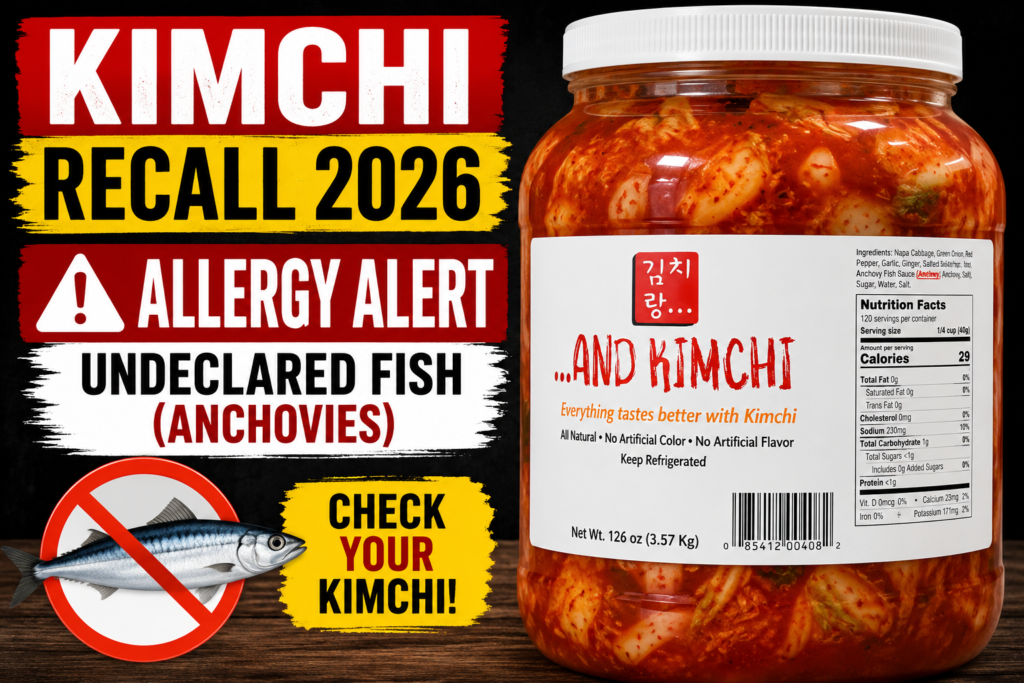
Kimchi Recall 2026 warnings are urging consumers to immediately check refrigerators and pantry storage areas after certain …And Kimchi” sliced kimchi products were recalled because they contain undeclared fish (anchovies), which could trigger serious allergic reactions in sensitive individuals.
For consumers with a fish allergy or fish sensitivity, consuming these products could trigger a serious allergic reaction.
This is especially important because kimchi is commonly used in:
✔ rice bowls
✔ tacos and wraps
✔ grilled meats
✔ soups and stews
✔ noodles
✔ sandwiches
✔ meal prep containers
✔ late-night snacks
✔ restaurant-style home meals
Many people may have this product in their refrigerator right now.
What Products Are Included in the Kimchi Recall 2026?
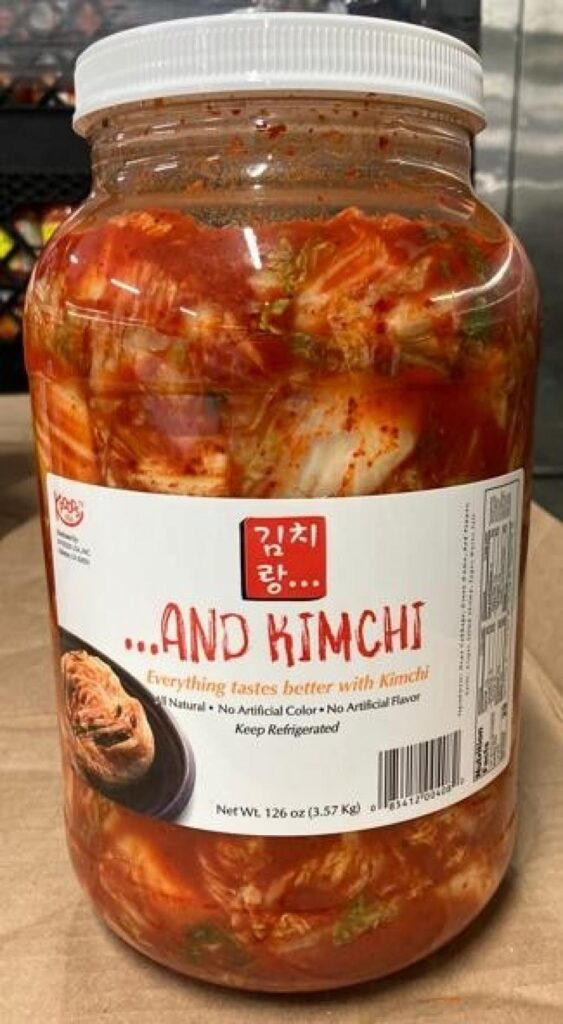
The Kimchi Recall 2026 includes certain refrigerated sliced kimchi sold under the …And Kimchi brand.
Affected sizes include:
✔ 126 oz jar (3.57 kg)
✔ 63 oz jar
✔ 30 oz jar
Consumers should compare:
✔ product label
✔ UPC information
✔ purchase date
✔ container size
✔ refrigeration date
✔ retailer purchase history
against the official FDA recall notice.
Because kimchi has a longer refrigerator shelf life than many prepared foods, affected jars may remain in homes for weeks or months.
Why Undeclared Fish Is Serious
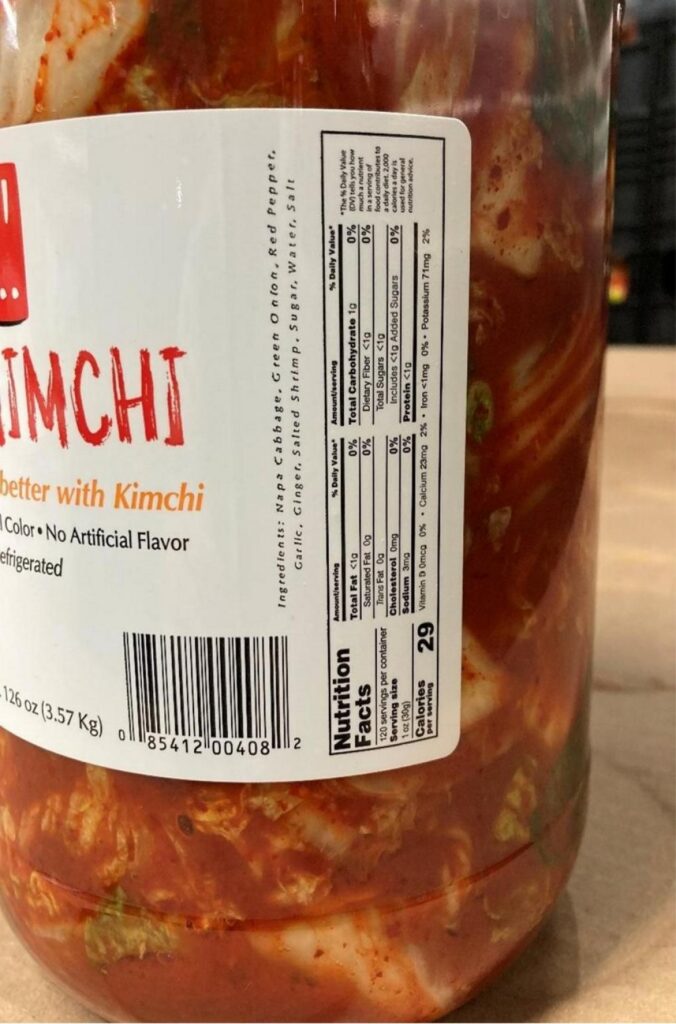
Fish is a major food allergen.
Consumers allergic to fish may experience:
✔ itching
✔ hives
✔ rash
✔ swelling of lips or throat
✔ nausea
✔ vomiting
✔ stomach cramps
✔ wheezing
✔ breathing difficulty
✔ anaphylaxis
Even a small amount of anchovy ingredient may trigger symptoms in sensitive individuals.
That makes Kimchi Recall 2026 an important alert for allergy-sensitive households.
Check More Than Your Refrigerator
Look in:
✔ home refrigerator shelves
✔ garage refrigerator storage
✔ office refrigerators
✔ family gathering leftovers
✔ meal prep containers
✔ restaurant ingredient storage
✔ food prep coolers
✔ secondary refrigerators
Fermented foods often get tucked in the back and forgotten.
What Consumers Should Do
If you purchased recalled kimchi:
Do not eat it if you have a fish allergy or fish sensitivity.
Then:
✔ isolate the jar
✔ return product for refund where sold
✔ discard safely if refund unavailable
✔ clean refrigerator surfaces where product was stored
✔ wash hands after handling
✔ review ingredients on similar products at home
If allergy symptoms develop after consuming the product, seek medical attention immediately.
Why the Kimchi Recall 2026 Matters
The Kimchi Recall 2026 highlights how undeclared allergens can create serious health risks for consumers who rely on food labels to avoid ingredients that may trigger allergic reactions.
In this case, the recalled kimchi products contain anchovies that were not properly disclosed on the packaging.
Fermented foods such as kimchi may contain complex ingredient blends and seasoning bases, making accurate allergen labeling especially important for consumer safety.
What Consumers Should Know About Fish Allergies
Fish allergies can range from mild symptoms to severe life-threatening reactions.
Symptoms may include:
- hives
- swelling
- itching
- vomiting
- difficulty breathing
- dizziness
- anaphylaxis
Consumers with fish allergies should avoid eating recalled kimchi products immediately and seek emergency medical attention if severe symptoms develop.
Food Allergy Reminder
Food allergy recalls happen more often than people realize.
Consumers should always:
✔ read labels
✔ check allergen statements
✔ monitor FDA alerts
✔ review imported specialty foods
✔ inspect prepared refrigerated products
✔ double-check fermented or mixed-ingredient foods
One label check can protect a family member.
What Consumers Should Know About Kimchi Ingredients
Kimchi is a traditional fermented food commonly made with cabbage, radish, seasonings, and fermented seafood ingredients.
Some kimchi products may contain fish-based ingredients such as anchovies or fish sauce as part of the fermentation or seasoning process.
This is why accurate labeling is especially important for consumers with seafood allergies.
Did You Know?
Fermented foods like kimchi can contain hidden seafood ingredients used in seasoning blends, fermentation starters, or flavoring bases.
That’s why consumers with seafood allergies should always review ingredient labels carefully, even on products that may appear vegetable-based.
The Kimchi Recall 2026 is another example of how allergen labeling mistakes can affect specialty food products.
Frequently Asked Questions About the Kimchi Recall 2026
Why was the kimchi recalled?
The kimchi products were recalled because they contain undeclared fish (anchovies), which were not properly listed on the label.
Why are undeclared fish allergens dangerous?
Consumers with fish allergies may experience severe or potentially life-threatening allergic reactions after consuming products containing undeclared fish ingredients.
Which kimchi products are included in the recall?
The recall involves certain “…And Kimchi” branded sliced kimchi products sold in multiple jar sizes.
Have any illnesses been reported?
At the time of the recall announcement, no illnesses had been publicly reported.
What should consumers do if they purchased the recalled kimchi?
Consumers should stop eating the recalled products immediately and return them to the place of purchase for a refund.
Refrigerator Safety Check
When was the last time you checked the labels and recall notices on the refrigerated foods currently stored in your kitchen?
Many recalled refrigerated products remain in homes because consumers may not realize affected products were purchased weeks earlier.
Today is a good reminder to:
- inspect refrigerated foods
- review allergen labels
- check fermented food products
- inspect seafood ingredients
- monitor FDA food recall alerts”
A quick refrigerator inspection could help prevent a serious allergic reaction.
Consumers can also review our latest food recalls, allergy safety alerts, and grocery product warnings to stay informed about products that may put households at risk.
Stephan Baby Toy Recall: Parents Should Check Children’s Toys Immediately
For official UPC details, affected product sizes, and refund guidance, review the safety alert published by the U.S. Food & Drug Administration (FDA) before consuming these products.
Final Thoughts
The Kimchi Recall 2026 serves as another reminder that allergen labeling errors can create serious risks for consumers with food allergies, especially when products contain hidden seafood ingredients.
Because fermented foods often use complex ingredient blends and seasoning bases, consumers with seafood allergies should carefully review labels and remain informed about active FDA recall alerts.
Consumers following the Kimchi Recall 2026 should carefully inspect refrigerated products currently stored at home.
Checking refrigerated foods, reviewing ingredient labels, and staying updated on recall announcements are simple steps that can help protect your household from avoidable health risks.