
This Isn’t About “Bad Toys”—It’s About What Happens After a Few Weeks
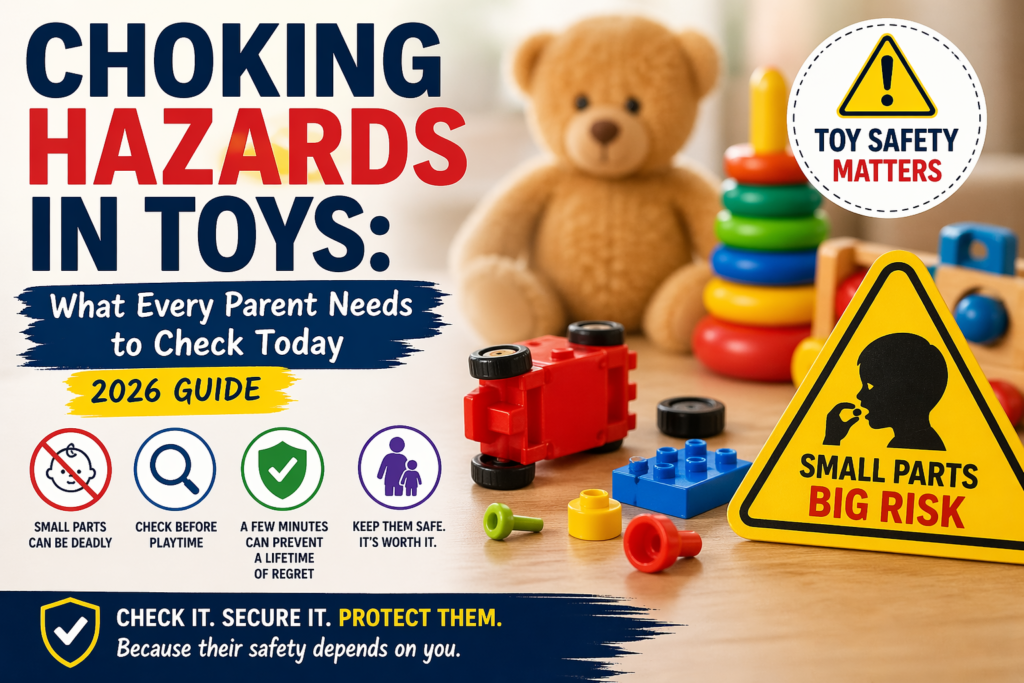
Most parents don’t hand their child something obviously dangerous. The problem usually starts later—after a toy has been used, dropped, stepped on, or just worn down over time.
A piece loosens. A seam weakens. A battery cover doesn’t close as tightly as it used to.
That’s when choking hazards in toys show up—quietly, without warning.
And it’s usually during normal play, not anything reckless, when something small ends up where it shouldn’t.
The Risk Isn’t Always What You Think It Is
People often assume choking hazards are only tiny toys. That’s not always true.
Sometimes it’s:
- a wheel that pops off a larger toy
- a decorative piece that wasn’t meant to be handled
- a small accessory that came with a “set”
- or something that breaks after a few uses
The danger isn’t always size—it’s what can come loose.
That’s why paying attention to choking hazards in toys means looking beyond what the toy looked like when you first bought it.
What You Should Be Looking For (Before You Hear a Snap)
Before a child starts playing, take a second and actually handle the toy yourself.
Turn it over. Press on it. Try to move parts that look like they might give.
You’re not trying to break it—you’re trying to see how easily something could break on its own.
If something feels loose, thin, or like it could snap with a little pressure, that’s your sign.
This quick habit catches a lot of choking hazards in toys before they ever become a problem.
The Mistake Almost Everyone Makes
Here’s the one that gets overlooked all the time:
A toy breaks a little… and we still let it stay in the play area.
Not because we don’t care—but because it doesn’t look “that bad.”
Maybe it’s:
- a missing piece
- a crack in the plastic
- something that was glued back together
But once a toy is damaged, it’s no longer predictable. And unpredictability is where choking hazards in toys become dangerous.
If something breaks, it needs to come out of rotation immediately. Not later.
The One Thing That Deserves Extra Attention
If a toy has a battery—especially a small one—it needs a closer look.
Button batteries aren’t just small. They’re dangerous in a completely different way.
If swallowed, they can cause serious internal damage in a short amount of time.
That’s why:
- battery compartments should be secure
- screws should be tight
- and covers shouldn’t open easily
This is one area where you don’t want to assume—it’s worth checking every time.
Age Labels Aren’t Just Suggestions
It’s easy to think, “They’re fine, they won’t put that in their mouth.”
But age labels aren’t just about maturity—they’re about risk tolerance.
A toy made for a 6-year-old might be perfectly safe for them, but not for a toddler who explores differently.
Matching the toy to the child’s age is one of the simplest ways to reduce choking hazards in toys, and it doesn’t require any extra effort.
When Something Feels Off, Trust That Feeling
You don’t need a checklist every time.
If something about a toy makes you pause—even slightly—there’s usually a reason.
Maybe it feels flimsy. Maybe it looks worn. Maybe a piece seems smaller than you remembered.
That instinct is worth listening to.
Most serious issues with choking hazards in toys come from things that didn’t seem urgent at the time.
Why This Keeps Showing Up in Recalls
If you’ve been seeing more toy recalls lately, you’re not imagining it.
Many recent recalls involve:
- parts detaching
- battery access
- components that don’t meet safety standards
It’s a reminder that even products that look safe can have issues.
You can review recent toy safety alerts here: Toy Recall 2026: Critical Choking Hazard Warning for ATOYUS Children’s Activity Cubes
For official toy safety standards and recall updates, visit the U.S. Consumer Product Safety Commission (CPSC) website. CPSC.GOV
When a New Toy Comes In the Door, That’s the Moment to Pause
This is one of the easiest moments to miss.
A child receives a new toy—maybe it’s a birthday, a holiday, or just a surprise—and the excitement kicks in immediately.
They want to open it, touch it, play with it right away.
And most of the time, we let that happen.
But that’s also one of the most important moments to slow things down.
Because even brand-new toys can have:
- loose pieces from packaging
- parts that weren’t secured properly
- small accessories that fall out easily
- packaging materials that get mixed in with the toy
It doesn’t mean the toy is bad—it just means it hasn’t been checked yet.
Taking just a few minutes to look it over can make a big difference.
The 5-Minute Check That Most People Skip
Before handing it over, do a quick check:
Open everything yourself first.
Look at:
- what comes loose
- what feels smaller than expected
- anything that could detach with light pressure
You’re not inspecting it like a professional—you’re just asking:
Would I feel comfortable if this ended up in their mouth for a second?
That one question changes how you look at the toy.
And it helps catch choking hazards in toys before they ever reach your child.
Excitement Can Hide Small Risks
When kids are excited, they don’t slow down.
They:
- grab pieces quickly
- explore without thinking
- move from one part to another fast
That’s normal—but it also means they’re not noticing what might be unsafe.
That’s why that short pause before playtime matters.
Not to take the fun away—but to make sure the fun stays safe.
What Should You Check Today?
Take a quick walk through your child’s play area.
Pick up a few toys—not just the new ones, but the ones they use every day.
Ask yourself:
- Has anything loosened?
- Has anything cracked?
- Would I trust this the same way I did when I bought it?
That small check can make a real difference.
Frequently Asked Questions
What are choking hazards in toys?
Choking hazards in toys are small parts or loose components that can block a child’s airway if swallowed.
How can I check if a toy is safe?
Inspect it for loose pieces, cracks, or anything that can detach easily before giving it to a child.
Are older toys more dangerous?
They can be, especially if they have wear and tear that causes parts to loosen.
Final Thoughts
Understanding choking hazards in toys isn’t about being overly cautious—it’s about being aware of how quickly things can change.
Most risks don’t come from what we expect. They come from what we stop noticing.
A few seconds of attention here and there is often all it takes to keep things safe.