
Pet emergency preparedness is something many families don’t think about until a storm, evacuation, or power outage happens. While people often prepare emergency kits for themselves, they forget that pets also depend entirely on their owners for food, water, and safety. Having a simple plan for your pets can make a stressful situation much easier and safer for everyone involved.
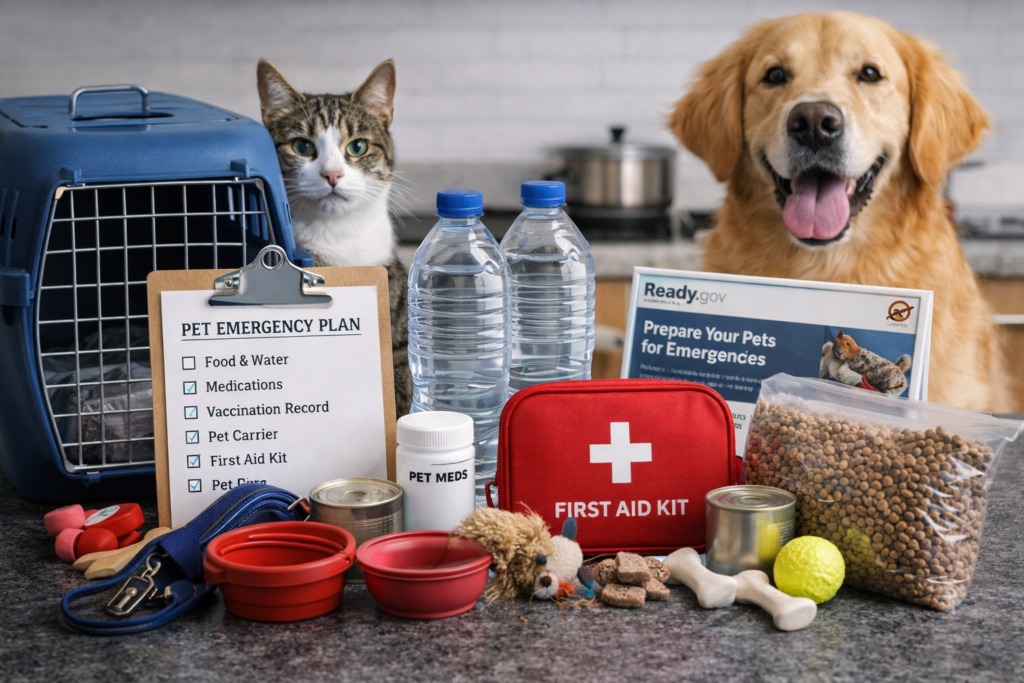
Whether you have dogs, cats, or other small animals, preparing a pet emergency kit and having a plan in place can prevent panic and help you act quickly if you ever need to leave your home or lose power.
Why Pet Emergency Preparedness Matters
During emergencies such as storms, power outages, floods, or evacuations, pets can become stressed, scared, and even lost if they are not properly prepared for the situation. Many shelters and hotels do not allow pets, so having a plan ahead of time is very important. Emergency preparedness for pets means making sure you have food, water, medications, and important documents ready so you can leave quickly if needed.
You can then add a small bullet list:
Extreme heat or coldPreparedness isn’t about fear — it’s about peace of mind.
Power outages
Hurricanes and storms
Flooding
Wildfires
Evacuations
What to Put in a Pet Emergency Kit
These items are affordable, easy to find, and don’t take up much space.
A pet emergency kit should be stored in an easy-to-grab bag or container so you can take it with you quickly if you need to leave your home. The kit should contain enough supplies to care for your pet for at least three days. Many people remember food and water but forget other important items like medications, vaccination records, and comfort items.
Pet Emergency Kit Items:
- Pet food for at least 3 days
- Bottled water
- Food and water bowls
- Leash and harness
- Pet medications
- Vaccination records
- Waste bags or litter
- Blanket or towel
- Favorite toy
- Pet carrier
- Recent photo of your pet
Pet emergency preparedness should always include a pet emergency kit that you can grab quickly if you need to leave your home. This kit should include enough supplies to care for your pet for at least three days. Many people remember food and water but forget important items like medications, vaccination records, and comfort items that help pets stay calm during stressful situations.
Download the free Winter Car Emergency Kit Checklist to print or save on your phone.
Keeping these items together in one container or bag will make it easier to leave quickly if you need to evacuate your home. Pet emergency preparedness is not only about having supplies but also about having a plan for where you will go and how you will transport your pets safely.
Budget Tip: Use What You Already Have
You don’t need to buy everything new. Many items can come from home:
- Old blankets instead of thermal blankets
- Reusable grocery bags for organizing supplies
- Empty containers or small bins to keep things tidy
The goal is useful, not fancy.
Important Pet Records to Keep Ready
One of the most important things people forget during pet emergency preparedness is keeping important documents for their pets. If you need to stay at a shelter, hotel, or with family, you may need proof of vaccinations. Keeping copies of these records in your emergency kit can save time and prevent problems.
Records to keep:
Pet photo
Vaccination records
Vet contact information
Microchip number
Medication list
Feeding instructions
What Most People Forget During a Pet Emergency
This is a good section for this article.
Many pet owners prepare food and water but forget smaller items that become very important during emergencies. Pets can become anxious and uncomfortable in unfamiliar environments, so comfort items and proper identification are very important.
Common things people forget:
- Extra leash
- Pet ID tags
- Comfort toy or blanket
- Pet medications
- Litter box and litter
- Waste bags
- Pet carrier
- Copies of records
- Extra water
- Cleaning supplies
If traffic stops or slows significantly:
- Stay in your vehicle unless it’s unsafe
- Run the engine sparingly to conserve fuel
- Crack a window slightly for ventilation
- Turn on hazard lights if visibility is low
- Use blankets and extra clothing to stay warm
If you’re stopped for a long time, check that your exhaust pipe is clear of snow to prevent carbon monoxide buildup.
How to Evacuate Safely With Pets
If you ever need to evacuate your home, never leave your pets behind. If it is not safe for you, it is not safe for them either. Make sure your pet is comfortable in a carrier and that you have a travel bag ready with their supplies. Plan ahead by knowing which hotels, shelters, or family members allow pets so you are not searching for options during an emergency.
If You Slide Off the Road or Get Stuck
- Stay with your car — it’s easier for help to find
- Turn on hazard lights
- Place reflective items behind your vehicle if safe to do so
- Call roadside assistance if available
- Avoid spinning your tires aggressively — it can dig you in deeper
If You’re Involved in an Accident in Winter Conditions
- Check for injuries first
- Call emergency services if needed
- Turn on hazard lights
- Stay inside the vehicle if conditions are dangerous
- Document the scene if safe (photos, notes)
Remain calm. Winter accidents often happen at low speeds due to ice.
Snowplows, Salting Trucks & Road Crews: Stay Back
During snow operations:
- Never pass a snowplow unless directed
- Keep a safe following distance
- Be patient — plows are there to make roads safer
- Watch for sudden stops or lane changes
Passing plows increases accident risk and endangers road crews.
Should You Have Roadside Assistance?
Many drivers find roadside assistance helpful in winter:
- Towing
- Jump starts
- Lockout service
- Flat tire help
If you already have it through insurance or a membership, keep the number saved in your phone.
Downloadable Winter Car Emergency Kit Checklist
To make this easy, we’ve created a simple one-page checklist you can:
- Print
- Save to your phone
- Keep in your glove box
Want an easy way to stay prepared?
Download the free Winter Car Emergency Kit:
he American Red Cross recommends including food, water, medications, and vaccination records in your pet emergency preparedness kit so pets can stay safe during emergencies and evacuations. https://www.redcross.org/get-help/how-to-prepare-for-emergencies/pet-disaster-preparedness.html
Pet emergency preparedness is just as important as preparing your home, so make sure you also have a basic home emergency kit ready for your household. https://everydayanswers.online/extreme-heat-safety-tips-during-heat-wave/
Final Thoughts
Pet emergency preparedness does not have to be complicated, but it does require planning ahead. Having a pet emergency kit, keeping important records ready, and knowing where you can go with your pets during an emergency can make a very stressful situation much easier. Taking a few hours to prepare now can help keep both you and your pets safe in the future.
Prepared doesn’t mean paranoid — it means ready.
Do you already have a pet emergency kit prepared for your pets? What is one item you think most people forget to include?