
Product recall alerts can be overwhelming, but staying informed doesn’t have to create fear. The key is knowing where to look, what sources to trust, and how to respond calmly when a food or product recall affects something in your home.
Why Product Recall Alerts Matter for Families
Recalls can feel more overwhelming today than they did years ago, not because products are suddenly more dangerous, but because information moves faster—and louder. News alerts, social media posts, and viral headlines often focus on worst-case scenarios, using urgent language that grabs attention but doesn’t always explain the actual risk. When details are missing or exaggerated, it’s easy to feel anxious even when a recall may not apply to you at all.
Another reason recalls feel constant is that safety monitoring has improved. Agencies now catch issues earlier, issue recalls more transparently, and communicate them more widely. This is a sign that safety systems are working—not failing. However, when every alert looks like an emergency, it becomes harder to tell the difference between a precautionary recall and a serious health concern.
Finally, many people don’t know where to find clear, reliable explanations. Without context—such as who is affected, what product details matter, and what actions are actually required—recalls can feel personal and urgent even when they aren’t. That uncertainty is what creates panic, not the recall itself.
The key is learning how to separate important information from alarm-driven noise, so you can stay informed without feeling overwhelmed.
Where to Find Trusted Product Recall Alerts
When it comes to recalls, knowing where to get your information matters just as much as the recall itself. Not all alerts carry the same level of risk, and trusted sources provide the details needed to understand what actually applies to you.
The Food and Drug Administration (FDA) handles recalls related to most foods (excluding meat, poultry, and eggs), as well as medications, medical devices, cosmetics, and some supplements. FDA recalls often include clear explanations, affected lot numbers, and guidance on what steps to take. Many FDA recalls are precautionary, meaning they are issued to prevent potential harm before it occurs.
The U.S. Department of Agriculture (USDA) oversees recalls involving meat, poultry, and egg products. These recalls are typically very specific, listing exact production dates, plant numbers, and packaging details. If a recalled item does not match those details, it usually does not apply to you. USDA recall notices are designed to help consumers make quick, informed decisions without unnecessary alarm.
The Consumer Product Safety Commission (CPSC) issues recalls for household items, children’s products, electronics, and everyday consumer goods. These recalls often focus on physical safety risks such as fire hazards, choking risks, or mechanical defects. CPSC notices clearly outline whether a product should be returned, repaired, or discontinued.
In addition to government agencies, many major retailers notify customers directly when a recalled product has been purchased using a store account or loyalty program. These notices are often targeted and helpful, but they should always be confirmed against official recall information.
By relying on official sources instead of viral headlines or social media posts, you can stay accurately informed, understand the real level of risk, and avoid unnecessary panic.
How to Check Food and Product Recall Alerts Quickly
Staying informed about recalls does not require constant checking or daily alerts. In fact, too much information can increase stress and make it harder to tell which recalls actually matter. A simple, intentional system is often more effective than real-time monitoring.
One of the easiest ways to stay updated is to sign up for official recall email alerts directly from trusted sources like the FDA, USDA, or CPSC. These alerts provide accurate information without unnecessary commentary or sensational language. Email notifications allow you to review recall details calmly, on your own time.
It’s also helpful to limit how often you check recall updates. For most people, reviewing recalls once or twice a week is enough. This prevents information fatigue and reduces the feeling that something is “always wrong.” Unless you are actively affected by a specific product, frequent checking usually adds stress without improving safety.
Another important step is to avoid social media as a primary recall source. While social platforms can spread information quickly, they often lack context and may amplify fear. Headlines are frequently shortened, details are missing, and comments can escalate concern unnecessarily. Official sources provide full explanations, product identifiers, and clear instructions—things social posts often leave out.
Finally, focus on relevance over volume. Not every recall applies to every household. By checking product names, lot numbers, dates, and locations, you can quickly determine whether a recall affects you. When you understand that many recalls are precautionary and limited in scope, it becomes easier to stay informed without feeling anxious.
The goal is not to know everything instantly—it’s to know what matters when it matters.
What to Do After Seeing Product Recall Alerts
Seeing a recall notice does not mean you need to act immediately or assume the worst. Most recalls come with specific details that help you determine whether any action is necessary. Taking a calm, step-by-step approach can prevent unnecessary worry and help you respond appropriately.
First, check whether the recalled product actually matches what you have. Look at the product name, brand, size, lot number, and expiration or production dates. If the details do not match exactly, the recall usually does not apply to you.
If the product does match, stop using it right away, even if you have not experienced any issues. Follow the instructions provided in the official recall notice. This may include returning the product to the store, disposing of it safely, or contacting the manufacturer for a refund or replacement.
Next, monitor for symptoms only if guidance specifically recommends it. Many recalls are precautionary and do not require medical attention unless symptoms appear. If symptoms are listed and you or a family member experience them, contact a healthcare professional for advice.
Avoid sharing unverified information or alarming messages with others. If you choose to inform friends or family, share the official recall source so they can review the details themselves rather than relying on secondhand summaries.
Finally, take a moment to remind yourself that recalls are designed to protect consumers. Identifying an issue and addressing it early helps prevent harm. Responding calmly and following official guidance is the most effective way to stay safe.
How to Stay Calm During Product Recall Alerts
One common myth is that every recalled product is immediately dangerous. In reality, many recalls are issued as a precaution. This means a potential issue was identified before widespread harm occurred. A recall does not always mean people have been injured or that the product is unsafe for everyone.
Another misconception is that everyone who purchased the product is at risk. Most recalls apply only to specific batches, lot numbers, or production dates. If the product details you have do not match the recall notice exactly, the recall usually does not apply to you.
Some people believe that recalls mean safety systems failed. In truth, recalls often show that safety monitoring is working as intended. When companies and agencies identify issues early and take action, it helps protect consumers before problems escalate.
There is also a belief that you must act immediately in every recall situation. While it’s important to stop using affected products, most recalls provide clear guidance and allow time for safe, thoughtful action. Panic-driven decisions are rarely necessary.
By understanding these myths, it becomes easier to respond to recalls with clarity rather than fear. Accurate information, not urgency, is what keeps households safe.
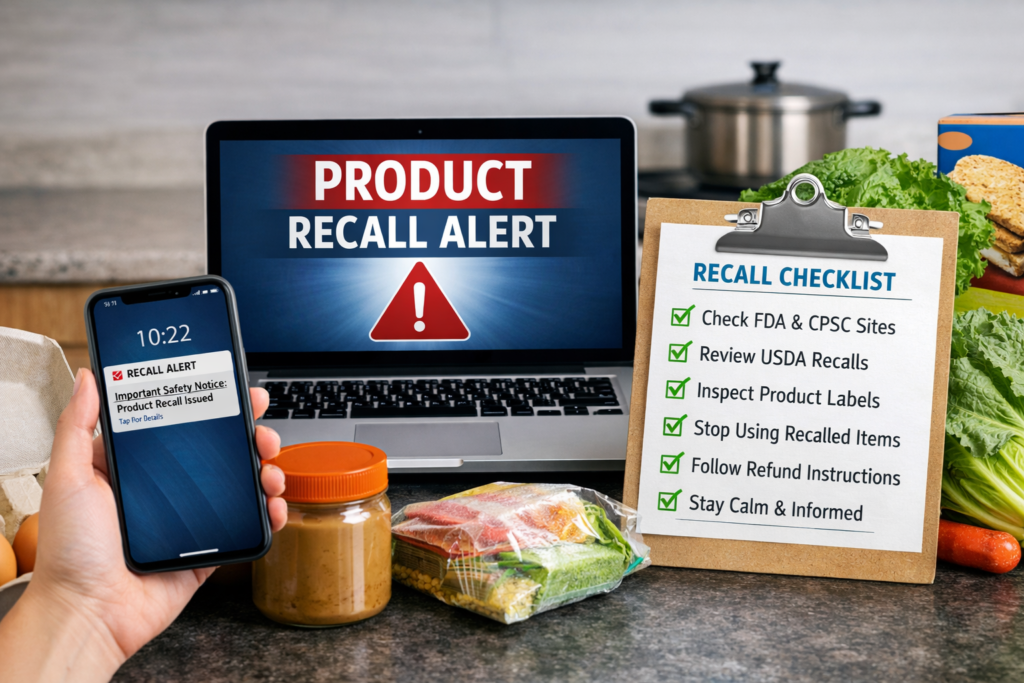
Simple Checklist: Stay Informed Without Panic
Use this checklist whenever you come across a recall notice. It’s designed to help you stay informed while keeping stress low.
- ✔ Rely on official sources such as the FDA, USDA, or CPSC
- ✔ Check product details carefully (brand, lot number, dates)
- ✔ Stop using the product only if it matches the recall exactly
- ✔ Follow the official instructions provided in the recall notice
- ✔ Monitor for symptoms only if guidance recommends it
- ✔ Limit recall checks to once or twice a week
- ✔ Avoid panic-driven headlines and social media speculation
- ✔ Share recall information responsibly and with sources
Staying informed doesn’t mean staying anxious. A calm, consistent approach keeps you prepared without unnecessary worry.
Being prepared at home is just as important as staying informed, so make sure you also have a basic emergency kit ready for your household. https://everydayanswers.online/power-grid-failure-preparedness/
Conclusion
Recalls are meant to protect consumers, not frighten them. When you understand where to find accurate information, how to check whether a recall actually applies to you, and what steps to take when action is needed, recalls become manageable rather than overwhelming.
Staying informed is about clarity, not constant vigilance. By relying on trusted sources, limiting unnecessary exposure to alarm-driven headlines, and responding thoughtfully instead of reactively, you can protect yourself and your household without stress.
At Everyday Answers, our goal is to provide clear, practical guidance that helps you navigate everyday situations with confidence. Recalls are just one example of how calm information and simple steps can make a real difference.
You don’t need to know everything at once—you just need to know what matters, when it matters.