
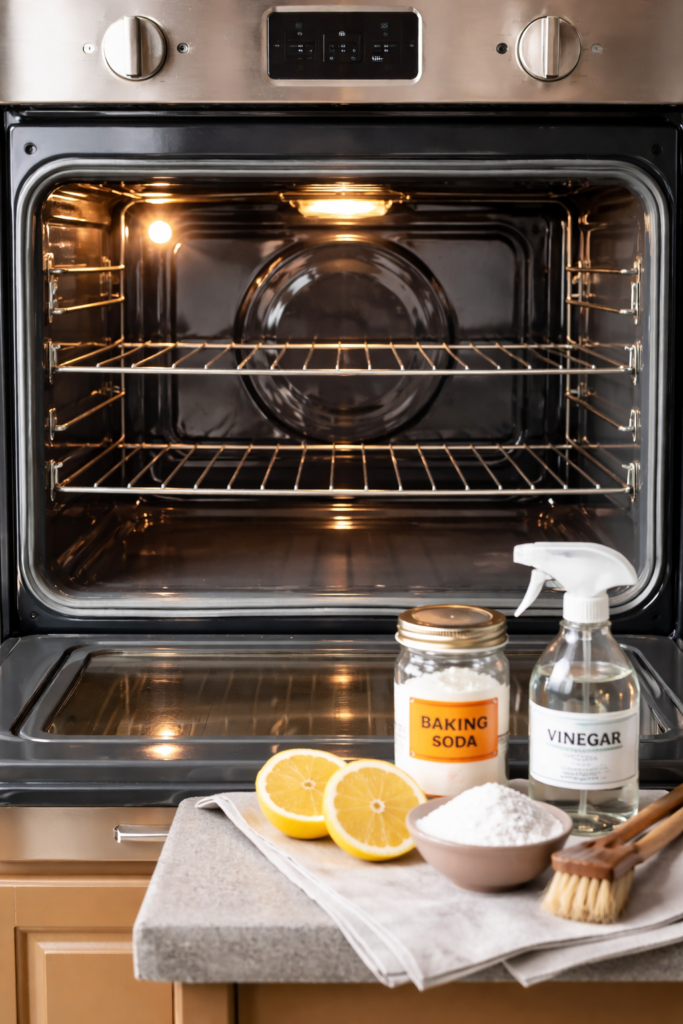
If you’re looking for a way to clean oven without harsh chemicals, you’re not alone. Many homeowners want a safer, natural way to remove grease and baked-on food without strong fumes or toxic cleaners. This guide shows you exactly how to clean oven without harsh chemicals using simple household ingredients that are effective and family-friendly.
The good news? You can clean your oven thoroughly using simple household ingredients that are effective, affordable, and much safer for everyday use.
This guide walks you through step-by-step methods, tips for tough grease, and common mistakes to avoid.
Why Many People Prefer to Clean Oven Without Harsh Chemicals
Traditional oven cleaners often contain strong chemicals that can:
- Irritate lungs, eyes, and skin
- Leave lingering fumes in your kitchen
- Be unsafe around children and pets
- Damage oven surfaces over time
Natural methods may take a little patience, but they’re gentler, safer, and just as effective when done correctly.
Choosing to clean the oven without harsh chemicals helps reduce fumes, protects oven surfaces, and creates a safer kitchen environment.
According to the Environmental Protection Agency, reducing exposure to harsh household chemicals can improve indoor air quality.https://www.epa.gov/saferchoice
What You’ll Need (Most Items Are Already at Home)
- Baking soda
- White vinegar
- Dish soap (gentle, grease-cutting type)
- Water
- Spray bottle
- Small bowl
- Microfiber cloth or sponge
- Plastic scraper or old credit card
- Optional: lemons
Method 1: Baking Soda Paste (Best Overall Method)
If you want to clean an oven without harsh chemicals, baking soda and vinegar are two of the easiest supplies to start with.
This is the most popular and effective chemical-free oven cleaning method.
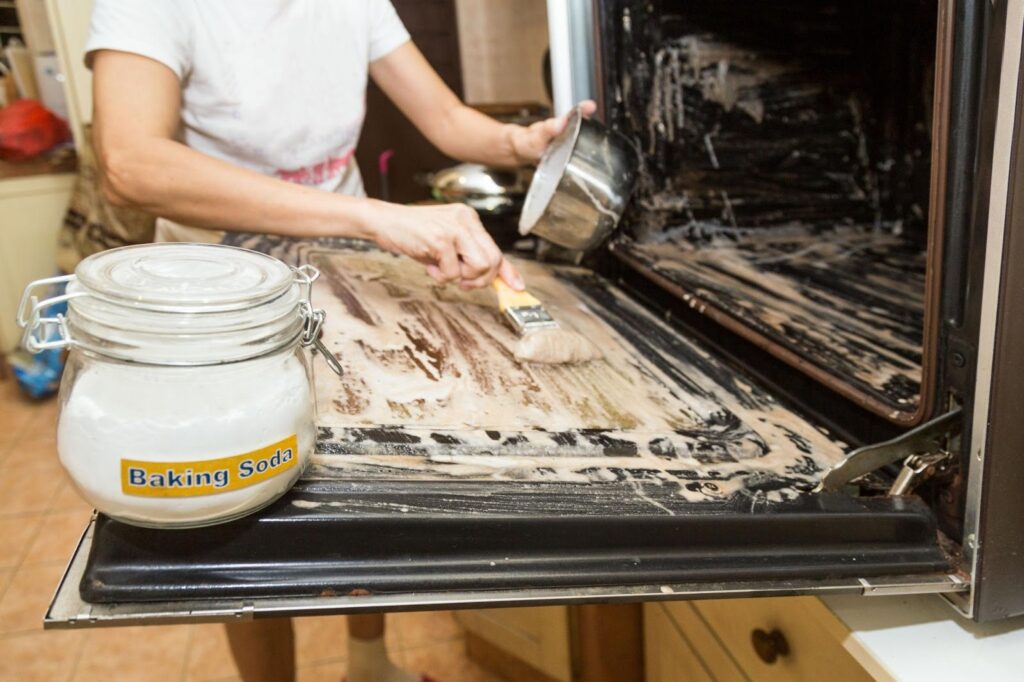
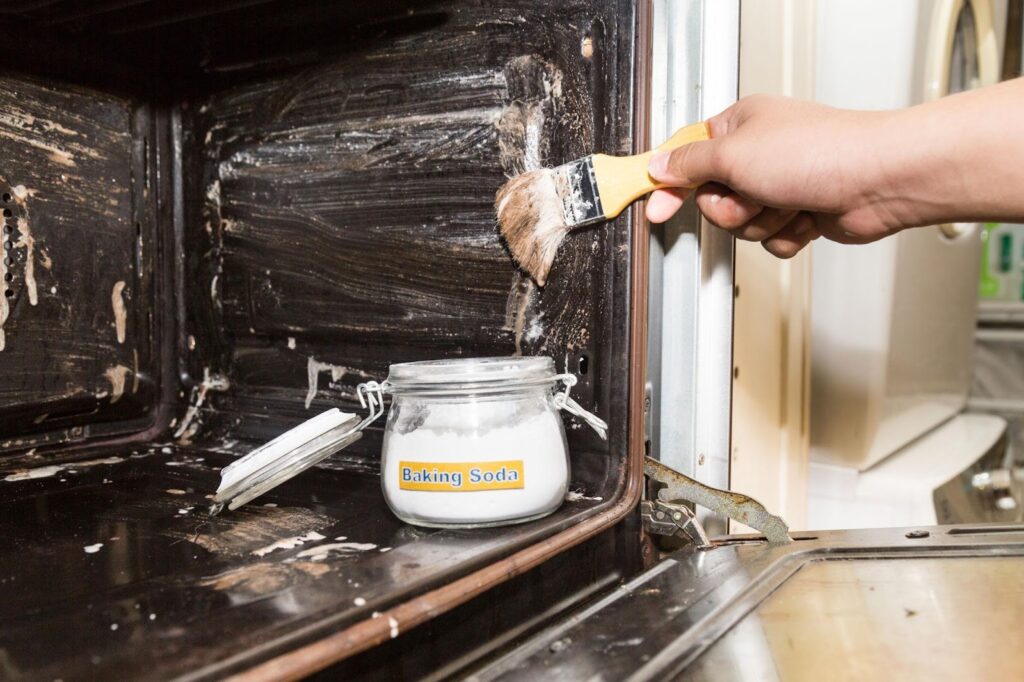
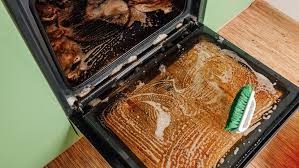
4
Step-by-Step Instructions
- Turn off and cool the oven completely
Never clean a warm oven when using natural cleaners. - Remove oven racks
Set them aside for separate cleaning. - Make a baking soda paste
Mix:- ½ cup baking soda
- 3–4 tablespoons water
You want a thick, spreadable paste.
- Apply the paste
Spread it across the oven interior, focusing on greasy areas.
Avoid heating elements. - Let it sit (this is key)
- Light grease: 6–8 hours
- Heavy buildup: overnight (12 hours)
- Wipe and scrape
Use a damp cloth to wipe away the paste.
For stuck-on spots, gently scrape with a plastic scraper. - Spray with vinegar
Lightly spray vinegar over remaining residue.
The fizz helps lift leftover grime. - Final wipe
Wipe everything clean with a damp cloth.
Result: A clean oven without toxic fumes.
Method 2: Vinegar & Steam (Great for Maintenance)
This method works best for light grease or routine cleaning.
How to Do It
- Place an oven-safe bowl with:
- 1 cup water
- ½ cup white vinegar
- Heat oven to 250°F for 20–30 minutes.
- Turn off the oven and let steam loosen grime.
- Wipe the interior with a damp cloth.
This is excellent for keeping your oven clean between deep cleans.
Method 3: Lemon Steam Clean (Fresh Smell Bonus)
Lemons naturally cut grease and leave a clean scent.
Steps
- Slice 2 lemons and place in an oven-safe bowl with water.
- Heat at 250°F for 30 minutes.
- Let cool, then wipe clean.
This is ideal if your oven smells unpleasant but isn’t heavily soiled.
How to Clean Oven Racks Without Chemicals
The safest way to clean an oven without harsh chemicals is to avoid soaking the oven and give the paste enough time to loosen the buildup.
Oven racks collect a lot of grease and are often overlooked.
Easy Method
- Place racks in a bathtub or large container.
- Sprinkle baking soda generously.
- Pour hot water until submerged.
- Let soak for 4–6 hours.
- Scrub gently and rinse.
Dry completely before returning to the oven.
Once you learn how to clean an oven without harsh chemicals, it becomes easier to keep your kitchen fresher without using strong fumes.
Common Mistakes to Avoid
❌ Using metal scrapers (can damage enamel)
❌ Spraying vinegar before baking soda (reduces effectiveness)
❌ Rushing the process — time is what replaces harsh chemicals
❌ Forgetting to wipe residue fully (can smoke later)
How Often Should You Clean Your Oven?
- Light use: every 3–4 months
- Heavy cooking/baking: every 1–2 months
- Spills: clean as soon as oven cools
Regular maintenance prevents heavy buildup and saves time later.
Related Home Cleaning Guide
For another simple home reset, read this guide on How to Clean a mattress naturally.
If you want to stay ahead of household messes, you may also like this guide on how to build a simple cleaning routine that helps keep your home healthier.
Is This Method Safe for Self-Cleaning Ovens?
Yes — as long as the oven is cool and turned off.
These methods clean the interior surfaces and do not activate the self-cleaning cycle.
Final Thoughts
Cleaning your oven without harsh chemicals is not only possible — it’s practical, affordable, and safer for your home. With simple ingredients like baking soda, vinegar, and lemons, you can remove grease, eliminate odors, and keep your kitchen fresh without exposing your household to unnecessary chemicals.
Natural cleaning methods may take a little patience, but they reward you with peace of mind and a healthier home.
If you’re tackling kitchen grease, you may also want to read our guide on how to remove grease from kitchen cabinets.https://everydayanswers.online/remove-grease-from-kitchen-cabinets/