
When it feels like there’s nothing left, saving feels unrealistic
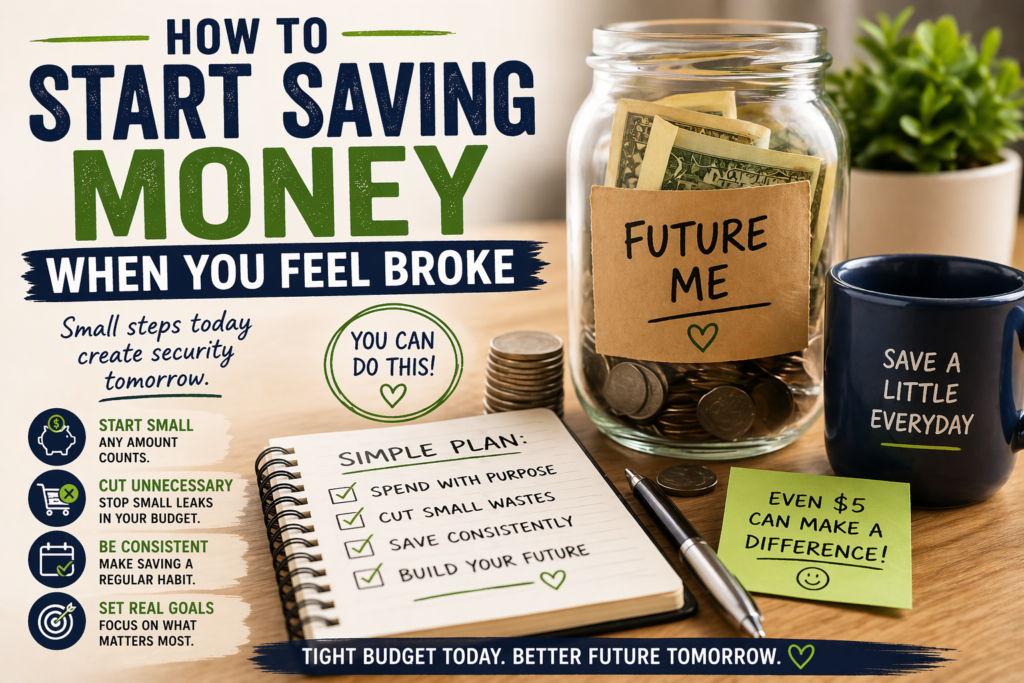
Start saving money when broke sounds like advice that only works for other people.
Because when your money already feels tight, saving doesn’t feel like a choice—it feels like something you can’t afford to do.
You pay your bills, you handle what you can, and by the time everything is done, there isn’t much left to work with. So the idea of saving gets pushed to “later.”
The problem is, later rarely comes on its own.
That’s why learning how to start saving money when broke isn’t about waiting for extra money—it’s about changing how you work with what you already have.
Why saving hasn’t worked before (and why that matters)
Most people have tried to save at some point.
They set a goal, try to cut back, and for a short time it works. But then something comes up, the plan gets interrupted, and everything goes back to normal.
That cycle isn’t a failure—it’s a sign that the approach didn’t match real life.
Saving fails when:
- it depends on leftover money
- it requires too much change too quickly
- it isn’t built into your routine
If you want to start saving money when broke, the process has to feel manageable from the beginning.
The shift that makes saving possible
Saving doesn’t begin with large amounts. It begins with a decision that your money will no longer move without direction.
Earlier, we talked about how small habits wasting money quietly drain your finances over time.
You can revisit that here: [link to your previous post]
That same idea applies here.
If money can leave in small amounts, it can also be saved in small amounts.
The shift is simple:
Instead of waiting to see what’s left, you decide—even before spending—what stays.
Starting small is not a weakness—it’s a strategy
One of the biggest mistakes people make is thinking saving only counts if it’s significant.
But saving is not about the amount—it’s about consistency.
If you’re trying to start saving money when broke, the goal is to build a habit that fits your current situation.
For example, setting aside a small amount a few times a week may not feel impressive at first. But over time, it creates something more important than the amount—it creates control.
That’s what changes how you handle money long-term.
Where to find money when it feels like there isn’t any
This is the part people struggle with the most.
If everything already feels tight, where does saving come from?
It usually doesn’t come from one big change. It comes from adjusting small patterns.
Think about the spending you do without planning:
- small purchases during the week
- quick decisions based on convenience
- repeating habits that feel normal
You don’t need to eliminate everything.
You only need to create space.
Even a small adjustment—something you do less often or delay—can become the starting point for saving.
That’s how you begin to start saving money when broke without putting pressure on yourself.
Keeping your savings separate changes your behavior
One reason saving doesn’t last is because it stays too close to your spending.
When your saved money sits in the same place as your everyday money, it’s easy to dip into it without thinking.
Separating it—even slightly—changes how you treat it.
It starts to feel like money that already has a purpose, not money that’s available.
This doesn’t require a complicated system. It simply requires a decision to protect what you’ve set aside.
Setting a goal that actually fits your life
Saving becomes easier when the goal matches your reality.
If your goal feels too far away, it becomes difficult to stay motivated. It starts to feel like something you’ll never reach.
Instead, choose something you can reach within a short period of time.
Something that feels possible without changing everything at once.
Once you reach it, you build from there.
Progress creates momentum, and momentum makes it easier to continue.
Letting your savings grow without starting over
A common habit is starting to save, then using that money when something comes up.
After that, it feels like you’re back at the beginning again.
To start saving money when broke, it’s important to break that cycle.
That doesn’t mean never touching your savings—it means being intentional about when and why you use it.
Protecting even a small amount over time allows it to grow. And once it grows, it becomes easier to keep going.
Why awareness matters more than perfection
Many people believe saving requires discipline or strict rules.
In reality, it starts with awareness.
When you’re aware of:
- how much you have
- where it’s going
- what you’re choosing to do with it
your decisions naturally change.
That’s why checking your money regularly makes such a difference.
If you haven’t already, it helps to understand the small habits that may be quietly draining your money before trying to save. https://everydayanswers.online/?p=1496
Consumer financial resources also recommend tracking spending regularly to improve saving habits over time. https://www.consumerfinance.gov
You don’t need to fix everything—you just need to start
If you’re trying to start saving money when broke, the goal isn’t to change your entire life overnight.
It’s to make one decision that moves you in a different direction.
That might look like:
- setting aside a small amount consistently
- reducing one spending habit
- paying attention to where your money goes
Those small actions are what create change.
Frequently Asked Questions
How can I start saving money when I have nothing left?
Start small and focus on consistency. Even small amounts saved regularly can build over time.
What is the best way to save on a tight budget?
Reduce one spending habit, create space in your budget, and set aside a small, consistent amount.
How much should I save if I feel broke?
Start with what you can manage. The habit matters more than the amount in the beginning.
Final thoughts
Learning how to start saving money when broke isn’t about having more money.
It’s about using what you already have differently.
Once you begin—even in a small way—you start to break the cycle of feeling stuck.
And that’s where real progress begins.