
Small habits that waste money are often the reason people struggle to save, even when their income stays the same.These small actions don’t feel like a big deal, but over time, they can quietly drain hundreds—or even thousands—of dollars from your budget.
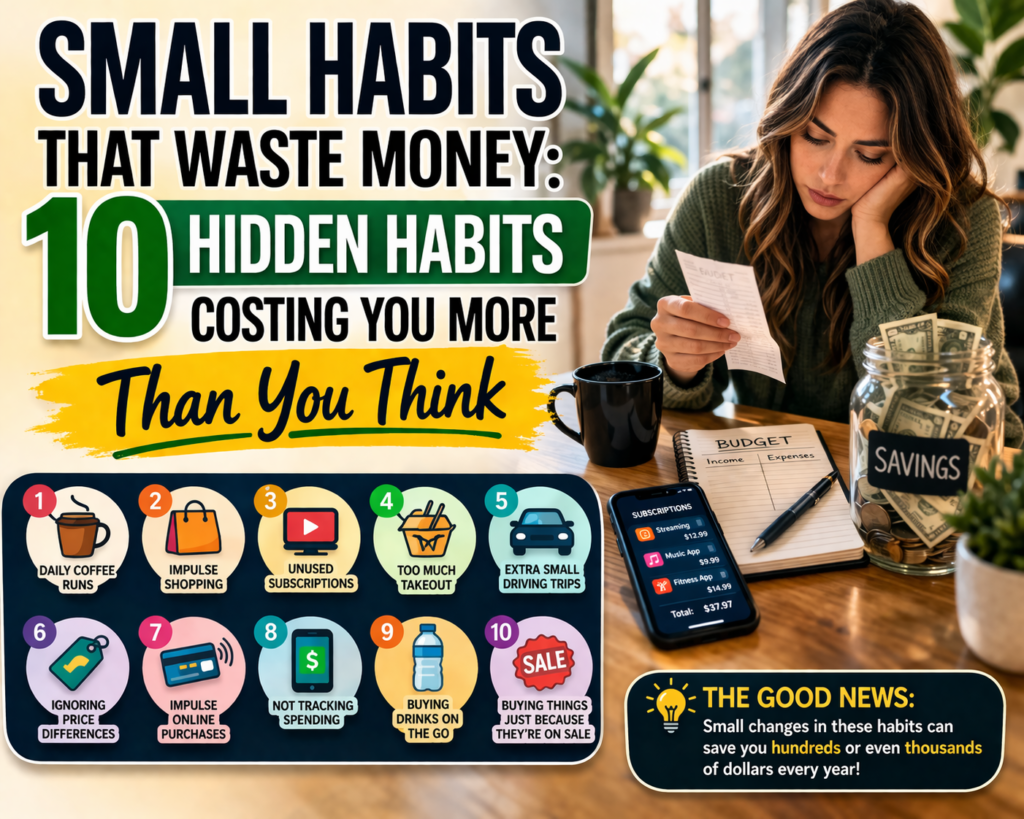
Understanding small habits that waste money is one of the easiest ways to take control of your finances without making drastic lifestyle changes. The goal isn’t to stop enjoying your life—it’s to become more aware of where your money is going and make smarter decisions. Many of these small habits that waste money feel normal, which is why they’re easy to overlook.
Why Small Habits That Waste Money Matter More Than You Think
Big expenses are easy to notice. Rent, bills, and major purchases stand out because they take a large portion of your income at once.
But small habits are different. They happen frequently, often without much thought. Because of that, they can add up faster than you realize.
Once you identify small habits that waste money, you’ll start seeing opportunities to save without feeling restricted.
Daily Convenience Purchases Add Up Fast
One of the most common habits is spending money on convenience. Whether it’s coffee, snacks, or quick meals, these purchases feel small in the moment.
However, spending just $5 a day turns into $35 a week and over $1,800 a year. That’s a significant amount for something that often goes unnoticed.
The key isn’t to eliminate convenience completely—it’s to be intentional about when and why you spend.
Shopping Without a Plan
Walking into a store without a plan is one of the easiest ways to overspend. Without a list or a clear idea of what you need, it’s easy to pick up extra items that weren’t necessary.
This is one of the most common small habits that waste money because it feels like normal behavior. But those extra purchases quickly add up.
Planning ahead—even just a little—can make a big difference.
Subscriptions You Forgot About
Subscriptions are designed to be convenient, but that convenience can also make them easy to forget.
Streaming services, apps, memberships, and monthly deliveries can quietly continue charging your account long after you stop using them.
Taking time to review your subscriptions can help you identify where money is being wasted without adding value to your life.
Ordering Food More Often Than You Realize
Food delivery and takeout are easy options when you’re busy, but they come at a cost. Service fees, tips, and higher menu prices can make these meals much more expensive than cooking at home.
Even a few extra orders each week can significantly impact your budget.
Recognizing this as one of the small habits that waste money can help you make better choices without cutting it out completely.
Making Multiple Small Trips
Driving more than necessary can increase your spending on gas without you noticing. Multiple short trips throughout the week may seem harmless, but they add up quickly.
Combining errands into fewer trips not only saves money but also reduces stress and saves time.
Ignoring Price Differences
Many people continue buying the same products out of habit without checking for better prices. Over time, even small differences in cost can lead to unnecessary spending.
Being more aware of pricing—even occasionally—can help reduce expenses without changing what you buy.
Impulse Buying
Impulse purchases are one of the biggest contributors to wasted money. These are the items you didn’t plan to buy but picked up anyway.
They often feel justified in the moment, but later, they’re forgotten or unused.
Learning to pause before making a purchase is one of the most effective ways to break this habit.
Not Tracking Where Your Money Goes
If you don’t know where your money is going, it’s much harder to control it. Many people underestimate how much they spend simply because they’re not tracking it.
Once you start paying attention, patterns become clear—and so do opportunities to save.
Small Changes Lead to Big Results
The good news is that fixing these habits doesn’t require major changes. Small adjustments can have a big impact over time.
By becoming aware of small habits that waste money, you can take simple steps to improve your financial situation without feeling overwhelmed.
Connect This to Your Savings Goals
If you’re working on saving money, you may also find this helpful:
Financial Guidance
For additional tips on managing money and improving financial habits, visit the Consumer Financial Protection Bureau for tools and resources. https://www.consumerfinance.gov/
What’s One Habit You Know Is Costing You Money?
Let’s be honest—we all have at least one habit we know isn’t helping our finances.
What’s one thing you spend money on that you could cut back on this week?
Drop it below—you might inspire someone else to do the same.
Final Thoughts
Understanding small habits that waste money is one of the simplest ways to improve your financial situation. You don’t need a complicated plan or extreme budgeting—just awareness and small, intentional changes.
Once you take control of these habits, saving money becomes much easier—and much more sustainable.