
Hiking is one of the best ways to enjoy nature, reduce stress, and stay active. As spring arrives and the weather warms up, many people begin exploring local trails, parks, and nature reserves.
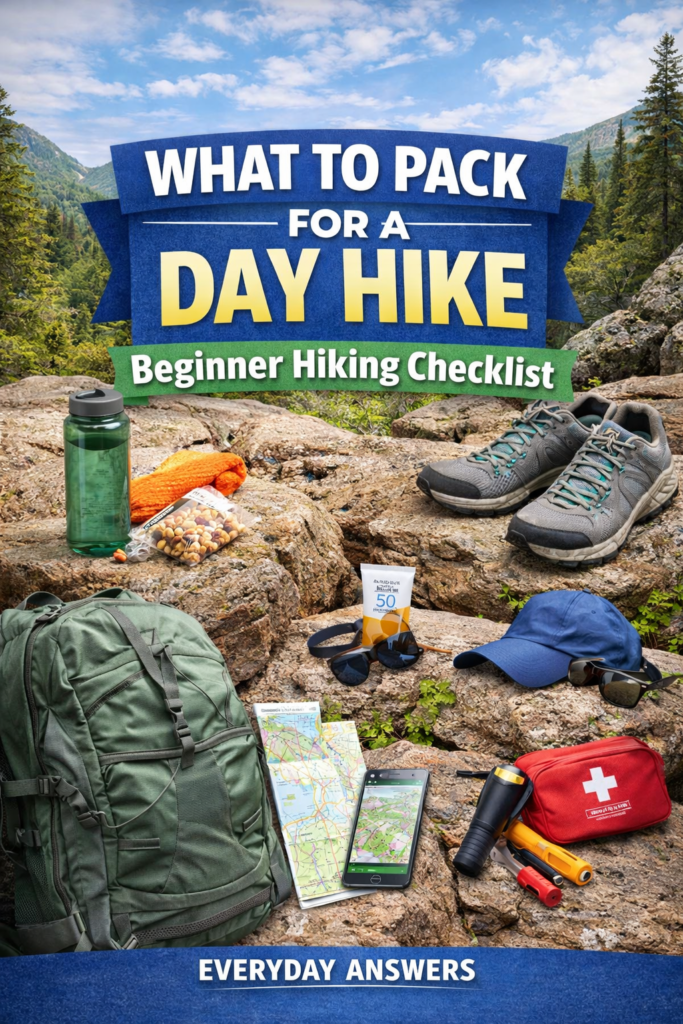
If you are new to hiking, knowing what to pack for a day hike can make the difference between a comfortable outdoor adventure and an uncomfortable experience.
Preparing the right gear helps you stay safe, hydrated, and ready for unexpected situations on the trail.
Below is a simple beginner hiking checklist to help you prepare for your next outdoor adventure.
What to Pack for a Day Hike: Essential Gear Checklist
1. Water and Hydration
One of the most important items when deciding what to pack for a day hike is water.
Even short hikes can cause dehydration, especially during warmer months.
Most hikers bring:
• a reusable water bottle
• a hydration backpack
• electrolyte packets
A general rule is to bring at least half a liter of water per hour of hiking.
Staying hydrated helps prevent fatigue, headaches, and heat exhaustion.
2. Comfortable Hiking Clothing
Wearing the right clothing can greatly improve your hiking experience.
Choose breathable and moisture-wicking fabrics that keep you comfortable while walking.
Recommended clothing includes:
• moisture-wicking shirts
• lightweight hiking pants or shorts
• comfortable socks designed for hiking
• a light jacket for changing weather
Avoid heavy cotton clothing because it retains moisture and can make you feel uncomfortable during longer hikes.
3. Proper Hiking Shoes
Footwear is extremely important when planning what to pack for a day hike.
Comfortable shoes can prevent blisters and foot pain.
Options include:
• hiking boots for rough terrain
• trail running shoes for lighter trails
• supportive walking shoes for beginner trails
Make sure shoes are broken in before hiking to avoid discomfort.
4. Small Backpack
A lightweight backpack makes it easy to carry your hiking essentials.
Your backpack should have enough space for:
• water
• snacks
• safety items
• extra clothing
A simple daypack is usually enough for short hikes.
5. Healthy Snacks
Hiking uses energy, so bringing snacks helps maintain stamina throughout the hike.
Popular hiking snacks include:
• trail mix
• granola bars
• fruit
• nuts
These foods provide quick energy while being easy to carry in a backpack.
6. Sun Protection
Even when temperatures feel comfortable, sun exposure can still affect hikers.
Sun protection is an important part of what to pack for a day hike.
Bring:
• sunscreen
• sunglasses
• a hat or cap
These items help protect your skin and eyes during longer hikes.
7. Basic Safety Essentials
Safety items are often overlooked by beginner hikers but can be very important.
Consider packing:
• a small first-aid kit
• a flashlight or headlamp
• a whistle
• a phone with a fully charged battery
These tools can help if you become lost or encounter an unexpected situation on the trail.
8. Navigation Tools
Many hiking trails are well marked, but some are not.
Bringing navigation tools helps you stay on the correct path.
Options include:
• trail maps
• GPS apps
• park maps from visitor centers
Knowing your route before starting a hike is always recommended.
The National Park Service recommends that hikers always carry water, proper footwear, and safety supplies before starting any trail. nps.gov
9. Weather Protection
Weather conditions can change quickly, especially in mountainous or forest areas.
Packing a lightweight rain jacket or windbreaker can help keep you comfortable if the weather changes.
Checking the weather forecast before leaving for your hike is also a good idea.
Why Preparation Makes Hiking More Enjoyable
Why Knowing What to Pack for a Day Hike Matters
Knowing what to pack for a day hike allows you to focus on enjoying nature rather than worrying about being unprepared.
A well-planned hike can include:
• beautiful views
• wildlife encounters
• relaxing time outdoors
Preparing your gear ahead of time makes the experience much more enjoyable.
For more outdoor preparation tips, check out our guide on how to prepare your vehicle for a long road trip, which includes useful safety tips for travelers. https://everydayanswers.online/plan-outdoor-trips-when-weather-is-unpredictable/
Frequently Asked Questions
How much water should I bring on a hike?
Most experts recommend bringing at least half a liter of water for each hour of hiking.
What shoes are best for hiking?
Trail shoes or hiking boots with good grip and support are ideal for most hiking trails.
Are snacks necessary for short hikes?
Yes. Even short hikes require energy, so snacks can help maintain stamina.
Share your Tips
Do you enjoy hiking during spring and summer?
What are your favorite hiking trails or parks to visit?
Share your tips and favorite outdoor locations in the comments.