
Simple cleaning routine steps can help you keep your home cleaner, healthier, and easier to manage without spending hours cleaning every day.
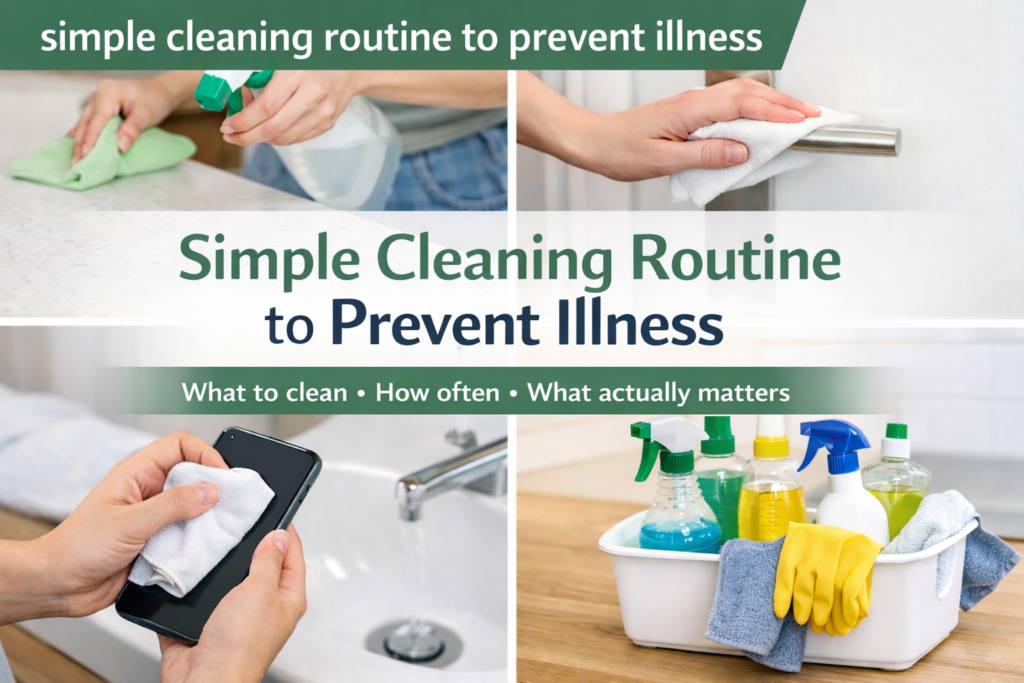
Simple cleaning routine habits can make your home feel healthier, calmer, and easier to manage without spending hours cleaning everyday.
A clean home does not have to mean scrubbing everything from top to bottom. For most people, the real goal is to focus on the areas that collect germs, dust, spills, and clutter the fastest.
People sometimes have a big misconception about a clean home. A clean home does not have to mean scrubbing everything every single day. For most people, the real goal is to build a simple cleaning routine that keeps the most-used areas of the home under control.
When you focus on the places germs, dust, spills, and clutter build up the fastest, cleaning feels less overwhelming and your home feels healthier, calmer, and easier to manage.
Most people clean their homes regularly — yet colds, stomach bugs, and seasonal illnesses still spread fast inside households. The issue usually isn’t how often people clean, but what they clean, when they clean it, and how they clean it.
A simple, intentional cleaning routine can significantly reduce the spread of germs without turning your home into a chemical-heavy zone or taking hours every day.
This guide breaks down a realistic cleaning routine that focuses on illness prevention — not perfection.
When a Simple Cleaning Routine Matters Most
A simple cleaning routine to prevent illness becomes especially important during times when germs are more likely to spread quickly inside the home. Seasonal changes, such as fall and winter, often bring an increase in colds, flu, and other respiratory illnesses, making consistent cleaning essential even if no one feels sick yet.
This type of routine also matters after hosting guests, returning from travel, or when children are attending school or daycare, where exposure to shared surfaces is common. Homes with elderly family members, young children, or individuals with weakened immune systems benefit even more from targeted cleaning habits.
Cleaning routines should also be adjusted during community illness outbreaks, food safety alerts involving contamination, or after power outages when refrigeration or sanitation may be disrupted. In these situations, focusing on high-touch surfaces and proper cleaning tools can help reduce unnecessary exposure.
By recognizing when cleaning needs to be increased, households can act early rather than reacting after illness has already spread.
You can also read our guide on how to deep clean a mattress naturally to reduce allergens and improve hygiene in your home. https://everydayanswers.online/deep-clean-mattress-naturally-spring/
Why a Simple Cleaning Routine to Prevent Illness Works
Many homes look clean but still allow germs to spread because:
- High-touch surfaces are skipped
- Cleaning tools spread bacteria instead of removing it
- Products are mixed or misused
- Timing is off (cleaning too late or inconsistently)
Preventing illness requires targeted cleaning, not deep cleaning every day.
The Surfaces That Matter Most (And Why)
If time is limited, these areas should always come first:
High-Touch Surfaces
These are the main transmission points:
- Door handles & light switches
- Refrigerator handles
- Faucet handles
- TV remotes & game controllers
- Phones & tablets
These surfaces should be cleaned daily during illness season or when someone in the home is sick.
Step 1: Use the Right Tools (This Matters More Than Products)
Before talking products, start with tools:
- Microfiber cloths (trap germs instead of spreading them)
- Separate cloths for bathroom vs kitchen
- Disposable paper towels when someone is actively ill
- Clean mop heads & sponges regularly
⚠️ Dirty tools re-contaminate surfaces even after cleaning.
If your bedroom needs a deeper reset, you may also like this guide on How to deep clean a mattress naturally.
Step 2: A Simple Daily Cleaning Routine (10–15 Minutes)
This is your illness-prevention baseline:
Daily Focus Areas
- Kitchen counters
- Sink & faucet handles
- Bathroom sink & toilet handle
- Door handles
- Phone screens
You do not need to clean the entire house every day — just the surfaces hands touch most.
Step 3: Weekly Cleaning That Stops Germ Build-Up
Once a week, add:
- Trash cans (inside & lid)
- Refrigerator shelves
- Bathroom light switches
- Bedding (especially pillowcases)
- Floor spots near entryways
This prevents slow germ buildup that daily wipe-downs miss.
For another practical home-cleaning project, read this guide on how to clean an oven without harsh chemicals.
Step 4: When Someone Is Sick — What Changes
When illness enters the home:
- Increase high-touch cleaning to 2x daily
- Assign one bathroom if possible
- Use separate towels
- Clean remotes, phones, and light switches daily
- Wash hands before and after cleaning
This reduces cross-contamination significantly.
Common Cleaning Mistakes That Spread Illness
Avoid these frequent errors:
- Mixing cleaning products (can create dangerous fumes)
- Reusing the same cloth everywhere
- Forgetting electronics
- Cleaning floors but skipping handles
- Assuming “natural” means disinfecting
Cleaning safely is just as important as cleaning often.
How to Keep This Routine Sustainable
The best routine is one you can maintain.
Tips:
- Keep supplies where you use them
- Set a daily timer (10 minutes is enough)
- Clean before illness spreads, not after
- Focus on consistency, not perfection
When to Adjust Your Routine
Increase cleaning during:
- Cold & flu season
- After hosting guests
- During school outbreaks
- When food recalls involve contamination
- After travel
These are high-risk periods where prevention matters most.
Final Cleaning Thought
A clean home doesn’t need to smell like chemicals or take hours to maintain. A simple, targeted cleaning routine protects your household, saves time, and reduces unnecessary illness.
Small, consistent actions make the biggest difference.
This simple cleaning routine to prevent illness focuses on consistency and high-touch areas rather than deep cleaning the entire home every day. https://www.cdc.gov/hygiene/cleaning/index.html
Frequently Asked Questions About a Simple Cleaning Routine to Prevent Illness
Why is a cleaning routine important for preventing illness?
A consistent cleaning routine helps remove bacteria, viruses, and allergens that may accumulate on frequently touched surfaces. Regular cleaning reduces the chances of germs spreading throughout the home.
What areas should be cleaned most often to prevent illness?
High-touch surfaces such as door handles, light switches, countertops, kitchen sinks, and bathroom fixtures should be cleaned regularly to reduce the spread of germs.
How often should bedding and linens be cleaned?
Bedding, pillowcases, and towels should be washed regularly to remove bacteria, dust, and allergens that may affect health.
Can simple cleaning habits really make a difference?
Yes. Small daily habits such as disinfecting surfaces, washing hands, and maintaining good ventilation can significantly reduce the spread of illness inside a home.
What Cleaning Habits Help Keep Your Home Healthy?
Do you follow a simple cleaning routine to prevent illness in your home?
Share your tips in the comments. Your experience may help other readers create healthier living spaces for their families.