
Removing grease from kitchen cabinets is one of the most common kitchen cleaning challenges, especially in homes where cooking happens daily.
You wipe the counters, clean the stove, mop the floors—and somehow the cabinets still feel sticky, dull, or grimy.
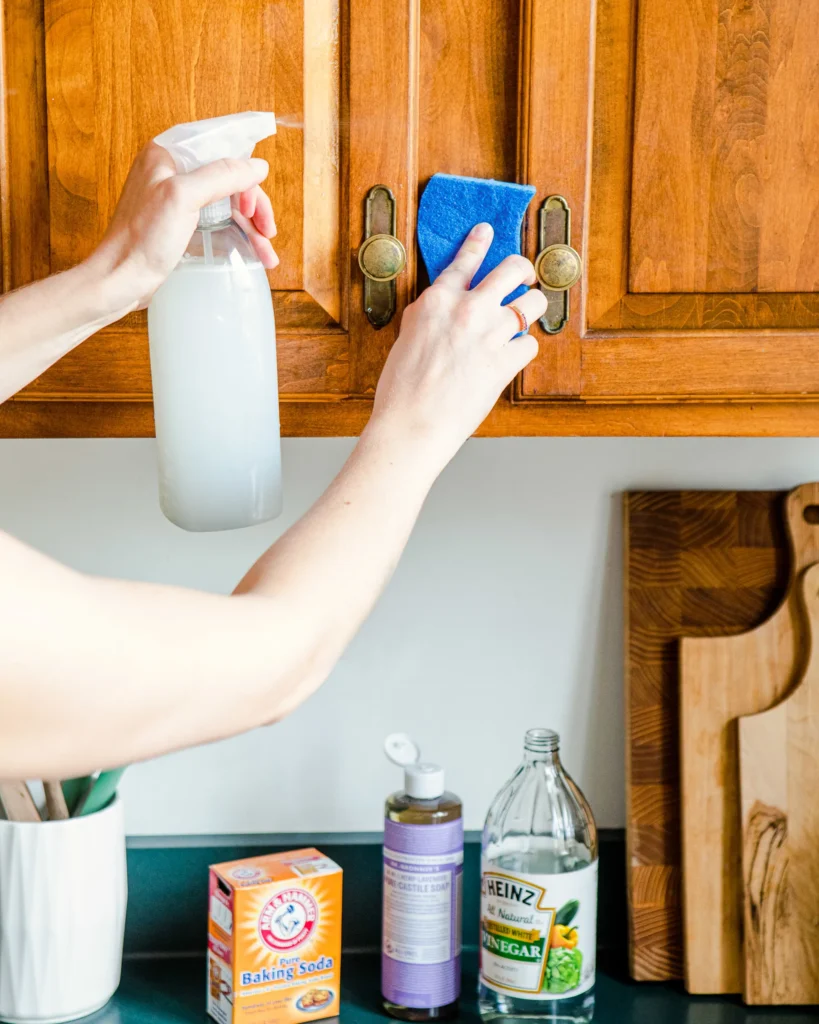
If you’ve ever run your hand along a cabinet door and wondered “Why is this still greasy?”, you’re not alone.
The good news? You don’t need harsh chemicals or expensive specialty cleaners. With the right approach—and the right cleaner for your cabinet type—you can remove grease safely and restore your cabinets without damaging the finish.
Let’s break it down step by step.
Why Do You Need to Remove Grease From Kitchen Cabinets
Every time you cook, tiny airborne grease particles rise into the air. Over time, they settle on nearby surfaces—especially cabinets above or near the stove.
Grease buildup tends to be worse when:
- You cook often or fry food regularly
- Ventilation is limited
- Cabinets are near the stove or microwave
- Cabinets aren’t wiped down regularly
Once grease mixes with dust, it creates a sticky film that’s harder to remove the longer it sits.
Before You Start: Know Your Cabinet Type
Using the wrong cleaner can damage cabinet finishes, so take a moment to identify what you’re working with.
Most kitchen cabinets fall into one of these categories:
- Painted wood
- Finished natural wood
- Laminate or thermofoil
- Metal cabinets
When in doubt, always test your cleaning solution on a hidden spot first.
According to general kitchen cleaning guidance from trusted household sources, grease buildup should be removed regularly to prevent long-term surface damage.https://www.cdc.gov/hygiene/about/when-and-how-to-clean-and-disinfect-your-home.html
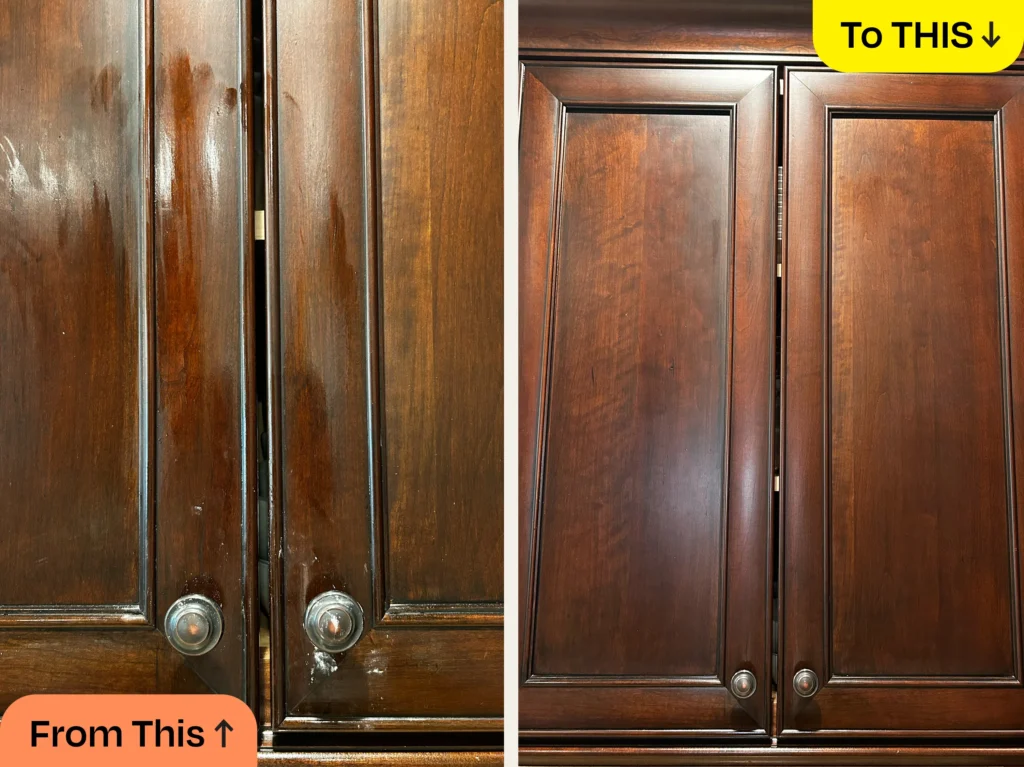
Step 1: Remove Surface Dust First
Before tackling grease, wipe cabinets with a dry microfiber cloth or a soft duster. This prevents dust from turning into sticky sludge once moisture is added.
This small step makes a big difference.
Step 2: Use a Gentle Degreasing Solution
The Best All-Purpose Grease Remover (DIY)
This simple mixture works well for most cabinets:
You’ll need:
- Warm water
- A few drops of dish soap (grease-cutting)
- Microfiber cloth or soft sponge
How to use it:
- Mix warm water with a small amount of dish soap.
- Dip the cloth, wring it out well (damp, not dripping).
- Wipe cabinets using gentle pressure.
- Rinse the cloth frequently.
- Dry immediately with a clean towel.
This method is safe, effective, and ideal for light to moderate grease.
Step 3: For Stubborn or Heavy Grease
If soap and water aren’t enough, step it up slightly—without going harsh.
Option 1: Vinegar & Water (Use With Care)
- Mix equal parts white vinegar and warm water
- Lightly spray or apply with a cloth
- Wipe gently, then rinse with plain water
- Dry immediately
⚠️ Avoid vinegar on unfinished or delicate wood, as it can dull the finish.
Option 2: Baking Soda Paste (Spot Cleaning Only)
Best for knobs, handles, or heavily soiled areas.
How to use:
- Mix baking soda with a little water to form a paste
- Apply to greasy spots only
- Gently rub with a soft cloth
- Wipe clean and dry
Never scrub aggressively—baking soda is mildly abrasive.
Step 4: Cabinet-Specific Tips
Painted Cabinets
- Avoid abrasive pads or stiff brushes
- Stick to dish soap or diluted vinegar
- Dry immediately to prevent streaks or peeling
Wood Cabinets
- Use minimal water
- Avoid soaking or spraying directly
- Consider a wood-safe cleaner if grease is heavy
Laminate Cabinets
- Dish soap works very well
- Avoid excessive heat or steam
- Dry to prevent swelling at seams
Metal Cabinets
- Dish soap or vinegar works fine
- Dry thoroughly to avoid streaking
Step 5: Don’t Forget Handles & Edges
Cabinet handles, edges, and corners collect the most grease because they’re touched constantly.
Use a soft toothbrush or cloth wrapped around your finger to clean:
- Handles and pulls
- Cabinet edges near the stove
- Lower cabinet corners
Step 6: Prevent Grease From Coming Back
Once your cabinets are clean, a little maintenance goes a long way.
Easy prevention tips:
- Wipe cabinets weekly with a damp cloth
- Use your range hood or fan when cooking
- Clean spills and splatters immediately
- Avoid oil-based furniture polishes (they attract dust)
A quick wipe once a week prevents heavy buildup later.
What NOT to Use on Greasy Cabinets
Avoid these common mistakes:
- ❌ Harsh chemical degreasers
- ❌ Steel wool or abrasive sponges
- ❌ Straight vinegar on delicate wood
- ❌ Steam cleaners (can loosen finishes)
- ❌ Ammonia-based cleaners
These can strip finishes, discolor cabinets, or cause long-term damage.
Final Thoughts
Greasy kitchen cabinets don’t mean your kitchen is dirty—they’re just a sign of normal, everyday cooking.
With gentle cleaners, the right technique, and regular upkeep, you can safely remove grease and keep your cabinets looking clean and fresh without risking damage.
A little consistency beats deep scrubbing every time.
Grease doesn’t just collect on cabinets—over time, it can also build up inside your oven, which is why learning how to clean a greasy oven safely is an important part of keeping your kitchen truly clean. https://everydayanswers.online/how-to-clean-oven-without-harsh-chemicals/