
The FDA Cottage Cheese Recall 2026 has raised concerns among consumers after certain products were flagged for potential safety risks.
The recall involves several types of cottage cheese sold under the Great Value private label and manufactured by Saputo Cheese USA, Inc.. These products were distributed primarily through Walmart stores and distribution centers in multiple states.
According to regulators, the FDA Cottage Cheese Recall 2026 affects select products that may pose health risks if consumed.
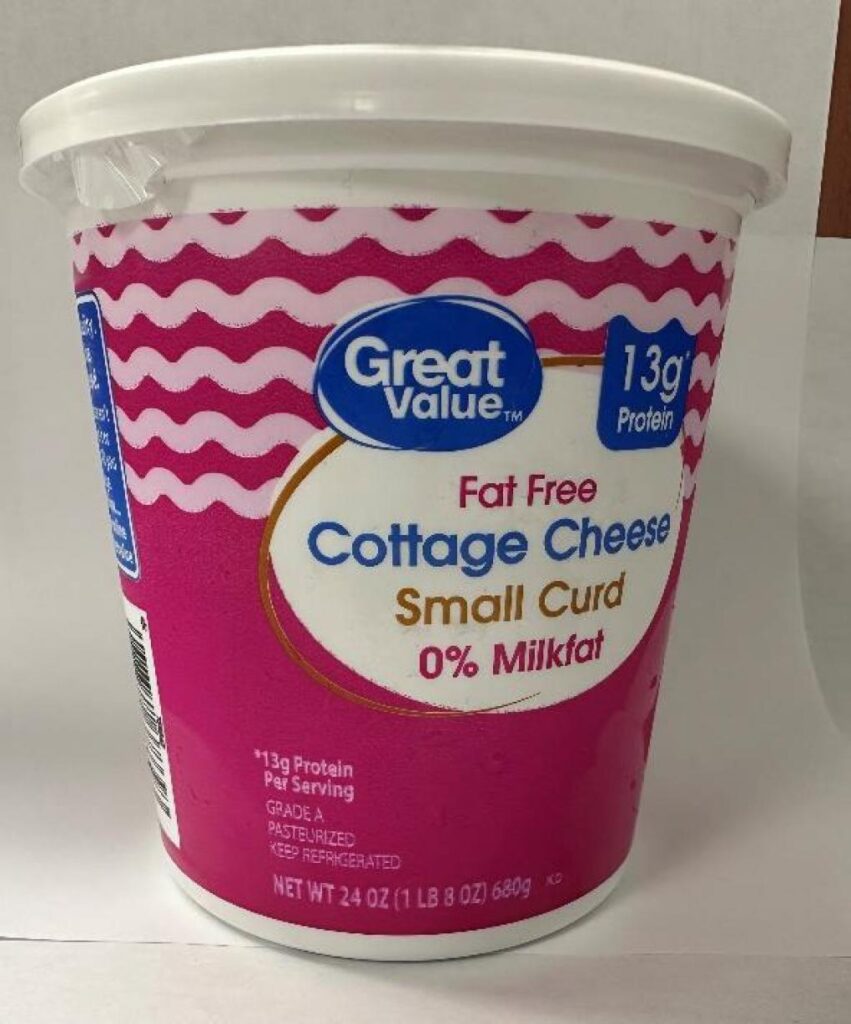
Great Value Fat Free Small Curd Cottage Cheese – 0% Milkfat
- 24 oz container
- UPC: 078742373393
- Best If Used By: April 1 & April 3, 2026
Great Value Lowfat Small Curd Cottage Cheese – 2% Milkfat
- 24 oz container
- UPC: 078742116730
- Best If Used By: April 1, April 2 & April 3, 2026
Great Value Small Curd Cottage Cheese – 4% Milkfat Minimum
- 16 oz, 24 oz, and 3 lb containers
- UPCs: 078742372358, 078742372365, 078742147970
- Best If Used By: April 1, April 2 & April 3, 2026
These products were sold between February 17 and February 20, 2026.
FDA Cottage Cheese Recall 2026: What Consumers Should Know
The recall was initiated because some liquid dairy ingredients used in these cottage cheese products may not have been fully pasteurized according to regulatory standards.
Pasteurization is a critical safety step in dairy processing. If dairy is not adequately pasteurized, it can contain harmful bacteria that pose health risks, particularly to high-risk groups including:
- Young children
- Older adults
- Pregnant individuals
- People with weakened immune systems
Although no illnesses or hospitalizations have been reported in connection with this recall to date, the potential for contamination prompted the voluntary action.
Where the Products Were Distributed
The recalled cottage cheese products reached Walmart stores and distribution centers across 24 U.S. states, including:
- Alaska
- Alabama
- Arkansas
- Arizona
- California
- Colorado
- Georgia
- Iowa
- Idaho
- Illinois
- Kansas
- Kentucky
- Louisiana
- Missouri
- Mississippi
- Montana
- New Mexico
- Nevada
- Oregon
- Texas
- Tennessee
- Utah
- Washington
- Wyoming
Consumers in these regions should check their refrigerators and freezers for the affected products.
Why the FDA Cottage Cheese Recall 2026 Is Important
The FDA Cottage Cheese Recall 2026 highlights how critical pasteurization standards are in dairy production. Even large national brands must follow strict safety procedures to protect consumers.
Why Cottage Cheese Recalls Can Be Dangerous
Dairy products such as cottage cheese must be handled and processed carefully to prevent contamination by harmful bacteria. When contamination occurs, it can lead to serious illnesses including food poisoning or infections such as Listeria. Foodborne illnesses can cause symptoms like fever, nausea, diarrhea, and stomach cramps. In severe cases, infections can lead to hospitalization, especially among vulnerable populations.
Food safety experts recommend checking product lot numbers, expiration dates, and official recall notices before consuming products that may be affected by safety alerts.
What You Should Do
If you purchased or received any of the recalled cottage cheese products:
- Do NOT eat them.
- Dispose of them immediately, OR
- Return them to the store where purchased for a full refund.
If you’re unsure whether you have an affected product, check the product size, UPC code, and best-by date against the recall list above.
For the official recall announcement, visit the USDA Food Safety and Inspection Service website. https://www.fsis.usda.gov/recalls
Questions & Contact Information
Consumers with questions can contact:
Saputo Cheese USA, Inc.
📞 Customer Service: 1-888-587-2423
Monday–Friday, 8 a.m.–5 p.m. CT
You may also contact your local Walmart store for return information.
You can view our full list of recent food safety alerts in our Food Recall Updates category. https://everydayanswers.online/
Why Pasteurization Matters in Dairy Products
Pasteurization is a heat-treatment process designed to eliminate harmful bacteria in milk and dairy products. Without proper pasteurization, bacteria such as Listeria, Salmonella, or E. coli can survive and multiply.
Because cottage cheese is typically eaten without additional cooking, consumers rely entirely on the pasteurization process to ensure safety. When pasteurization standards are not fully met, recalls are issued out of precaution to prevent potential illness.
Food safety systems are designed to detect these risks early. Recalls are not necessarily proof of confirmed contamination, but they serve as preventive action to protect public health.
Consumers who purchased products involved in the FDA Cottage Cheese Recall 2026 should follow the official guidance for returns or disposal. Consumers can review our latest food safety alerts and product recalls to stay informed about potential risks affecting households. fda.gov
Why Pasteurization Matters
Pasteurization is a heat-treatment process that kills harmful bacteria in dairy products. Dairy items that are not fully pasteurized can carry pathogens like Listeria or Salmonella, which can cause foodborne illness. Ensuring proper pasteurization is a key regulatory requirement for dairy safety.
While recalls over pasteurization issues are relatively rare, they serve as a strong reminder of why food safety standards exist and must be monitored closely by manufacturers and distributors.
Frequently Asked Questions
Why was cottage cheese recalled in 2026?
Certain products were recalled due to potential contamination that could pose health risks to consumers.
What should consumers do if they purchased the product?
Consumers should stop eating the product immediately and return it to the store for a refund or follow the manufacturer’s instructions.
Where can I check official recall updates?
Consumers can visit the FDA website for updated recall notices and safety alerts.