
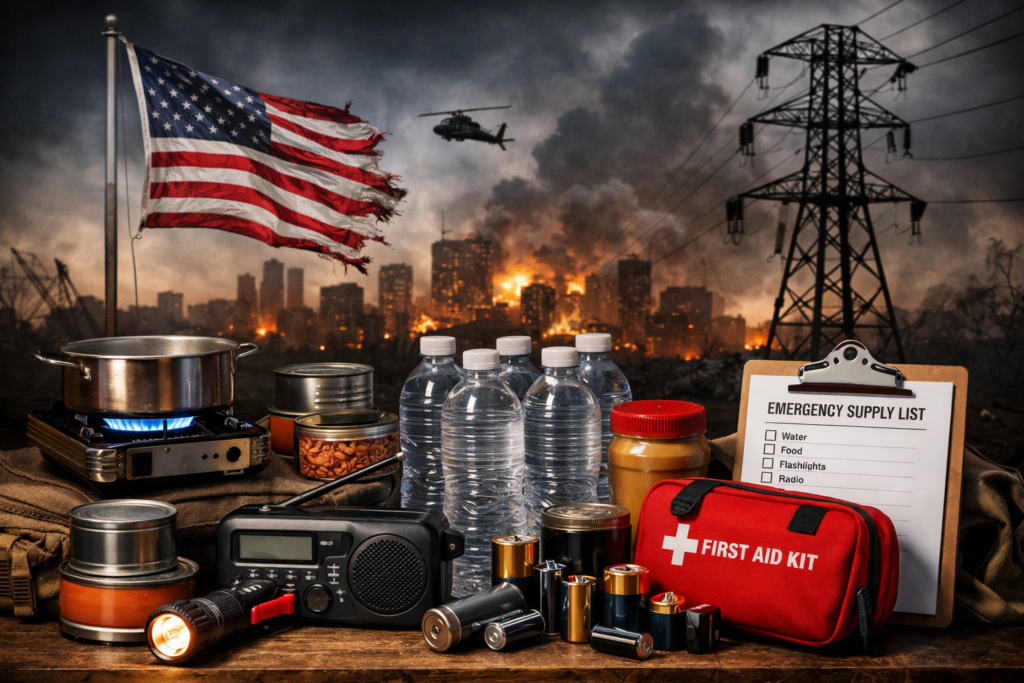
A power grid failure can disrupt electricity, internet access, and essential services for days. While most outages are caused by storms, preparing for a power grid failure helps families stay safe during any large emergency.
Preparing your household ahead of time ensures that your family can remain safe and comfortable even if electricity becomes unavailable for several days or longer.
This guide explains practical steps families can take to prepare for a power grid failure in the United States, whether caused by severe weather, infrastructure damage, or broader emergencies that delay repairs.
Why Preparing for a Power Grid Failure in the United States Matters
Most Americans experience short power outages during storms or equipment failures. In many of those situations, electricity is restored within hours or days.
However, there are circumstances where power outages could last much longer, especially if critical infrastructure is damaged or if repair crews cannot access the affected areas immediately.
Longer outages could occur during:
- major storms or natural disasters
- infrastructure failures
- cyberattacks on energy systems
- large-scale emergencies or conflicts
Preparing your household ahead of time ensures your family can remain safe and comfortable if electricity becomes unavailable for several days or longer.
Preparedness is not about expecting the worst. It is simply about making sure your household has the basic supplies needed to manage temporary disruptions.
For additional guidance on emergency readiness, households can review preparedness resources from the Federal Emergency Management Agency and the preparedness website Ready.gov
Cooking Without Electricity
Many homes rely on electric stoves, microwaves, and other appliances that will not work during a power outage. Having an alternative way to prepare food can make a significant difference during extended outages.
Portable Camping Stove
A small propane or butane camping stove is one of the most useful emergency cooking tools. These stoves are widely used by campers and can quickly boil water or cook simple meals.
Outdoor Grill
Gas or charcoal grills can also be used for cooking during outages. These should always be used outdoors to avoid dangerous carbon monoxide buildup.
Butane Tabletop Stove
Compact butane stoves are easy to store and can heat canned foods or boil water quickly.
No-Cook Food Options
It is also helpful to keep foods that require little or no preparation, such as:
- canned meats
- peanut butter
- granola bars
- crackers
- dried fruit
- ready-to-eat meals
Always include a manual can opener with emergency food supplies.
Staying Warm or Cool Without Power
Heating and air-conditioning systems typically require electricity, which means homes can become uncomfortable during prolonged outages.
Staying Warm in Cold Weather
During winter outages, families can conserve heat by:
- wearing layered clothing
- using blankets or sleeping bags
- gathering in one room to conserve warmth
- closing curtains and doors to reduce heat loss
Staying Cool in Hot Weather
During summer outages, households should focus on reducing heat exposure by:
- opening windows during cooler evening hours
- staying in shaded areas of the home
- using battery-powered fans
- drinking plenty of water
Proper hydration becomes especially important during hot weather outages.
How to Stay Informed Without Internet or Television
One of the biggest challenges during a large power outage is not knowing what is happening. Most households today rely on internet services, smartphones, streaming television, and social media for information. When the electrical grid goes down, these services may become unreliable or unavailable.
However, information does not disappear entirely. Communities often continue to receive updates through local radio stations, emergency broadcasts, and local government announcements.
Battery-Powered Radio
A simple battery-powered radio can still receive local AM/FM broadcasts even when internet services are down. Many local stations are connected to emergency communication systems that continue operating during disasters.
These radios are inexpensive and easy to store in an emergency kit.
Hand-Crank Emergency Radio
Hand-crank radios include a small generator that produces power when the handle is turned. This allows the radio to operate without batteries or electricity, which can be useful during extended outages.
Many models also include built-in flashlights and USB ports for charging phones.
Walkie-Talkies for Family Communication
Two-way radios, commonly called walkie-talkies, can allow family members or neighbors to communicate locally even when cell service is unavailable. These are especially helpful for families living in large neighborhoods or rural areas.
Local Information Sources
Even when national communication systems are disrupted, local information often continues to circulate. Local police departments, fire stations, and community leaders may provide updates about shelter locations, water availability, or safety information.
In a major emergency, staying calm and gathering information from multiple trusted sources can help families make better decisions.
Why Water Becomes One of the Most Important Supplies
Water is one of the first necessities that becomes difficult to access during a major infrastructure disruption.
Many people assume that water will continue flowing from taps even if electricity goes out. While this is sometimes true in the early stages of an outage, many water systems rely on electric pumps to maintain pressure.
If the power grid failure lasts long enough, water service may eventually be reduced or temporarily unavailable.
Water is needed not only for drinking but also for:
- cooking food
- sanitation and hygiene
- basic cleaning
- caring for children or elderly family members
Emergency planners recommend storing one gallon of water per person per day to cover both drinking and basic sanitation needs.
Example for a Family of Five
Daily water requirement:
5 people × 1 gallon = 5 gallons per day
Two-week preparation:
5 gallons × 14 days = 70 gallons of water
This may sound like a large amount, but water can be stored gradually using bottled water or larger food-grade containers.
Having water stored ahead of time removes one of the biggest stress factors during an extended outage.
What Non-Perishable Food Really Means
When preparing for a long power outage, you will often hear the term non-perishable food.
Non-perishable foods are items that can be safely stored at room temperature for long periods of time without refrigeration.
These foods remain safe to eat even if electricity is unavailable.
Five Important Non-Perishable Foods to Start With
If you are just beginning your emergency preparation, these five items helps, families remain safe during extended outages. Here are some of the most useful:
- Canned protein (tuna, chicken, or beans)
- Peanut butter or nut butters
- Rice or pasta
- Canned vegetables or soups
- Granola bars or shelf-stable snacks
These foods provide a combination of protein, carbohydrates, and calories that help sustain energy.
Because there are many options available, we created a complete printable guide of recommended non-perishable foods.
You can download the full list here:
Download: Complete Non-Perishable Food Storage List (Printable PDF)
This list helps families build a practical food supply without purchasing unnecessary items.
Refrigerator and Freezer Safety During Power Outages
Food safety is an important concern during extended outages.
Refrigerator
A refrigerator keeps food cold for approximately four hours if unopened.
Perishable foods such as meat, dairy products, and leftovers should be discarded if they remain above 40°F for more than two hours.
Freezer
A full freezer can keep food frozen for:
- 48 hours if unopened
- 24 hours if half full
Frozen food that still contains ice crystals may often be safely refrozen or cooked.
Keeping freezer doors closed helps preserve cold temperatures longer.
- Emergency Preparedness Shopping List (Downloadable Guide)
- There are many possible emergency supplies, and trying to remember everything can feel overwhelming.
- Instead of listing dozens of items here, we recommend starting with a few essentials from each category:
- Water
- Bottled water or refillable containers
- Food
- A small supply of canned meals or shelf-stable foods
- Lighting
- Flashlights and extra batteries
- Communication
- Battery-powered radio or portable chargers
- Safety
- Basic first aid kit
- To make preparation easier, we created a complete Emergency Preparedness Shopping List that you can print and use while shopping.
- Download the Full Emergency Preparedness Shopping List (PDF)
- Subscribers to our blog can also receive updates when we publish new preparedness guides and safety alerts.
Sanitation and Hygiene During Long Power Outages
When electricity is unavailable for several days, basic sanitation can quickly become a challenge. Many people do not realize that modern sanitation systems often rely on electricity to operate pumps, treatment systems, and water pressure.
If a power outage lasts long enough, water service may become limited or unavailable, making it important to plan for basic hygiene and sanitation needs.
Maintaining cleanliness during an emergency helps prevent illness and keeps households more comfortable during stressful situations.
Basic Hygiene Supplies to Keep at Home
A small supply of hygiene products can help families maintain cleanliness even when normal utilities are unavailable.
Some helpful items include:
- hand sanitizer
- wet wipes or baby wipes
- paper towels
- soap and basic toiletries
- trash bags
- disposable gloves
- toilet paper
These items require little storage space but can make a big difference during extended outages.
Managing Waste if Water Service Is Interrupted
If water service becomes unavailable, toilets may not function normally.
One temporary solution used during emergencies is a bucket toilet system.
This involves:
- a sturdy bucket with a lid
- heavy-duty trash bags
- absorbent materials such as kitty litter or sawdust
After each use, a small amount of absorbent material can help control odor until waste can be safely disposed of.
This is not something most families ever need to use, but understanding basic sanitation options can help households stay prepared during unexpected disruptions.
Keeping Hands Clean Without Running Water
Hand hygiene is extremely important during emergencies to prevent the spread of bacteria and illness.
When running water is limited, families can still maintain hygiene by using:
- alcohol-based hand sanitizer
- wet wipes
- bottled water with soap
If bottled water must be conserved, using sanitizer between meals and after handling waste can help maintain basic cleanliness.
Why Sanitation Planning Matters
When households think about emergency preparedness, they usually focus on food and water first. While those are essential, sanitation is equally important for maintaining health and preventing illness during longer disruptions.
By storing a few basic hygiene supplies and understanding simple sanitation solutions, families can remain safer and more comfortable until normal utilities are restored.
How Can Families Prepare for a Power Grid Failure with Children, Elderly Family Members, and Pets for Long Power Outages
Emergency preparation is not only about supplies and equipment. It is also about making sure that every member of the household is safe and comfortable, especially those who may need additional care.
Children, elderly individuals, and pets often have specific needs that should be considered when preparing for extended power outages or other emergencies.
Planning ahead can help reduce stress and ensure that everyone in the household is properly supported.
Preparing Children During Emergencies
Children may not fully understand what is happening during a power outage or major emergency. Sudden darkness, unfamiliar sounds, or changes to daily routines can feel frightening.
Parents can help children remain calm by:
- explaining the situation in simple and reassuring terms
- keeping flashlights or small lanterns easily accessible
- maintaining familiar routines as much as possible
- keeping comfort items such as blankets or favorite toys nearby
Activities such as books, board games, or simple crafts can also help keep children occupied if electronic devices cannot be used.
Having small entertainment items stored in an emergency kit can make long outages easier for younger family members.
Supporting Elderly Family Members
Older adults may face additional challenges during extended outages, particularly if they rely on electrical medical equipment or take regular medications.
Families should consider preparing for situations such as:
- medications that need refrigeration
- medical devices that require electricity
- mobility challenges during dark conditions
Helpful preparations include:
- keeping extra medication supplies if possible
- storing flashlights in easy-to-reach locations
- keeping emergency contact information printed and accessible
Checking in regularly with elderly neighbors or relatives during outages can also make a meaningful difference.
Caring for Pets During Power Outages
Pets are part of many families, and they also depend on their owners during emergencies.
Preparation for pets may include:
- storing extra pet food and water
- keeping a leash or carrier easily accessible
- maintaining vaccination records in a safe place
- having comfort items such as blankets or toys
Animals can also become stressed during unusual situations, so keeping them in a familiar environment and maintaining feeding routines can help them remain calm.
Community Support Matters
During extended outages or emergencies, communities often rely on neighbors helping one another. Checking on elderly neighbors, sharing information, or assisting families who need help can strengthen community resilience.
Prepared households are better able to help others, which is why simple planning ahead can benefit entire communities.
Why Family Preparedness Is Important
Emergency preparedness is not only about supplies. It is about making sure that everyone in the household—children, seniors, and pets—can remain safe and comfortable until normal services return.
Taking a few steps now to consider these needs can make unexpected disruptions much easier to manage.
Emergency Kits Are Useful for Many Situations
An emergency preparedness kit is not only for one type of disaster. These kits can help families during many situations, including:
- severe storms
- tornadoes
- blizzards
- hurricanes
- long power outages
- infrastructure failures
- large-scale emergencies or conflicts
Having a small kit prepared ahead of time allows families to respond quickly and avoid unnecessary stress.
We created a complete 72-Hour Emergency Kit Checklist that explains exactly what to include.
Download the 72-Hour Emergency Kit Guide (PDF)
This guide walks families through building a practical emergency kit step by step.
If a Major Conflict Occurred: Practical Do’s and Don’ts
Many Americans today have never experienced war or large-scale disruptions. While such events are rare, it is still helpful to understand basic preparedness principles.
The goal is not to create fear but to encourage calm and practical thinking.
Do
Stay calm and focus on your household’s immediate needs such as water, food, and shelter.
Follow guidance from trusted local authorities when communication is available.
Check on neighbors, especially elderly individuals who may need assistance.
Use emergency supplies responsibly so they last longer.
Don’t
Do not panic or rush to stores during emergencies if it can be avoided.
Do not rely on rumors or unverified information.
Avoid unnecessary travel during unstable situations.
Remember that preparation is simply about being ready to manage temporary disruptions until normal services return.
Emergency Contacts and Resources for U.S. Households
While preparing your home for potential power outages or emergencies, it is also helpful to know where to find reliable information and assistance when services are still available.
The United States has several national and local agencies that provide emergency updates, disaster assistance, and safety guidance during major events such as storms, tornadoes, floods, or infrastructure disruptions.
Federal Emergency Management Agency (FEMA)
The Federal Emergency Management Agency coordinates disaster response and recovery efforts across the United States.
FEMA provides guidance on emergency preparedness, evacuation planning, and disaster assistance programs.
FEMA website: fema.gov
Disaster assistance website: dissarterassistance.gov
Ready.gov Emergency Preparedness
The official preparedness website Ready.gov provides practical information on how families can prepare for many types of emergencies.
Topics include:
- emergency supply kits
- evacuation planning
- disaster preparedness for families
- guidance for storms, floods, and earthquakes
Ready.gov website: ready.gov
Important Emergency Phone Numbers
Keeping a printed list of emergency numbers can be helpful if internet access or mobile contacts become unavailable.
National Emergency Number
911 – Police, fire, or medical emergency assistance
FEMA Disaster Assistance Helpline
1-800-621-FEMA (3362)
This line can help people apply for disaster assistance after federally declared disasters.
American Red Cross
1-800-RED-CROSS (733-2767)
The American Red Cross provides shelter, food assistance, and support during major disasters.
Local Emergency Management Offices
Every county or city typically has a local emergency management office responsible for coordinating local response efforts.
These offices may provide:
- evacuation information
- emergency shelters
- local disaster updates
It is helpful to locate your local emergency management office before an emergency occurs.
Why It Helps to Write Down Emergency Information
During extended power outages, phones may lose battery power and internet access may be limited. For this reason, many preparedness experts recommend keeping a printed emergency contact list inside your emergency kit.
This list can include:
- emergency phone numbers
- important family contacts
- medical information
- local emergency management offices
Having this information available can help families respond more quickly and stay connected during unexpected situations.
If you are preparing your home for emergencies, you may also want to read How to Purify Water During an Emergency (Complete Guide) : https://everydayanswers.online/?p=792
How long could a power grid failure last?
Most outages are restored within hours or days. However, larger infrastructure disruptions could potentially take longer depending on the situation.
How much water should families store?
Experts recommend storing one gallon per person per day for drinking and sanitation.
What foods are best during a power outage?
Non-perishable foods such as canned goods, peanut butter, pasta, rice, and shelf-stable snacks are ideal.
How can I stay informed without the internet?
Battery-powered or hand-crank emergency radios can provide updates when internet and television services are unavailable.
How long does food stay safe in a refrigerator without power?
A refrigerator can keep food safe for about four hours, while a full freezer may keep food frozen for up to 48 hours.
Are you prepared for a long power outage?
Many Americans have never experienced a major infrastructure disruption, which is why preparation is so important.
We would love to hear from you.
Do you currently keep any emergency supplies at home?
Is there an item you recommend that other families should consider adding to their preparedness kit?
Share your experience in the comments below. Your advice could help others become better prepared.
What Americans Learned From Wartime Rationing and Power Restrictions
Many Americans today have never experienced long-term disruptions to daily life caused by war or large-scale national emergencies. However, previous generations in the United States lived through periods where electricity, fuel, and food supplies were limited.
During World War II, the U.S. government introduced rationing programs to ensure that resources such as gasoline, food, and materials were available for military use. Families were encouraged to conserve electricity, grow their own food, and avoid unnecessary consumption.
Victory Gardens
One of the most well-known preparedness efforts was the creation of Victory Gardens. Millions of American families planted vegetables in backyards, parks, and community spaces to supplement food supplies.
These gardens produced significant amounts of food and helped reduce pressure on commercial food systems.
Fuel and Energy Conservation
Citizens were encouraged to conserve fuel and electricity whenever possible. People adjusted their daily habits, shared resources, and relied more heavily on local communities for support.
Community Cooperation
Perhaps the most important lesson from that time was the importance of community cooperation. Neighbors shared information, helped one another, and worked together to manage limited resources.
Why These Lessons Still Matter Today
The goal of preparedness today is not to expect the same conditions experienced during wartime decades ago. Instead, the lesson is that basic preparation and community awareness can make unexpected disruptions easier to manage.
Having simple supplies at home, knowing how to cook without electricity, storing water, and staying informed are practical steps that help families remain resilient during many types of emergencies.
Preparedness also helps communities respond more effectively because households that are ready for short-term disruptions can focus on supporting one another rather than rushing to secure basic supplies during a crisis.
Final Thoughts
Preparing for a power grid failure in the United States is not about expecting the worst. It is about making sure that families have the basic supplies and knowledge needed to remain safe and comfortable during unexpected disruptions.
Many people do not think about emergency preparedness until a crisis occurs. Taking small steps now—such as storing water, learning about food storage, and creating an emergency kit—can make a significant difference if services are temporarily unavailable.
Preparedness allows families to respond calmly, stay informed, and support their communities when challenges arise.