
Lower electric bill expenses by making small adjustments to your daily household habits and energy usage. With electricity costs increasing in many areas, homeowners are looking for practical ways to reduce their monthly utility bills.
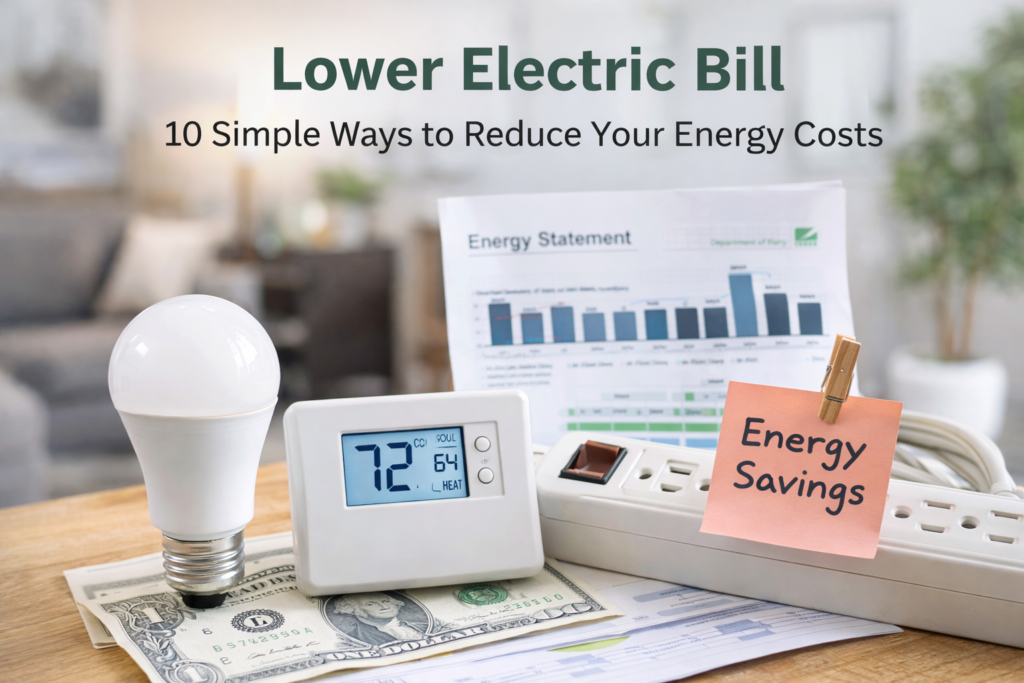
Learning how to lower electric bill costs can help families manage their budgets more effectively while still maintaining a comfortable home.
Below are ten practical strategies that can help reduce electricity usage and save money every month.
1. Turn Off Lights When Not in Use
One of the simplest ways to lower electric bill costs is to turn off lights in rooms that are not being used.
While a single light bulb may not use much energy, leaving lights on throughout the home can increase electricity consumption over time.
2. Replace Old Light Bulbs with LED Bulbs
LED bulbs use significantly less electricity than traditional incandescent bulbs.
Switching to LED lighting can reduce lighting energy consumption by up to 75 percent, helping homeowners lower electric bill costs over time.
3. Unplug Electronics Not Being Used
Many electronics continue to use electricity even when they are turned off.
Devices such as televisions, chargers, and gaming consoles draw small amounts of power known as phantom energy.
Unplugging unused devices can help lower electric bill expenses.
4. Use Energy-Efficient Appliances
Energy-efficient appliances are designed to use less electricity while performing the same tasks.
Appliances labeled with energy efficiency certifications can significantly reduce electricity usage.
5. Adjust Your Thermostat
Heating and cooling systems are often the largest contributors to electricity costs.
Adjusting the thermostat by just a few degrees can make a noticeable difference in monthly utility bills.
6. Wash Clothes with Cold Water
Using cold water for laundry reduces the energy required to heat water.
This small change can help households lower electric bill expenses over time.
7. Seal Windows and Doors
Air leaks around windows and doors allow cooled or heated air to escape.
Sealing gaps helps maintain indoor temperature and reduces the amount of energy needed for heating and cooling.
8. Use Appliances During Off-Peak Hours
In some areas, electricity rates are lower during off-peak hours.
Running appliances such as dishwashers or washing machines during these times can reduce energy costs.
9. Clean Air Filters Regularly
Dirty air filters make heating and cooling systems work harder.
Cleaning or replacing filters regularly can improve efficiency and help lower electric bill costs.
10. Monitor Your Energy Usage
Monitoring electricity usage helps identify which appliances consume the most power.
Understanding energy consumption patterns can help homeowners make better decisions to lower electric bill expenses.
For more everyday money-saving strategies, explore additional budgeting tips here on Everyday Answers.
https://everydayanswers.online/?p=756
For additional guidance on reducing home energy consumption, you can also review energy-saving recommendations from the U.S. Department of Energy. https://www.energy.gov/
Frequently Asked Questions About How to Lower Electric Bill
What uses the most electricity in a home?
Heating and cooling systems typically use the most electricity in most households.
Can unplugging electronics really save money?
Yes. Electronics that remain plugged in can continue using electricity even when turned off.
How much can LED bulbs reduce electricity costs?
LED bulbs can reduce lighting energy usage by up to 75 percent compared to traditional bulbs.
What temperature saves the most energy?
Keeping your thermostat a few degrees higher in summer and lower in winter can help reduce energy usage.
Engagement Section
What Helps You Lower Your Electric Bill?
Many homeowners are searching for ways to reduce monthly utility costs.
We would love to hear from you.
- What strategies help you lower electric bill costs?
- Do you use energy-efficient appliances?
- Have you noticed changes in your electricity costs recently?
Share your experiences in the comments and help other readers save money.