
As severe weather begins to develop across many parts of the United States, families should review their emergency plans and prepare their homes for dangerous storms. A reliable tornado season safety guide can help households respond quickly when severe weather warnings are issued.
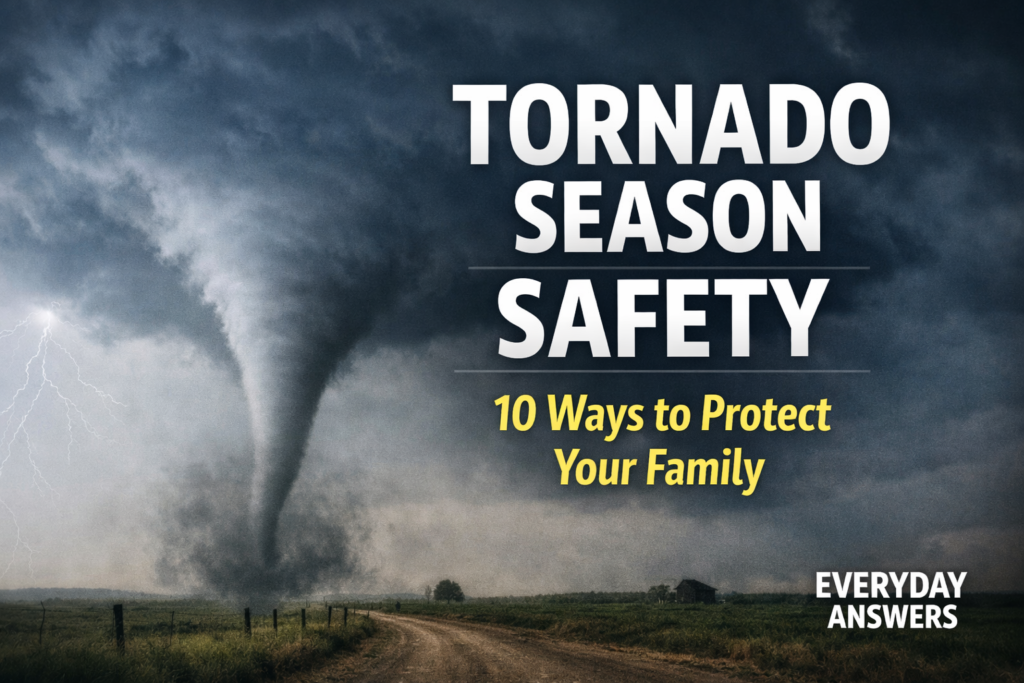
Tornadoes are among the most powerful and destructive weather events. These rotating columns of air can form quickly during thunderstorms and produce winds exceeding 200 miles per hour. In just a few minutes, tornadoes can destroy homes, overturn vehicles, and cause widespread damage.
Because tornadoes can develop with little warning, preparation is one of the most important steps families can take to protect themselves. Understanding the basics of tornado preparedness allows households to stay calm and respond effectively when severe weather occurs.
Why Tornado Preparedness Matters
Each year, the United States experiences hundreds of tornadoes, particularly during the spring and early summer months. States located in what is often called “Tornado Alley” — including Texas, Oklahoma, Kansas, Nebraska, and parts of the Midwest — tend to experience the highest concentration of tornado activity.
However, tornadoes can occur in many regions of the country. Severe storms capable of producing tornadoes have been reported in the Southeast, Northeast, and even parts of the West.
According to the National Weather Service, tornadoes can develop quickly during powerful thunderstorms, which is why families should monitor weather alerts and prepare emergency supplies ahead of time.
https://www.weather.gov/safety/tornado
A strong tornado season safety guide ensures that families know exactly what steps to take when severe weather threatens their community.
10 Steps Every Household Should Take Before Tornado Season
Preparing ahead of time can significantly improve your family’s safety during severe weather events. Following a basic tornado season safety guide can help households avoid confusion and respond quickly during emergencies.
1. Identify the Safest Place in Your Home
The safest location during a tornado is typically a basement or an interior room on the lowest level of your home. Bathrooms, closets, and hallways without windows often provide the best protection.
2. Create a Family Emergency Plan
Every member of your household should know where to go during a tornado warning. Practicing your emergency plan can help ensure everyone responds quickly.
3. Prepare an Emergency Supply Kit
A basic emergency kit should include:
• bottled water
• non-perishable food
• flashlights
• batteries
• first aid supplies
• phone chargers or portable battery packs
4. Keep a Weather Radio
Battery-powered weather radios provide emergency alerts even during power outages, helping families stay informed during severe storms.
5. Secure Outdoor Items
Outdoor furniture, grills, and garden equipment can become dangerous projectiles during strong winds. Bringing these items indoors before storms arrive can reduce potential damage.
6. Charge Important Devices
Keeping mobile phones and backup batteries fully charged ensures you can receive weather alerts and communicate with family members during emergencies.
7. Know Your Community’s Emergency Warning System
Many communities use tornado sirens or emergency alert systems. Understanding these alerts can help families recognize when immediate action is required.
8. Teach Children What To Do
Children should understand the basics of tornado safety, including where to go and how to protect themselves during severe weather.
9. Protect Important Documents
Store important documents such as identification, insurance papers, and medical records in waterproof containers.
10. Stay Informed About Weather Conditions
Monitoring weather forecasts and alerts is one of the most important steps in any tornado season safety guide.
Signs That a Tornado May Be Forming
While tornadoes can develop quickly, certain weather conditions may indicate that a storm is becoming more dangerous.
Common warning signs include:
• dark or greenish skies
• large hail or intense thunderstorms
• a loud roaring sound similar to a freight train
• rotating cloud formations or funnel clouds
If these conditions occur, families should immediately move to their designated safe area.
What To Do During a Tornado Warning
A tornado warning means that a tornado has been sighted or detected by weather radar. When a warning is issued, immediate action is required.
Follow these safety steps:
• move to the lowest level of your home
• stay away from windows and exterior walls
• cover your head and neck with blankets, pillows, or a mattress
• stay tuned to emergency alerts until the storm has passed
Households that follow a tornado season safety guide are better prepared to respond quickly during these dangerous situations.
After the Storm: Staying Safe After a Tornado
Even after the storm has passed, hazards may still exist. Tornado damage can leave behind broken structures, exposed power lines, and debris that may cause injury.
After a tornado:
• check family members for injuries
• avoid downed power lines
• watch for gas leaks or structural damage
• follow instructions from local emergency officials
Staying cautious after severe weather helps prevent additional accidents.
How to Stay Updated During Tornado Season
Technology has made it easier than ever to stay informed about severe weather.
Helpful tools include:
• smartphone weather alert apps
• local emergency notification systems
• television and radio weather reports
• official government weather websites
Using multiple sources of information helps ensure that you receive alerts quickly.
For additional safety alerts and preparedness tips, readers can explore our Emergency Preparedness and Safety Guides to learn how to protect their homes and families during unexpected situations.https://everydayanswers.online/category/emergency-preparedness/
Frequently Asked Questions
When does tornado season occur in the United States?
Tornado season typically peaks between March and June, although tornadoes can occur at any time of the year.
What is the safest place during a tornado?
A basement or interior room on the lowest floor of a building away from windows is usually the safest location.
How much warning do people usually have before a tornado?
Warning times vary, but many tornado warnings are issued between 10 and 20 minutes before a tornado reaches an area.
Can tornadoes happen at night?
Yes. Nighttime tornadoes can be especially dangerous because they are harder to see and people may be asleep when warnings are issued.
Final Thoughts
Preparing for severe weather does not have to be complicated, but it does require planning ahead. Families who follow a reliable tornado season safety guide can respond more effectively when dangerous storms develop.
Taking time now to review your emergency plan, prepare supplies, and monitor weather alerts can make a critical difference in protecting your home and loved ones during tornado season.