
Lower Monthly Grocery Bill strategies are becoming more important for many households. If you’ve been looking for practical ways to reduce food expenses without extreme couponing or drastic changes, these simple adjustments can help.
Many families are looking for practical ways to lower their monthly grocery bill as food prices continue to rise across the United States.
Groceries have quietly become one of the largest monthly expenses for many households. Prices fluctuate, package sizes shrink, and what used to feel routine now requires more attention.
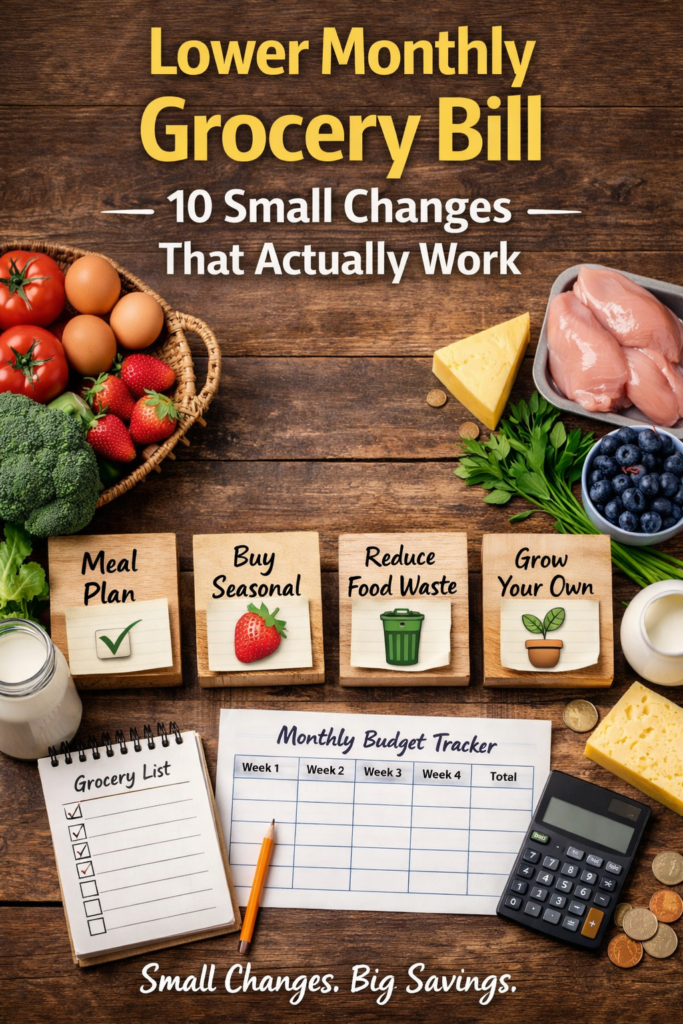
The good news?
Lowering your grocery bill doesn’t require extreme couponing or cutting out everything you enjoy. Small, intentional changes — done consistently — can make a noticeable difference over time.
Here are ten practical adjustments that can help you reduce spending without sacrificing quality or nutrition.
Simple Ways to Lower Your Monthly Grocery Bill Without Sacrificing Quality
1️⃣ Plan Meals Before You Shop
Meal planning doesn’t have to mean creating complicated weekly charts or cooking gourmet meals every night. At its core, it simply means deciding what you’re going to eat before you step into the store.
When you shop without a plan, you’re more likely to:
- Buy duplicate ingredients
- Grab convenience foods
- Forget key items
- Make multiple trips during the week
Each extra trip usually leads to extra spending. Practical Ways to Lower Monthly Grocery Bill in 2026
Start with What You Already Have
Before planning anything new, take 5–10 minutes to check:
- The refrigerator
- The freezer
- Pantry shelves
Write down proteins, vegetables, grains, and leftovers that need to be used soon.
Then build meals around those ingredients.
For example:
- Leftover chicken → chicken tacos or chicken soup
- Half a bag of spinach → omelets or pasta
- Rice in the pantry → stir-fry or burrito bowls
Planning around what you already own reduces waste and lowers the amount you need to buy.
Plan 4–5 Dinners, Not 7
You don’t need to plan every meal.
Most households benefit from planning:
- 4–5 dinners
- A few breakfast staples
- 1–2 flexible leftover nights
Leave space for:
- Eating leftovers
- Using up random ingredients
- Adjusting if schedules change
Over-planning can lead to wasted food.
Choose Overlapping Ingredients
One smart way to save money is to plan meals that share ingredients.
Example:
If you buy:
- Ground beef
- Bell peppers
- Onions
You can make:
- Tacos
- Stuffed peppers
- Spaghetti
- Burrito bowls
Buying ingredients with multiple uses stretches your grocery budget further.
Keep It Simple
Budget-friendly meals don’t have to be complicated.
Examples of simple, low-cost dinners:
- Rice + beans + vegetables
- Pasta + homemade sauce
- Sheet pan chicken + potatoes
- Vegetable stir-fry
Focus on:
- Basic ingredients
- Balanced nutrition
- Affordable staples
Simple meals often cost significantly less per serving than pre-packaged options.
Write a List and Stick to It
Once your meals are planned, write your grocery list based strictly on those meals.
At the store:
- Shop with intention
- Avoid browsing
- Skip “just in case” items
The list protects your budget.
Why This Works
Meal planning reduces impulse buying, minimizes food waste, and prevents multiple grocery trips during the week.
Even reducing one unnecessary store visit per week can save:
- Gas money
- Time
- $20–$40 in unplanned purchases
Over a month, that’s meaningful savings.
2️⃣ Shop Your Pantry First
Before you even think about heading to the grocery store, pause and take inventory of what you already have.
Many households unknowingly spend money replacing items they already own — simply because they didn’t check first.
“Shopping your pantry” means using what you have before buying more.
It sounds simple, but it can significantly lower your grocery bill.
Start with a Quick 5–Minute Scan
Open:
- Your refrigerator
- Freezer
- Pantry shelves
Look for:
- Proteins (chicken, ground beef, frozen fish)
- Grains (rice, pasta, quinoa)
- Canned goods (beans, tomatoes, corn)
- Half-used vegetables
- Leftovers
Write down what needs to be used soon.
This prevents food from expiring and reduces waste.
Build Meals Around Existing Ingredients
Instead of planning meals first and shopping for them, reverse the process.
Ask:
“What meals can I make with what I already have?”
Examples:
- Canned beans + rice → burrito bowls
- Frozen vegetables + pasta → simple stir-fry
- Leftover chicken → wraps, soup, or salad
- Eggs + vegetables → breakfast-for-dinner
Using what’s already in your kitchen lowers the amount of new food you need to purchase. These small shifts may seem simple, but together they can significantly lower your monthly grocery bill over time.
Check Expiration Dates
Sometimes we buy duplicates because we assume we’re out.
Take a quick look at:
- Spices
- Flour
- Oats
- Baking supplies
- Sauces
You may already have enough for several meals.
Avoid the “Just in Case” Mindset
Buying extra “just in case” items often leads to:
- Expired food
- Cluttered shelves
- Unnecessary spending
If you’re unsure, check first. If you’re close to running out, add it to the list — but avoid guessing.
3️⃣ Buy Generic When It Makes Sense
Buying generic doesn’t mean sacrificing quality. In many cases, store brands are produced in the same facilities as name brands — just packaged differently.
The difference? Marketing costs.
National brands spend heavily on advertising. Store brands don’t. That savings is often reflected in the price.
But the key phrase here is: when it makes sense.
Not everything should automatically be swapped. The smart approach is comparison.
Compare Ingredients — Not the Label
Instead of assuming name brand is better, flip the package over and compare:
- Ingredient lists
- Nutrition labels
- Serving sizes
- Price per ounce
You may be surprised at how similar they are.
For example:
- Store-brand canned vegetables often contain the same ingredients: vegetables, water, salt.
- Generic pasta is typically made from the same durum wheat as name brands.
- Store-brand oats are often identical in nutritional value to premium brands.
If the ingredient list is nearly identical, you’re likely paying extra for the label — not the product.
Items Where Generic Often Makes Sense
These categories usually show little difference in quality:
- Rice
- Pasta
- Flour
- Sugar
- Oats
- Canned beans
- Canned tomatoes
- Frozen vegetables
- Baking supplies
- Basic spices
Switching even 5–6 pantry staples to generic can reduce a grocery bill by $10–$20 per trip.
Items Where You Might Compare More Carefully
Some products vary more in taste or quality:
- Condiments (ketchup, mayo, mustard)
- Coffee
- Cheese
- Cereal
- Yogurt
In these cases, try one generic version before committing. Some people find no difference. Others prefer the name brand.
The goal isn’t to eliminate everything branded — it’s to make informed choices.
Look at Price Per Unit
Many shoppers focus only on the shelf price.
Instead, look at:
- Price per ounce
- Price per pound
Sometimes the name brand on sale is cheaper than generic.
Unit pricing tells the real story.
Why This Works
Switching to generic products strategically can lower grocery costs without changing what you eat.
You’re not cutting quality.
You’re reducing unnecessary markup.
Over time, these small substitutions compound.
Saving $15 per trip can equal:
- $60 per month
- $720 per year
That’s meaningful — without extreme changes.
4️⃣ Choose Whole Ingredients Over Processed Foods
Convenience foods save time — but they often cost more per serving.
When you pay for pre-packaged meals, you’re not just paying for ingredients. You’re paying for:
- Pre-cut preparation
- Seasoning blends
- Packaging
- Branding
- Added convenience
Small swaps toward whole ingredients can quietly reduce your grocery total.
Compare the Cost Difference
For example:
- Pre-cut fruit costs noticeably more than buying whole fruit and slicing it yourself.
- Pre-seasoned meats are usually priced higher than plain cuts.
- Ready-made sauces often cost more than combining basic pantry staples like tomatoes, garlic, oil, and spices.
Even something as simple as shredded cheese versus block cheese can show a price difference per ounce.
These differences may seem small individually, but they add up over multiple shopping trips.
If you are trying to save money in other areas too, you may also like this guide on realistic ways to build extra income in 2026.
For more simple money habits, read this guide on How to Stop Impulse Buying and Save Money Fast.
Keep It Simple, Not Complicated
Choosing whole ingredients doesn’t mean cooking elaborate meals from scratch every night.
It can be as simple as:
- Plain rice instead of flavored rice packets
- Dry beans cooked in batches instead of canned seasoned beans
- Plain yogurt instead of pre-flavored varieties
These swaps reduce cost while still allowing flexibility in flavor.
Balance Time and Budget
There will be weeks when convenience makes sense — and that’s okay.
The goal isn’t to eliminate all processed foods. It’s to become aware of where you’re paying extra for convenience and decide when it’s worth it.
When you prepare more meals from basic ingredients, you gain:
- Better portion control
- More flexibility
- Lower cost per serving
Small shifts here can noticeably lower your monthly grocery bill.
According to the U.S. Bureau of Labor Statistics, food prices continue to fluctuate based on supply and demand trends.https://www.bls.gov/
Then link “U.S. Bureau of Labor Statistics” to:
5️⃣ Stick to the Perimeter (Mostly)
Most grocery stores are designed in a similar way. The outer edges — or perimeter — typically contain fresh, whole foods like:
- Produce
- Meat and seafood
- Dairy
- Eggs
The center aisles often contain more processed, packaged, and convenience items.
Sticking primarily to the perimeter can naturally guide you toward simpler ingredients and reduce impulse purchases.
That said, you’ll still need items from the center aisles — things like rice, pasta, beans, flour, and canned goods. The key word is mostly.
If you walk into the store with a plan and spend most of your time around fresh foods, you’re less likely to fill your cart with snacks or “just in case” items that quietly increase your total.
It’s not about avoiding entire sections.
It’s about shopping intentionally.
Even being mindful of where you spend most of your time in the store can help lower your monthly grocery bill.
6️⃣ Reduce Food Waste
Reducing food waste is one of the fastest ways to lower your grocery bill — because every item thrown away represents money already spent.
Even small amounts of waste each week can add up quickly over a month.
The goal isn’t perfection. It’s awareness.
Store Food Where You Can See It
Out of sight often means out of mind.
Use clear containers for leftovers so you can easily see what needs to be eaten first. Place older items toward the front of the refrigerator so they don’t get forgotten behind newer purchases.
If you can see it, you’re more likely to use it.
Repurpose Leftovers Creatively
Leftovers don’t have to be eaten the same way twice.
For example:
- Roasted vegetables → add to omelets or wraps
- Leftover chicken → soups, tacos, or salads
- Rice → stir-fries or fried rice
- Soft vegetables → blend into sauces or soups
Thinking creatively stretches meals further and reduces waste.
Freeze Before It Goes Bad
If you notice food nearing expiration, freeze it instead of tossing it.
Items that freeze well:
- Bread
- Cooked meat
- Soups and stews
- Shredded cheese
- Berries
- Cooked rice
Freezing extends shelf life and prevents emergency grocery runs.
Plan a “Use It Up” Night
One simple habit that works well is scheduling a weekly “use it up” meal.
Once a week, build dinner around whatever is left in the refrigerator. This clears space, prevents spoilage, and helps you reset before the next grocery trip.
For more budget help, read this guide on how to start saving money when you feel broke.
Why This Makes a Real Difference
If a household throws away even $10–$15 worth of food per week, that’s:
- $40–$60 per month
- $480–$720 per year
Reducing waste doesn’t require changing what you buy — it requires using what you already purchased.
That shift alone can noticeably lower your monthly grocery bill.
7️⃣ Buy Seasonal Produce
Buying fruits and vegetables when they’re in season is one of the easiest ways to lower your grocery bill — and improve quality at the same time.
When produce is in season, it’s:
- More abundant
- Easier to source
- Less expensive to transport
- Often fresher
Out-of-season produce usually travels farther, requires more storage, and costs more as a result.
Seasonal Produce Is Usually More Affordable
For example:
- Berries tend to cost less in late spring and summer.
- Apples are often more affordable in fall.
- Squash and root vegetables are usually cheaper during cooler months.
- Tomatoes are less expensive in summer compared to winter imports.
When supply is high, prices typically drop.
Shopping seasonally allows you to take advantage of natural price cycles instead of paying premium prices for off-season items.
Let the Sales Guide Your Menu
Instead of planning meals first and forcing expensive ingredients into your list, check store ads and seasonal produce displays.
If zucchini is on sale, build meals around zucchini.
If strawberries are abundant, incorporate them into breakfasts and snacks.
This flexible approach reduces spending without limiting variety.
Consider Freezing or Preserving
When seasonal produce is especially affordable, buy a little extra.
You can:
- Freeze berries for smoothies
- Chop and freeze peppers and onions
- Make simple sauces from extra tomatoes
Preserving seasonal abundance extends savings into future months.
Why This Matters
Buying seasonal produce supports your budget and improves flavor.
It also aligns naturally with self-sufficiency — especially if you’re growing some of your own food at home.
Instead of fighting the season, work with it.
That mindset alone can reduce grocery spending over time.
8️⃣ Use a Simple Grocery Budget
One of the easiest ways to control grocery spending is to give it a clear boundary.
Without a set number in mind, it’s easy for small extras to quietly push your total higher each week.
Start by setting a realistic weekly or monthly grocery budget based on:
- Household size
- Dietary needs
- Current spending patterns
If you’re unsure where to start, look at your last two or three grocery receipts and calculate an average. Then aim to reduce it slightly — even $25–$50 less per month can make a difference.
Break It Down Weekly
Instead of thinking in large monthly numbers, break it into weekly limits.
For example:
- $600 per month → about $150 per week
- $400 per month → about $100 per week
This makes tracking easier and helps you adjust before overspending.
Track Spending Simply
You don’t need complicated apps.
A simple notebook, printable tracker, or grocery list pad works well.
Before checkout:
- Review your cart
- Estimate your total
- Remove one or two non-essential items if needed
Small adjustments prevent budget creep.
Free Printable Option
If you’d like a simple way to stay organized, you can download our free monthly grocery budget tracker and printable grocery list to help you plan and stay on track.
(You can link to your email opt-in or free resource page here.)
Using a Grocery List Makes a Difference
Writing your list ahead of time reduces impulse purchases and helps you shop with purpose.
If you prefer something simple and tear-off ready, our grocery list memo pads are designed to make weekly planning quick and organized.
9️⃣ Start Small with Growing Your Own Food
Growing your own food doesn’t require a large backyard or a full garden setup.
Even starting small can reduce recurring grocery purchases.
You might begin with:
- Fresh herbs on a windowsill
- Green onions in a small container
- Lettuce in a shallow planter
- A single tomato plant in a pot
These may seem like minor additions, but over time they reduce small, repeat purchases — especially herbs, which can be surprisingly expensive at the store.
Why Starting Small Works
Growing just a few items:
- Reduces trips for “just one thing”
- Adds fresh flavor to meals
- Builds confidence for future seasons
- Encourages seasonal buying
It also gives you more control over quality and freshness.
You don’t need to replace your grocery store — just supplement it.
Ready to Go Further?
If you’re interested in learning how to start vegetables from seed indoors before spring planting, you can read our full step-by-step guide on how to start seeds indoors using simple household items.
(Insert internal link to your seed-starting post here.)
This connects budgeting with self-sufficiency — and keeps readers on your site.
🔟 Avoid Shopping When Hungry or Rushed
This tip sounds obvious, but it makes a measurable difference.
When you shop while hungry, your brain is more likely to prioritize quick satisfaction over thoughtful planning. That often leads to:
- Extra snacks
- Pre-packaged convenience foods
- Impulse bakery or deli items
- “Treat yourself” additions
Even a few extra items can quietly increase your total by $10–$25 per trip.
Over a month, that adds up.
Eat Before You Go
A simple snack before heading to the store — even something small like fruit, yogurt, or a sandwich — can help you make more balanced decisions.
When you’re not hungry, you’re more likely to:
- Stick to your list
- Compare prices calmly
- Skip unnecessary extras
Don’t Shop When You’re in a Rush
Rushed shopping often leads to:
- Grabbing the first item you see
- Skipping price comparisons
- Forgetting key ingredients
- Making return trips later in the week
Extra trips usually mean extra spending.
If possible, choose a time when you can move through the store with intention instead of urgency.
Use a Written List as a Guardrail
When you’re hungry or rushed, your list becomes even more important.
Treat your grocery list as a boundary. It helps prevent emotional or impulse decisions.
If something wasn’t planned, pause and ask:
“Is this necessary, or is this a reaction?”
That small pause can protect your budget.
Why This Works
Grocery stores are designed to encourage impulse buying — through smells, displays, and placement.
Shopping when you’re calm and prepared keeps you in control.
It’s a small behavioral shift that can lower your monthly grocery bill without cutting quality or nutrition.
By applying even a few of these strategies, you can significantly lower your monthly grocery bill and keep more money in your household budget.
Frequently Asked Questions
How much should a family spend on groceries each month?
Grocery budgets vary depending on household size, dietary needs, and location. A practical starting point is reviewing your last 2–3 months of grocery receipts to calculate your average spending.
From there, try reducing that number gradually — even lowering your total by $25–$50 per month can create noticeable savings over time.
The key is consistency, not drastic cuts.
What is the fastest way to lower a grocery bill?
The fastest way to lower grocery costs is to combine three habits:
- Plan meals before shopping
- Shop your pantry first
- Use a written grocery list
These steps reduce impulse purchases and prevent duplicate buying, which often accounts for unnecessary spending.
Is buying generic really cheaper?
In many cases, yes — especially for pantry staples like rice, pasta, canned vegetables, flour, and sugar.
The best approach is to compare ingredient labels and price per ounce. If the quality is similar, generic options often provide the same value at a lower cost.
However, taste preferences matter. It’s okay to compare and decide what works best for your household.
How can I reduce food waste at home?
To reduce food waste:
- Store leftovers in clear containers
- Freeze items before they spoil
- Plan one “use it up” meal per week
- Check expiration dates regularly
Reducing waste can lower grocery expenses without changing what you buy — simply by using what you already have.
Does growing your own food really save money?
Growing your own food can reduce small, repeat purchases — especially herbs, lettuce, tomatoes, and green onions.
While it may not replace your entire grocery bill, even starting small can supplement your meals and lower spending over time.
It also builds useful food independence skills.
How do I stick to my grocery budget each week?
Use a simple written grocery list and set a weekly spending limit. Before checkout, review your cart and remove non-essential items if needed.
Tracking spending regularly — even with a basic notebook or printable tracker — increases awareness and reduces overspending.
Let’s Make Grocery Shopping Easier Together
Everyone has a different approach to grocery budgeting.
What’s one small change that has helped lower your grocery bill?
Do you plan every week, grow a few herbs at home, or track spending more closely?
Share your favorite money-saving grocery tip in the comments. Your experience could help someone else stretch their budget this month.
If there’s a specific grocery challenge you’re working through — feeding a large family, managing dietary restrictions, shopping on a tight budget — let us know. We may create a guide to help.
Small changes add up.
And sometimes the best ideas come from everyday households learning together.
Final Thoughts
Lowering your grocery bill doesn’t require drastic changes or cutting out everything you enjoy.
With a few smart shopping habits and better planning, it is possible to lower monthly grocery bill expenses without sacrificing healthy meals for your family.
More often, it comes down to small, consistent habits:
Planning before shopping.
Using what you already have.
Making thoughtful substitutions.
Paying attention to waste.
Each adjustment may seem minor on its own, but together they create structure — and structure protects your budget.
You don’t have to implement all ten ideas at once. Start with one or two. Build from there.
Over time, you’ll likely notice something important: grocery shopping feels more intentional and less reactive.
And that shift alone can make a meaningful difference month after month.
Small changes. Steady progress. Real savings.
If you’re also looking for ways to grow food at home, see our guide on starting seeds indoors. https://everydayanswers.online/small-food-backup-using-plants/