
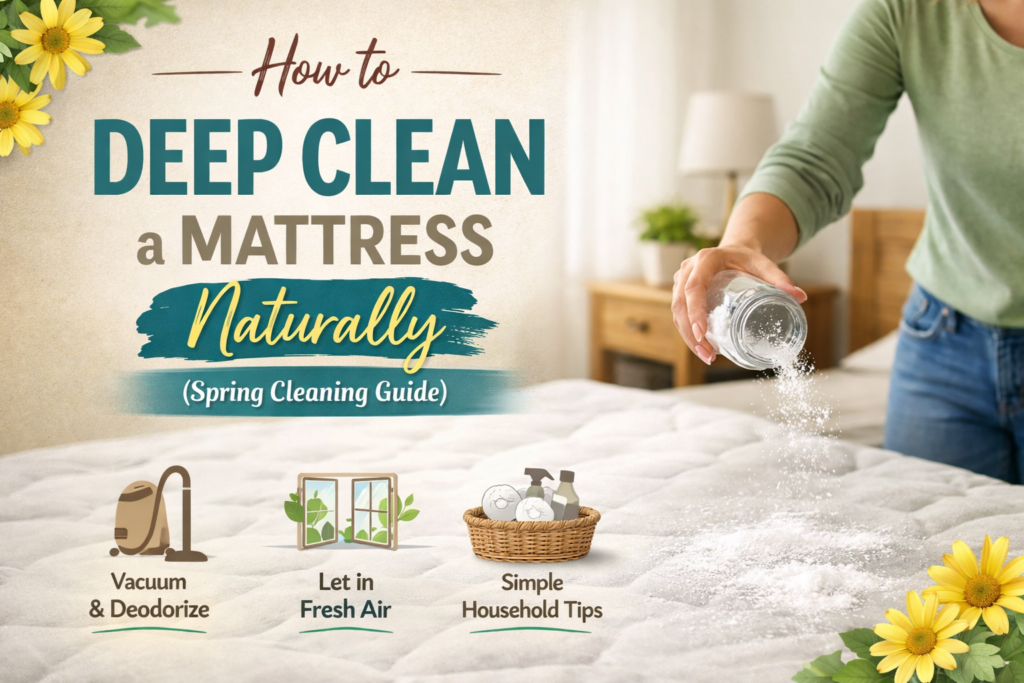
Spring is a good time to refresh your home, but your mattress deserves attention all year long. Dust, sweat, pet dander, spills, and everyday use can build up over time, even when your sheets look clean.
The good news is that you do not need harsh chemicals to make your mattress feel fresher. With a few simple supplies like baking soda, vinegar, and a vacuum, you can deep clean your mattress naturally and help your bedroom feel cleaner and more comfortable.
If you want to deep clean mattress naturally, the goal is to remove odors, freshen the surface, and reduce buildup without using strong chemical cleaners.
If you want to keep your bedroom and home feeling fresher between deep cleans, you may also like this guide on how to build a simple cleaning routine that actually prevents harsh chemicals. How to Build a Simple Cleaning Routine That Actually Prevents Illness
If you deep clean mattress naturally at least twice a year, you can remove allergens, odors, and dust mites that build up over time.
Even if you wash your sheets regularly, your mattress collects:
- Dust
- Dead skin cells
- Sweat
- Allergens
- Pet dander
- Odors
The good news? You don’t need harsh chemicals to clean it properly.
Here’s a calm, natural, step-by-step guide to deep cleaning your mattress the safe way.
Why You Should Deep Clean Your Mattress
Your mattress is used every single night.
Over time, buildup can:
- Trigger allergies
- Create odors
- Shorten the life of your mattress
- Affect sleep quality
Spring cleaning is the perfect reset.
Experts like the American Academy of Allergy, Asthma & Immunology recommend reducing dust and allergens in sleeping areas to improve air quality and reduce irritation.https://www.aaaai.org
What You’ll Need to Deep Clean a Mattress Naturally
You can clean your mattress the natural way using simple supplies you probably already have at home. It doesn’t have to feel overwhelming, complicated, or expensive. Deep cleaning your mattress shouldn’t require harsh chemical sprays or specialty products you’ll only use once.
With a few basic household items and a little time, you can refresh your mattress safely and effectively.
Here is what you’ll need:
- Baking soda
- White vinegar
- Mild dish soap
- Warm water
- Spray bottle
- Vacuum with upholstery attachment
- Clean microfiber cloths
- Essential oils (optional, for light scent)
That’s it. Simple, affordable, and gentle.
Step-by-Step: How to Deep Clean Your Mattress Naturally
Now that you have your supplies ready, take a deep breath. This doesn’t have to be rushed. Set aside a little time, open a window if the weather allows, and let’s walk through it together.
Step 1: Strip the Bed Completely
Before you deep clean mattress naturally, remove all sheets, blankets, mattress protectors, and pillows so you can work directly on the surface.
Start by removing everything from the bed — sheets, pillowcases, mattress protector, and bed skirt.
Wash your bedding in hot water (if the fabric allows). While it’s in the wash, your mattress can begin airing out. Even this simple step already makes a difference.
Giving your mattress time to breathe is part of the process.
Step 2: Vacuum Thoroughly
Before adding anything to the surface, remove what’s already there.
Using your vacuum’s upholstery attachment, go over the entire mattress slowly. Pay special attention to seams and creases, where dust and debris tend to collect.
There’s no need to rush this step. A careful vacuuming lays the foundation for everything else.
Step 3: Gently Treat Any Stains
If you notice stains, don’t panic.
For light stains, mix:
- 1 cup warm water
- A few drops of mild dish soap
Lightly dab the area with a clean cloth. Avoid soaking the mattress — gentle blotting works best.
For tougher spots, mix equal parts white vinegar and water in a spray bottle. Lightly mist the area and blot again.
The key here is patience. Too much moisture can damage the mattress, so always use a light touch.
Step 4: Deodorize with Baking Soda
Now comes the refreshing part.
Sprinkle a generous layer of baking soda over the entire surface of the mattress. You don’t need to pile it on — just enough to lightly cover the top.
Let it sit for at least 4–6 hours. If you have the time, leaving it overnight works even better.
This is where the magic happens. Baking soda naturally absorbs moisture and odors, helping your mattress feel clean and renewed.
If you’d like a light scent, you can mix a few drops of essential oil into the baking soda before sprinkling it on.
Step 5: Vacuum Again
Once the baking soda has had time to work, vacuum the entire mattress again.
Move slowly to ensure all residue is removed. This step pulls away the baking soda along with the odors and moisture it absorbed.
At this point, your mattress should already feel fresher.
Step 6: Let It Air Out
Before remaking the bed, allow your mattress to fully air dry.
If possible:
- Open windows
- Let natural light in
- Allow airflow around the mattress
Sunlight and fresh air help complete the process. Even 30–60 minutes of airflow makes a noticeable difference.
Once everything feels dry and fresh, you can put your clean bedding back on and enjoy the reset.
How to Keep Your Mattress Cleaner Longer
Now that your mattress feels fresh and renewed, the goal is simple: keep it that way for as long as possible.
The good news? It doesn’t take much. A few small habits can make a big difference in protecting your mattress and extending its life.
Here’s how to maintain that clean, spring-fresh feeling:
✔ Use a Washable Mattress Protector
A mattress protector acts as a barrier between your mattress and everyday buildup like sweat, dust, and accidental spills.
Choose one that’s breathable and machine washable. Washing it every 1–2 months helps prevent deeper stains and odors from forming.
This one small addition can significantly extend the life of your mattress.
✔ Wash Sheets Weekly
Sheets collect oils, sweat, and dust faster than we realize.
Washing them once a week (or at least every two weeks) helps reduce allergens and keeps your sleep space feeling fresh.
If someone in your household has allergies, weekly washing is especially helpful.
✔ Rotate Your Mattress
Rotating your mattress every 3–6 months promotes even wear and prevents sagging in one area.
Mark it on your calendar during seasonal changes — it’s an easy habit to build into your routine.
✔ Let Your Mattress Breathe
If possible, leave your bed unmade for 20–30 minutes in the morning before covering it with comforters and blankets.
This allows moisture from overnight sleep to evaporate instead of being trapped.
It’s a simple step that many people overlook.
✔ Avoid Eating in Bed
Crumbs and spills may seem harmless, but they can attract dust mites and create odors over time.
Keeping food out of the bed helps maintain cleanliness and prevents unexpected stains.
✔ Be Mindful of Pets
We love our pets — but their fur, dander, and occasional accidents can add up quickly.
If pets sleep on the bed, consider using a washable blanket layer on top of your bedding for easier cleaning.
Once you learn how to deep clean mattress naturally, it becomes an easy part of your seasonal home refresh routine.
A Little Maintenance Goes a Long Way
You don’t need to deep clean your mattress every month. But small, consistent habits can prevent buildup and keep your sleep environment healthier year-round.
Spring cleaning gives you a fresh start — and simple maintenance helps you keep it.
How Often Should You Deep Clean a Mattress?
Deep cleaning your mattress doesn’t need to become a monthly task. For most households, a thorough cleaning every 6 months is enough to keep things fresh and well-maintained.
Spring and fall are great reminders. As you transition seasons and refresh your home, your mattress can be part of that reset.
However, you may want to clean it sooner if:
- Someone has been sick
- There has been a spill or accident
- You notice lingering odors
- Allergy symptoms seem worse at night
- Pets frequently sleep on the bed
If you use a mattress protector and wash your bedding regularly, you’ll reduce how often a deep clean is necessary.
Think of it this way:
You don’t need to do it constantly — just consistently.
A twice-a-year refresh keeps buildup under control and helps extend the life of your mattress without making the task feel overwhelming.
Spring Cleaning Tip
If you’re already refreshing your mattress, take a few extra minutes to clean the surrounding areas too. A truly fresh sleep space goes beyond the bed itself.
Consider:
- Vacuuming under the bed and along baseboards
- Wiping down the bed frame and headboard
- Washing pillows (check care labels first)
- Rotating or flipping the mattress if recommended
- Decluttering nightstands and dusting lamps
Spring cleaning works best when it feels intentional, not rushed. You don’t have to do everything in one day — even small improvements make a difference.
Open the windows, let in some fresh air, and enjoy the feeling of starting the season with a cleaner, calmer space.
If you’re refreshing your home for the season, you may also want to read our guide on how to clean your oven without harsh chemicals.
You can also learn how to remove grease from kitchen cabinets naturally to continue your spring cleaning routine. https://everydayanswers.online/remove-grease-from-kitchen-cabinets/
Frequently Asked Questions
Can I use hydrogen peroxide on my mattress?
Hydrogen peroxide can help lighten certain stains, especially older ones. However, it may bleach or discolor some fabrics. Always test a small, hidden area first and avoid over-saturating the mattress.
Is it safe to steam clean a mattress?
Light steam may help sanitize the surface, but too much moisture can damage foam layers and become trapped inside. If you choose to steam clean, use minimal moisture and allow plenty of drying time. Always check the manufacturer’s care instructions first.
What if my mattress still smells after cleaning?
If odors remain, allow the mattress more time to air out in a well-ventilated space. Persistent musty smells may indicate trapped moisture. In that case, additional drying time — or professional cleaning — may be necessary.
Can I flip my mattress?
Not all mattresses are designed to be flipped. Many modern mattresses are one-sided and should only be rotated. Check your mattress label or manufacturer’s website before flipping.
How long should I let the baking soda sit?
At least 4–6 hours is ideal. If you have the time, leaving it overnight allows it to absorb more moisture and odors.
Is deep cleaning necessary if I use a mattress protector?
Yes — even with a protector, dust and allergens can settle over time. A deep clean every 6 months helps maintain freshness and extend the life of your mattress.
Knowing how to deep clean mattress naturally can help remove odors, dust mites, and allergens, creating a healthier sleeping environment for your home.
When you deep clean mattress naturally twice a year, you help reduce allergens and extend its lifespan without relying on harsh chemicals.
Final Thoughts
Deep cleaning your mattress doesn’t have to be complicated or expensive. With a few simple household supplies and a little time, you can refresh one of the most used spaces in your home naturally and safely.
Spring is about more than just tidying up — it’s about resetting your environment and creating a space that feels lighter and healthier. When your sleep space feels clean, it supports better rest, and better rest supports everything else in your daily life.
You don’t need harsh chemicals.
You don’t need specialty equipment.
You just need consistency and a simple plan.
Take it one step at a time, enjoy the fresh air, and let this season be a reminder that small, intentional efforts can make a big difference in your home.
Deep cleaning your mattress naturally does not have to be complicated. A few simple steps can help remove odors, freshen the surface, and make your bedroom feel cleaner without using harsh products.
Let’s Keep the Conversation Going
Spring cleaning looks different in every home — and there’s always something new to learn.
Do you have a favorite natural cleaning hack that works well for you? Share it in the comments. Your tip might help someone else refresh their space this season.
And if there’s another area in your home you’re struggling to clean naturally, let us know. We may feature it in an upcoming guide.
Sometimes the best ideas come from real-life experience — and this community is built on sharing practical solutions that actually work.