
Cruises remain one of the most popular ways to travel, offering the convenience of visiting multiple destinations without constant packing and unpacking. However, many travelers are surprised by unexpected rules, fees, and safety concerns — especially when leaving the ship at port or reviewing charges after the trip ends.
Travelers reading this cruise travel guide 2026 can better understand what to expect before boarding their cruise ship.
Cruise travel guide 2026 information is essential for travelers who want to avoid surprise fees, stay safe on shore excursions, and understand what to expect before, during, and after their cruise.
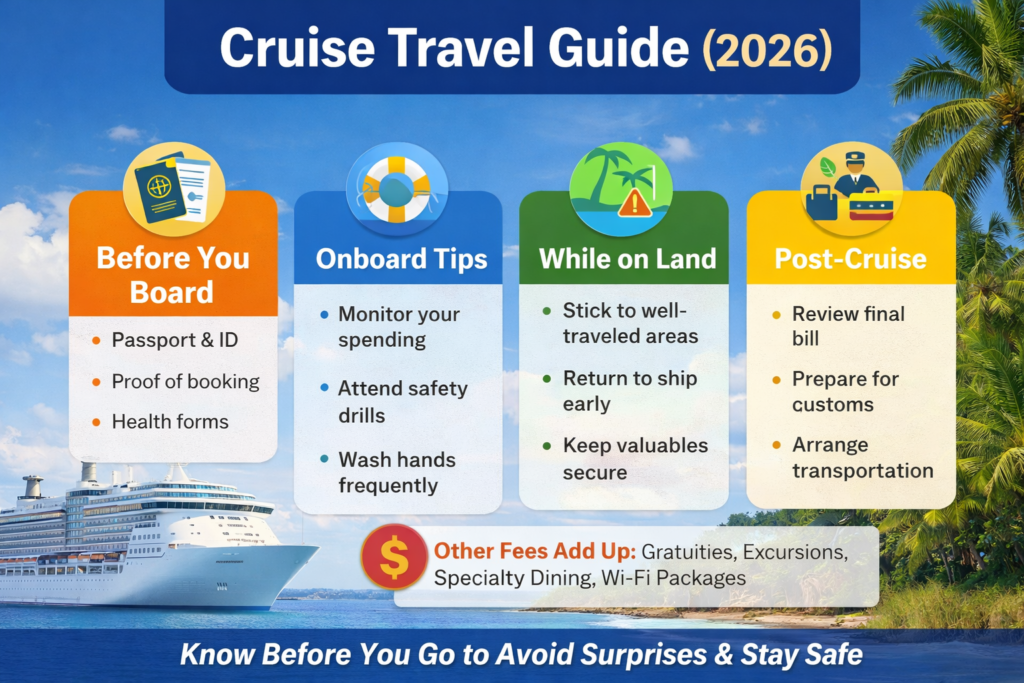
This guide is designed to help cruise travelers understand what to expect in 2026, how to stay safe, what to bring (and not bring), and how to avoid common mistakes that lead to stress or unexpected expenses.
Cruise Onboarding Requirements (Before You Board)
Before stepping onto the ship, travelers must complete several important steps. Missing even one requirement can delay or deny boarding.
What you need:
- Government-issued photo ID
- Passport (strongly recommended, even for closed-loop cruises)
- Boarding pass and cruise documents (digital and printed backup)
- Completed online check-in
- Any required health or customs forms
Important reminder:
Some destinations now require a passport even if they did not in the past. Passport validity rules also apply — many ports require at least six months of validity beyond your return date. Always verify requirements before purchasing cruise tickets or excursions.
What to Bring on a Cruise (and What Not to Bring)
Cruise Travel Guide 2026: Do’s and Don’ts for a Smooth Trip
✅ Recommended Items
- Small backpack or crossbody bag for ports
- Comfortable walking shoes
- Refillable water bottle
- Sunscreen (onboard prices are often high)
- Motion sickness medication
- Copies of ID (printed and digital)
- Portable charger approved for cruise use
❌ Items Commonly Prohibited
- Extension cords and surge protectors
- Irons or steamers
- Candles or heating devices
- Drones (often banned at ports)
- Excessive cash
Bringing restricted items can result in confiscation at security checkpoints.
Fees Not Included in the Cruise Cost (Major Complaint Area)
One of the biggest cruise frustrations comes from charges travelers didn’t expect.
Common additional costs include:
- Daily gratuities (often added automatically)
- Alcoholic beverages and specialty drinks
- Specialty dining experiences
- Wi-Fi packages
- Shore excursions
- Spa services
- Casino spending
- Bottled water and premium coffee
Even cruises advertised as “all-inclusive” often exclude gratuities and excursions. Monitoring your onboard account daily helps prevent surprises at the end of the trip.
Onboard Do’s and Don’ts (While on the Ship)
✅ Do
- Attend the mandatory safety drill
- Lock valuables in your cabin safe
- Monitor onboard spending daily
- Wash hands frequently to prevent illness
- Follow posted safety rules
❌ Don’t
- Leave drinks unattended
- Ignore posted safety signs
- Assume crew will delay departure for late passengers
- Overspend assuming charges can be disputed later
Your cruise card acts as both your room key and payment method — treat it carefully.
Shore Excursions: Staying Safe When You Leave the Ship
Leaving the ship is one of the highlights of cruising, but it’s also where many problems occur.
✅ Do
- Return to the ship early, not at the last minute
- Stay in well-traveled, populated areas
- Carry ship contact information
- Secure personal belongings
- Follow local guidance
❌ Don’t
- Flash valuables
- Wander alone in unfamiliar areas
- Trust unsolicited guides
- Carry your passport unless required
- Ignore local safety warnings
Important: Cruise ships operate on ship time — not local time. The ship will leave without you if you’re late.
What Many Travelers Forget (But Shouldn’t)
These commonly overlooked details can impact safety and costs:
- Time zone differences at ports
- International phone roaming charges
- Foreign transaction fees
- Tipping expectations at ports
- Local laws differ from U.S. laws
Planning ahead prevents unnecessary stress.
Travelers can find official cruise safety guidance and emergency information on the U.S. Department of State’s cruise travel page before boarding.
✅ U.S. Department of State – Cruise Ship Safety
Best for: Official safety guidance, emergencies, and traveler responsibilities https://travel.state.gov/content/travel/en/international-travel/before-you-go/cruise-ship-safety.html
What to Expect When the Cruise Ends
Many complaints occur during disembarkation and after reviewing final charges.
Common end-of-trip issues:
- Unexpected onboard account charges
- Disembarkation delays
- Customs and immigration congestion
- Transportation delays
- Luggage mix-ups
Best practices:
- Review your onboard account the night before departure
- Address billing concerns while still onboard
- Arrange transportation in advance
- Keep travel documents accessible
Travel Insurance and Emergency Planning
Cruise travel is still international travel. Medical care onboard and at ports can be expensive, and evacuation costs can be significant.
Consider travel insurance that includes:
- Emergency medical coverage
- Trip interruption or cancellation
- Medical evacuation
Always review policy exclusions carefully.
You may also like our guide on how to prepare for travel emergencies. https://everydayanswers.online/u-s-travel-advisory-march-2026
Final Cruise Travel Reminder
Cruises offer convenience and unforgettable experiences, but preparation matters. Understanding onboard rules, port safety, documentation requirements, and potential fees helps travelers enjoy their trip without stress or surprises.
Before booking or boarding your next cruise, travelers should also review our guide on carry on rules 2026, including updated airline and travel restrictions that may affect flights to and from cruise ports.https://everydayanswers.online/?p=328