
Most people don’t realize how much money they lose every month because of impulse buying. Impulse buying is when you purchase something you did not plan to buy. It usually happens in stores, online shopping, or when items are on sale.
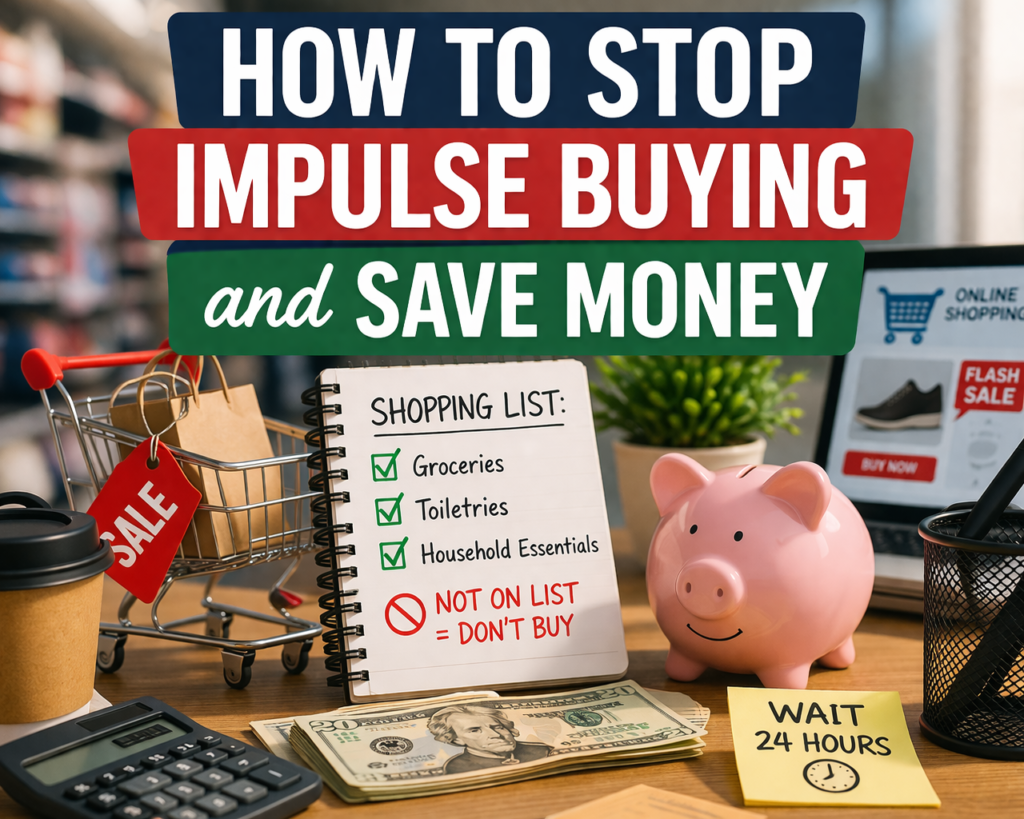
Learning how to stop impulse buying is one of the easiest ways to improve your finances, save money faster, and avoid clutter in your home.
Many people believe they have a money problem, but in reality, they have a spending habit problem. Small impulse purchases may not seem like a big deal, but over time they add up to hundreds or even thousands of dollars per year.
Why Impulse Buying Happens
Before you can stop impulse buying, it is important to understand why it happens. Most impulse purchases are emotional decisions, not logical decisions.
People impulse buy when they feel:
- Bored
- Stressed
- Sad
- Happy
- Tired
- Hungry
- Excited
- Celebrating something
- Rewarding themselves
- Fear of missing out on a sale
Stores and websites are designed to encourage impulse buying. This is not an accident. Stores place items near checkout lines because they know people make last-minute decisions while waiting in line. Online stores show “recommended items” and “customers also bought” to encourage additional purchases.
Understanding this helps you realize that impulse buying is often planned by the store, not by you.
How Impulse Buying Affects Your Budget
Impulse buying does not usually destroy a budget in one large purchase. Instead, it slowly drains money through small purchases.
For example:
- $5 here
- $12 there
- $20 online order
- $8 snacks
- $15 sale item
- $25 random purchase
These small purchases can easily add up to $200–$400 per month without people realizing it.
If that money was saved instead:
- $300 per month = $3,600 per year
- $300 per month for 5 years = $18,000
This is why learning to stop impulse buying can change your financial situation over time.
How Stores and Websites Encourage Impulse Buying
Why Checkout Items, Sales, and Store Layout Make People Spend More
Many people believe they are making independent shopping decisions, but stores actually study customer behavior very carefully. Large stores track how people walk through stores, what they look at, what they pick up, and what they buy together. This information is used to decide where products are placed in the store.
Why Certain Items Are Placed Near the Checkout Line
Items near the checkout line are usually small, inexpensive items that people can decide to buy quickly without thinking too much. Stores do not place random items there. They place items that people often buy impulsively.
These items are usually:
- Candy and snacks
- Drinks
- Gum
- Batteries
- Phone chargers
- Magazines
- Small toys
- Lip balm
- Gift cards
- Travel-size items
- Small tools
- Seasonal items
Stores know that when customers are waiting in line, they are no longer focused on their shopping list. Instead, they are standing still, looking around, and more likely to grab something small. Because the price is usually low, people think, “It’s only a few dollars,” and add it to their purchase.
Stores make a lot of extra money from these small impulse purchases.
Stores use several tricks:
- Items near checkout lines
- “Buy one get one free”
- Limited time sales
- Bright sale signs
- Store layout that forces you to walk past many items
- Music and lighting that make you stay longer
- Small inexpensive items near registers
- Seasonal displays
- End-of-aisle displays
Online stores use:
- Flash sales
- Countdown timers
- “Only 2 left”
- Free shipping if you spend more
- Recommended items
- Easy one-click checkout
- Saved credit cards
- Email promotions
All of these are designed to increase impulse buying.
How Stores Know People Will Buy These Items
Large retail stores collect a lot of information about shopping habits. They track:
- Which items sell the most
- Which items are often bought together
- How long people stay in the store
- Where customers walk the most
- Which shelves people look at
- Which displays increase sales
- Seasonal buying patterns
This information helps stores decide where to place items to increase sales. Product placement is not random — it is based on data and customer behavior.
How “Buy One Get One Free” Makes People Spend More
“Buy One Get One Free” sounds like a great deal, but it is actually a strategy to make people buy more items than they planned.
This works because:
- People focus on the free item
- People feel like they are saving money
- People buy items they were not planning to buy
- People buy more quantity than needed
- Stores sell more inventory
- Stores increase total sales per customer
Sometimes stores slightly increase the price before offering the promotion, so the store still makes a profit. Even if the store gives one item free, they are still selling more products overall.
If you planned to buy the item anyway, it may be a good deal. But if you bought it only because it was on sale, then the sale actually made you spend money instead of saving money.
Why Stores Put Expensive Items at Eye Level
Another strategy stores use is shelf placement. Most people look straight ahead when shopping, so stores place higher profit items at eye level.
Shelf placement usually works like this:
- Eye level = more expensive brands
- Middle shelves = higher profit items
- Bottom shelves = cheaper brands
- Top shelves = less popular items
- End-of-aisle displays = impulse items
- Checkout area = small impulse items
If you want to save money, always look at the top and bottom shelves where cheaper items are often placed.
Why Online Shopping Encourages Even More Impulse Buying
Online stores use different strategies, but the goal is the same — make it easy and fast to buy something.
Online shopping encourages impulse buying because of:
- One-click checkout
- Saved credit cards
- Flash sales
- Countdown timers
- “Only 2 left”
- Free shipping if you spend more
- Recommended items
- Customers also bought
- Daily deals
- Email promotions
- App notifications
Online shopping removes the time you would normally have to think before buying something, which leads to more impulse purchases.
1. Shop With a List Every Time
One of the most effective ways to stop impulse buying is to shop with a list and stick to it. If something is not on your list, do not buy it.
A shopping list helps you:
- Stay focused
- Avoid unnecessary items
- Save money
- Shop faster
- Avoid wandering through stores
- Avoid buying things because they are on sale
Many impulse purchases happen simply because people walk around stores without a plan.
2. Wait 24 Hours Before Buying Anything Not Planned
This rule is very powerful. If you see something you want but did not plan to buy, wait 24 hours before buying it. Most of the time, after waiting, you will realize you don’t actually need it.
Impulse buying happens at the moment. Waiting removes the emotional decision.
3. Do Not Save Your Card Information Online
Online shopping is one of the biggest causes of impulse buying because it is very easy to buy something quickly. If your card information is saved on websites, it takes only seconds to buy something.
Remove saved card information so you must enter it every time. This gives you time to think before buying.
4. Use Cash for Weekly Spending
Using cash instead of cards makes spending more real. When you see cash leaving your wallet, you become more aware of spending.
Try using cash for:
- Groceries
- Gas
- Eating out
- Small purchases
- Entertainment
When the cash is gone, stop spending.
5. Avoid Shopping When You Are Emotional or Bored
Many people shop when they are bored or stressed. Shopping becomes entertainment instead of a necessity.
Instead of shopping, try:
- Going for a walk
- Cleaning
- Cooking
- Reading
- Working on a hobby
- Organizing your house
- Planning meals
- Planning finances
Changing habits is one of the best ways to stop impulse buying.
6. Set a Monthly Spending Limit for Non-Essential Items
Set a limit for things like:
- Clothes
- Eating out
- Online shopping
- Entertainment
- Hobbies
- Coffee
- Snacks
- Decorations
- Tools
- Gadgets
Having a limit makes you think before spending money.
7. Think About How Many Hours You Worked for That Item
This is one of the best ways to control spending.
Before buying something, ask:
How many hours did I work to pay for this?
This changes how you look at purchases and helps reduce impulse buying.
Simple Habits That Help Stop Impulse Buying
Learning to stop impulse buying is not about never buying anything — it is about becoming more aware of your spending and making intentional decisions with your money. Small habits can make a big difference over time, and controlling impulse buying is one of the fastest ways to free up extra money in your budget.
Many people do not realize that controlling impulse buying is almost the same as giving yourself a raise, because the money you stop spending becomes money you can save.
Habit 1 – Always Shop With a List
Shopping with a list is one of the simplest ways to control spending. When you go to a store without a list, you are more likely to walk around and buy things you did not plan to buy.
A list helps you:
- Stay focused
- Avoid unnecessary purchases
- Save time shopping
- Stick to your budget
- Reduce food waste
- Avoid buying duplicate items
- Avoid buying items just because they are on sale
This habit alone can reduce grocery bills and store spending significantly over time.
Habit 2 – Use the 24-Hour Rule
If you see something you want but did not plan to buy, wait 24 hours before purchasing it. Most impulse purchases happen because of excitement or emotion in the moment. After waiting a day, many people realize they do not actually need the item.
This rule works especially well for:
- Online shopping
- Clothes
- Tools
- Home items
- Electronics
- Decorations
- Gadgets
- Hobby items
Waiting before buying helps you make logical decisions instead of emotional decisions.
Habit 3 – Create a Monthly Spending Limit
Set a monthly limit for non-essential spending like:
- Eating out
- Clothes
- Online shopping
- Entertainment
- Coffee
- Snacks
- Decorations
- Hobbies
- Tools
- Gadgets
When you set a limit, you become more aware of how much you are spending. This helps you control impulse buying and keep your budget under control.
Habit 4 – Track Your Spending
Many people do not realize how much they spend on small purchases. Tracking spending for one month can be very eye-opening.
Write down every purchase for:
- Snacks
- Drinks
- Online purchases
- Gas station items
- Fast food
- Small tools
- Household items
- Apps or subscriptions
At the end of the month, add everything up. Many people are surprised by how much money goes to small impulse purchases.
Habit 5 – Remove Saved Card Information Online
Online shopping makes impulse buying very easy because you can buy something in seconds. If your credit card information is saved on shopping websites, it removes the time you would normally have to think before buying.
Removing saved payment information creates a small delay that forces you to think before buying something.
This small step can reduce impulse buying significantly.
Habit 6 – Set Savings Goals
One of the best ways to stop impulse buying is to have a goal for your money. When you have a savings goal, it becomes easier to say no to unnecessary purchases.
Savings goals could include:
- Emergency fund
- Vacation
- Car
- Home repairs
- Down payment for a house
- Paying off debt
- Retirement
- Starting a business
- Education
- Travel
- Equipment or tools
When you know what you are saving for, it becomes easier to control spending.
How Controlling Impulse Buying Helps You Save Money
Controlling impulse buying does not feel like saving money at first, but over time it makes a big difference.
For example:
- Stop spending $10 per day → Save $300 per month
- Stop spending $50 per week → Save $200 per month
- Stop spending $200 per month → Save $2,400 per year
- Save $200 per month for 5 years → $12,000
Small changes in spending habits can create large savings over time.
Benefits of Controlling Spending
When you learn to control impulse buying and spending, several things improve in your life:
Financial Benefits
- More money saved
- Less debt
- Better budget control
- More emergency savings
- More money for important purchases
- Less financial stress
- Ability to invest money
- Ability to travel or take time off work
Home Benefits
- Less clutter
- Less unnecessary items in the house
- More organized home
- Less cleaning
- Less storage needed
Mental Benefits
- Less stress
- Better financial control
- Better decision making
- More confidence with money
- Less regret after purchases
- Better long-term planning
Controlling spending is not just about money — it improves many areas of life.
If you are trying to reduce spending overall, read our guide on How to Lower Your Monthly Grocery Bill.
A Simple Way to Start Controlling Impulse Buying Today
If you want to start today, try these simple steps:
- Make a shopping list before going to the store
- Wait 24 hours before buying anything not planned
- Set a monthly spending limit
- Track spending for one month
- Remove saved credit cards from online stores
- Set a savings goal
- Avoid browsing stores for entertainment
- Ask yourself if you really need the item
- Think about how many hours you worked to pay for it
- Focus on saving instead of spending
These small habits can help you stop impulse buying, control spending, and save more money over time. According to the Consumer Financial Protection Bureau, tracking spending and avoiding impulse purchases are two of the most effective ways to improve financial stability over time. https://www.consumerfinance.gov/consumer-tools/budgeting/
Think About This
If you stopped spending just $10 per day on impulse purchases, that would be about $300 per month or $3,600 per year. What would you do with an extra $3,600 per year — pay off debt, travel, save for a house, or build an emergency fund?
Common Questions About Impulse Buying
What is impulse buying?
Impulse buying is when you buy something without planning to buy it beforehand.
Why is impulse buying bad?
Impulse buying can lead to overspending, debt, clutter, and less money saved.
How do I control impulse buying online?
Remove saved card information, unsubscribe from emails, and wait 24 hours before buying.
Is impulse buying normal?
Yes, most people impulse buy sometimes, but controlling it can help improve finances.
Reader Sharing the information
What is one thing you often buy without planning to? Snacks, clothes, tools, online deals, or something else? Becoming aware of impulse purchases is the first step to controlling spending and saving more money.