
10 things every American home should have during a power outage is more than a checklist right now. A long outage can affect lighting, heating or cooling, food refrigeration, communications, medication storage, cooking, banking, and even access to water in some homes. Ready.gov and the American Red Cross both advise families to plan ahead with supplies that can support them for several days if the power goes out.
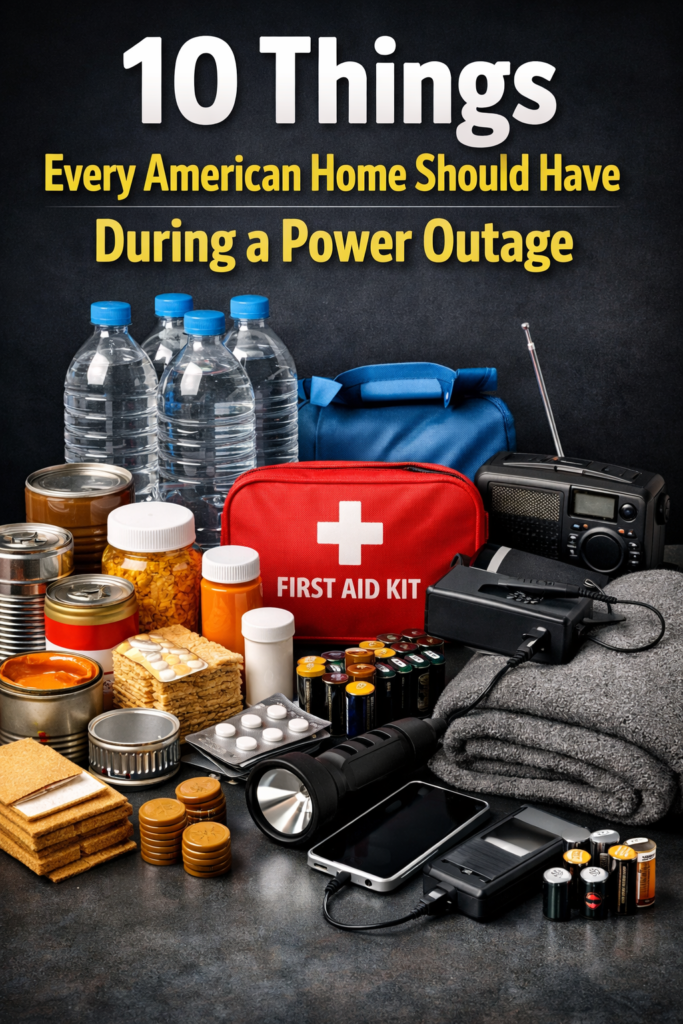
These 10 things every American home should have during a power outage can help families stay safer, calmer, and more prepared when normal services suddenly stop.
Power outages are not just an inconvenience. They can quickly become a safety issue, especially for households with children, seniors, pets, or anyone who depends on refrigerated medicine or powered medical equipment. CDC also warns that outages create added risks around food safety and carbon monoxide poisoning if people use generators or grills the wrong way.
If you want to be ready before the next blackout, storm, grid problem, or local outage, these are the items worth having at home.
These 10 things every American home should have during a power outage are some of the most practical supplies families can gather before an emergency happens.
10 Things Every American Home Should Have During a Power Outage Before the Next Emergency
1. Water
Water should be at the top of every outage plan. The Red Cross recommends one gallon of water per person, per day, with a two-week supply at home when possible. That covers drinking and basic sanitation needs.
This matters even more if your home depends on electric pumps, well systems, or local systems that may be interrupted during a severe emergency. If you do not already have stored water, start small and build up steadily.
2. Nonperishable Food
Ready.gov and the Red Cross both recommend keeping food that is easy to prepare and does not depend on refrigeration. A full outage can shut down grocery access, delay deliveries, and make cooking more difficult than people expect.
Good options include canned foods, protein bars, peanut butter, dry cereal, crackers, shelf-stable milk, canned fruit, tuna, soups, and other foods your family will actually eat. The goal is not just to store food, but to store food you can use without stress.
3. Flashlights and Extra Batteries
Ready.gov specifically recommends having flashlights for every household member during a power outage. CDC also advises using flashlights or other battery-powered lights instead of candles whenever possible because candles increase the risk of fire.
This is one of the easiest upgrades a family can make. Keep at least one flashlight in the bedroom area, one in the kitchen, and one in your emergency supply kit, along with fresh batteries.
4. A Battery-Powered or Hand-Crank Radio
If the power goes out and internet service becomes unreliable, a battery-powered or hand-crank radio can help you keep receiving local emergency updates. The Red Cross and Ready.gov both include radios among core emergency kit supplies. NOAA weather radios are especially useful during severe weather and extended outages.
A lot of people assume their phone will be enough. It might not be. A radio gives you another layer of information when batteries run low or networks are overloaded.
5. Backup Phone Charging Options
Ready.gov advises people to know whether their home phone will work during an outage and how long battery backup will last. The Red Cross also recommends having a backup battery or another way to charge your cell phone.
Portable power banks, car chargers, and fully charged backup batteries are some of the most useful tools during a blackout. If you have a family, try to keep at least one power bank fully charged at all times.
These 10 things every American home should have during a power outage are not expensive luxuries—they are practical basics that can help families stay safer and more comfortable.
6. Prescription Medications and Medical Supplies
FEMA and the Red Cross both stress the importance of having prescription medications and medical items ready before an emergency. This becomes critical during outages that disrupt pharmacy access, transportation, or refrigeration for certain medicines.
If someone in your home uses insulin, oxygen equipment, CPAP devices, mobility devices, or any medication that needs cooling, power outage planning should be taken seriously well before bad weather hits.
7. A First Aid Kit
A first aid kit belongs in every emergency supply setup. Ready.gov’s emergency kit guidance includes first aid supplies as a basic item, and the Red Cross includes it in its recommended survival kit list as well.
You do not need anything fancy. You need bandages, antiseptic, gloves, pain relief, gauze, and the basics for handling minor injuries when stores may be closed or hard to reach.
8. Safe Backup Heat or Warmth Supplies
If an outage happens during cold weather, warmth becomes a major issue fast. FEMA’s recent winter preparedness guidance highlights blankets, warm clothing, and other cold-weather essentials as important emergency supplies. Ready.gov’s current “stay safe and warm” materials also stress taking steps to stay warm safely during outages.
Extra blankets, sleeping bags, socks, gloves, and layered clothing are simple but important. Do not rely on unsafe indoor heating methods. Fuel-burning devices can create carbon monoxide if used improperly.
9. A Generator Plan That Does Not Put Your Family at Risk
Many families think a generator is the solution to every outage, but CDC and Ready.gov both warn that generators must only be used outdoors and well away from windows, doors, and other openings because of carbon monoxide poisoning risk. Current federal guidance says at least 20 feet away from buildings.
So the real essential is not just a generator. It is a safe generator plan. That means fuel stored correctly, extension cords rated properly, outdoor-only use, and everyone in the home understanding that generators, charcoal grills, and camp stoves do not belong inside the house or garage.
10. A Food Safety Plan
One of the most overlooked outage essentials is knowing how long refrigerated food stays safe. CDC says your refrigerator will keep food safe for about 4 hours if the door stays closed, and a full freezer will keep food safe for 48 hours or 24 hours if half-full.
That means every home should have a simple food safety plan: keep appliance doors closed, know what must be thrown out, and avoid guessing. During outages, foodborne illness is a very real problem, and throwing out unsafe food is cheaper than getting sick. CDC and the Red Cross both recommend paying close attention to food safety after a loss of power.
Putting together these 10 things every American home should have during a power outage now can save time, stress, and money later.
For official outage preparedness guidance and a basic supply list straight from the federal government, review Ready.gov’s power outage preparedness recommendations. ready.gov
Why These 10 Things Every American Home Should Have During a Power Outage Matter
The reason 10 things every American home should have during a power outage is such an important topic is simple: outages can happen during storms, heat waves, winter events, accidents, grid strain, or local emergencies. Families who prepare ahead usually make calmer, safer decisions when the lights go out.
You do not need to build the perfect emergency room in your house overnight. Start with water, food, light, communication, medication, and safe backup plans. Then build from there.
If you have not started yet, gathering these 10 things every American home should have during a power outage is one of the smartest preparedness steps you can take this year.
Preparing these 10 things every American home should have during a power outage now is much easier than trying to gather supplies once stores are crowded or the lights are already out.
If you are building a stronger emergency plan at home, also read our guide on how to purify water during emergencies so your family is better prepared if basic utilities are interrupted. https://everydayanswers.online/?p=814
Final Thoughts
These 10 things every American home should have during a power outage can make the difference between feeling panicked and feeling prepared. The most important step is not buying everything at once. It is starting before you need it. Official guidance from Ready.gov, CDC, FEMA, and the Red Cross all points in the same direction: plan for several days without normal services, protect your family from preventable dangers like carbon monoxide and spoiled food, and keep the essentials where you can reach them fast.
Frequently Asked Questions About This Topic
How much water should a family store for a power outage?
The Red Cross recommends one gallon per person per day, with a two-week supply for home when possible.
What is the safest light to use during a blackout?
CDC recommends using flashlights or other battery-powered lights instead of candles when possible because candles increase fire risk.
How long does food stay safe in the fridge during a power outage?
CDC says refrigerated food is generally safe for about 4 hours if the refrigerator door stays closed.
How far away should a generator be from the house?
Federal guidance says generators should be used outdoors and at least 20 feet away from doors, windows, and other openings to reduce carbon monoxide risk.
What should every family have before an outage starts?
At minimum, families should have water, nonperishable food, flashlights, batteries, a radio, medications, first aid supplies, and a safe way to stay informed and charged.
Help Protect Other Families
Power outages catch a lot of people off guard because they seem temporary until they are not. Share this post with a friend, neighbor, parent, or grandparent who may not have a home outage plan yet.
What is the one thing you always make sure to keep on hand before a storm or blackout? Leave a comment and share what your family relies on most.